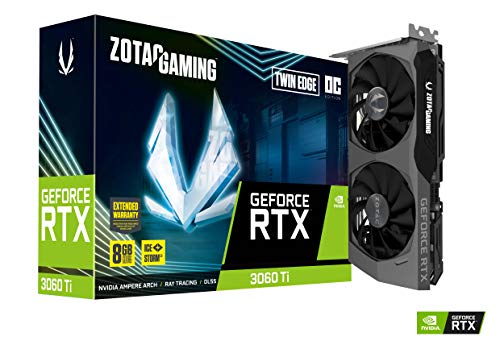
You have just built a new PC or want to breathe life into an older system, and the graphics card is the heart of the experience. With so many AMD Radeon options on the market, from the budget-friendly RX 7600 to the powerful RX 9070 XT, picking the right one can feel overwhelming. This guide cuts through the noise, focusing on the best AMD graphics cards for 2026 across different budgets and performance needs. Whether you are a competitive gamer chasing high frame rates or a creator needing raw compute power, we have you covered. For those on a tighter budget, check out our roundup of best budget graphics cards for additional options.
We have assessed dozens of models based on real-world gaming benchmarks, cooling efficiency, build quality, and feature sets like ray tracing and AI acceleration. Our picks balance performance and value, ensuring you get the most for your money without sacrificing future-proofing. Let us break down the top contenders that deserve a spot in your rig.


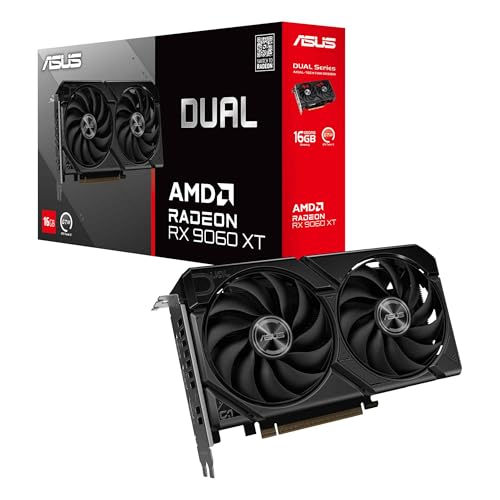
Buying Guide: How to Choose the Right AMD Graphics Card
Selecting the best AMD graphics cards for your setup depends on three core factors: your target resolution, the games you play, and your monitor’s refresh rate. Below are key considerations to make an informed decision.
1. Resolution and Performance Tier
The first question is whether you plan to game at 1080p, 1440p, or 4K. For high-refresh 1080p, a card like the ASRock Radeon RX 7600 Challenger Pro 8GB OC delivers excellent frame rates with modern RDNA 3 features. If you want buttery-smooth 1440p or entry-level 4K, step up to the ASRock Radeon RX 9070 Challenger 16GB OC Graphics or the GIGABYTE Radeon RX 9070 XT Gaming OC 16G Graphics. For ultrawide or high-fidelity 4K, the top-tier ASUS Prime Radeon RX 9070 XT 16GB GDDR6 OC Edition is a beast. If you are building a entry-level system, our guide on best entry level graphics cards for 2026 may also be helpful.
2. VRAM and Future-Proofing
Video memory matters more than ever. 8GB cards (like the RX 7600) are fine for most current 1080p titles, but 12GB or 16GB gives you headroom for texture-heavy games and future releases. The ASRock Radeon RX 7700 XT Challenger 12GB OC sits nicely in the middle, while the ASRock Radeon RX 9060 XT Steel Legend 16GB GDDR6 and both RX 9070 series cards offer generous VRAM for high-resolution textures and ray tracing. Avoid going below 8GB if you plan to keep the card for several years.
3. Cooling and Noise Levels
A graphics card’s cooling solution directly affects performance stability and noise. Triple-fan designs, such as those on the ASRock Radeon RX 9070 Challenger 16GB OC Graphics and the GIGABYTE Radeon RX 9070 XT Gaming OC 16G Graphics, provide excellent thermal dissipation and often run quieter than dual-fan models. The ASUS Prime Radeon RX 9070 XT 16GB GDDR6 OC Edition uses axial-tech fans with a smaller hub for more blades and a barrier ring that boosts downward air pressure. Many cards also feature 0dB silent modes, halting fans under light loads for quiet operation. If silent computing is a priority, a card with a robust triple-fan cooler and efficient heatsink is the way to go.
4. Connectivity and Build Compatibility
Check your case dimensions and power supply before buying. Cards like the ASRock Radeon RX 7600 Challenger Pro 8GB OC are 2.5-slot designs that fit most mid-towers, while high-end models like the ASUS Prime Radeon RX 9070 XT may require more space. All modern AMD GPUs support PCIe 4.0 or 5.0, and DisplayPort 2.1 is becoming standard for high-refresh 4K and 8K monitors. Ensure your PSU has the required power connectors (typically two 8-pin for mid-range and above). For a broader look at performance tiers, our best mid range graphics cards guide offers additional insight.
Final Thoughts
After carefully evaluating the latest AMD lineup, our recommendation comes down to two standout models that cater to different needs. For gamers who demand uncompromising 4K performance with top-tier ray tracing and AI features, the ASUS Prime Radeon RX 9070 XT 16GB GDDR6 OC Edition is the ultimate choice, offering robust cooling and dual BIOS flexibility. If you are building a high-value 1440p system or dipping into 4K without breaking the bank, the ASRock Radeon RX 9070 Challenger 16GB OC Graphics delivers exceptional performance with a generous 16GB frame buffer and a reliable triple-fan cooler. Both cards are outstanding picks for 2026, and whichever you choose, you will enjoy a massive upgrade in gaming immersion.
Frequently Asked Questions
What is the best AMD graphics card for 4K gaming in 2026?
The ASUS Prime Radeon RX 9070 XT 16GB GDDR6 OC Edition is currently the top performer among AMD cards for 4K, featuring 16GB of VRAM and advanced RDNA 4 architecture. It handles the latest titles at high settings with smooth frame rates. For a slightly more affordable option, the GIGABYTE Radeon RX 9070 XT Gaming OC 16G Graphics also excels at 4K with its WINDFORCE cooling.
How much VRAM do I need for gaming in 2026?
For 1080p gaming, 8GB is sufficient for most current titles. For 1440p, 12GB is recommended, and for 4K or heavy modding, 16GB is ideal. Cards like the ASRock Radeon RX 9060 XT Steel Legend 16GB GDDR6 and the RX 9070 series provide ample VRAM for future-proofing.
Are AMD graphics cards good for content creation?
Absolutely. AMD’s RDNA 3 and 4 architectures include dedicated AI accelerators and ray tracing cores that benefit video editing, 3D rendering, and AI workloads. The ASRock Radeon RX 7700 XT Challenger 12GB OC and higher-tier cards offer excellent compute performance for applications like Blender and DaVinci Resolve. For a comparison of affordable options, see our best affordable graphics cards.
Do I need a PCIe 5.0 motherboard for these graphics cards?
No, all current AMD cards are backward compatible with PCIe 4.0 and even PCIe 3.0 motherboards. While PCIe 5.0 offers extra bandwidth for future-proofing, it does not provide a significant performance gain in gaming today. Cards like the ASRock Radeon RX 9070 Challenger 16GB OC Graphics support PCIe 5.0 but work perfectly fine on older slots.