You have spent hours fine-tuning your turntable, upgrading your DAC, and selecting the perfect amplifier. Yet something still feels missing. The final piece of the puzzle is often the loudspeaker, and for true audiophiles, floorstanding speakers deliver the scale, dynamics, and detail that bookshelf models simply cannot match. In this guide, we have reviewed four outstanding floorstanding speakers from Klipsch and Sony to help you invest wisely in your listening room. Whether you crave the horn-loaded clarity of Klipsch or the balanced precision of Sony, our picks cover a range of performance levels. For more context on what makes a great speaker, check out our guide to the best home audio speakers for 2026.


Buying Guide
Driver Configuration and Crossover Design
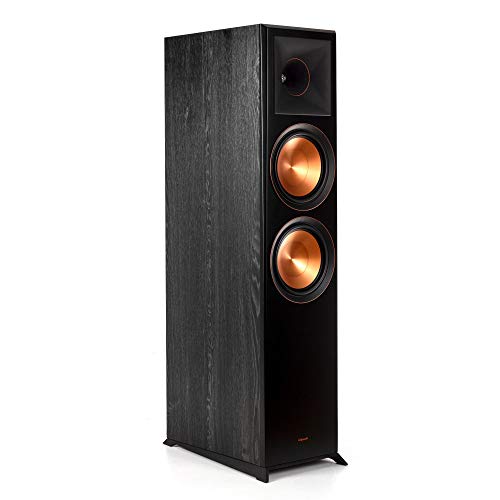
The heart of any floorstanding speaker is its driver array. A well-engineered crossover ensures that each driver handles only the frequencies it excels at, reducing distortion and phase issues. Look for models with dedicated woofers, midrange drivers, and tweeters. The Klipsch RP-8000F uses dual 8-inch woofers and a horn-loaded tweeter, while the Sony SS-CS3M2 employs a three-way, four-driver layout with a super tweeter for extended highs. For a deeper dive into speaker design, read our guide to the best home speakers for music.
Sensitivity and Power Handling
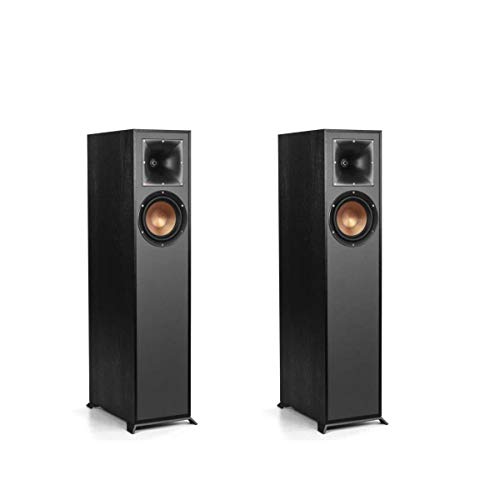
Sensitivity ratings indicate how efficiently a speaker converts power into volume. Higher sensitivity (above 90 dB) means you can drive the speakers with lower-powered amplifiers and still achieve satisfying loudness. The Klipsch Reference R-610F boasts 94 dB sensitivity, making it an excellent match for tube amps or low-wattage solid-state designs. Power handling tells you the maximum continuous and peak wattage the speaker can accept without damage. Always match your amplifier’s output to the speaker’s recommended range.
Room Acoustics and Placement
Floorstanding speakers interact strongly with room boundaries. Bass reflex ports (front or rear firing) affect how low frequencies behave in your space. Rear-ported designs, like the Klipsch RP-8000F, need at least six inches from the back wall to avoid boomy bass. Front-ported or sealed designs are more forgiving. Consider your room size and listening distance. For more placement tips, see our guide to home speakers for every room.
Build Quality and Finish
High-end floorstanding speakers are investments that should last decades. Look for thick MDF cabinets with internal bracing to reduce resonance. Quality binding posts that accept banana plugs or spade connectors make cable management easier. Removable magnetic grilles are a nice touch for those who prefer the raw look of drivers. The Klipsch Reference Premiere series uses a scratch-resistant ebony vinyl finish that looks elegant in any room.
Final Thoughts
After evaluating each model, we recommend the Klipsch RP-8000F Reference Premiere Floorstanding for audiophiles who prioritize lifelike dynamics and horn-loaded clarity, and the Sony SS-CS3M2 3-Way 4-Driver Hi-Res Floorstanding for those who seek a balanced, detailed soundstage at a more accessible price point. Both speakers deliver exceptional performance for their respective categories, and your choice ultimately comes down to your sonic preferences and room acoustics.
Frequently Asked Questions
What makes a floorstanding speaker audiophile-grade?
Audiophile floorstanding speakers use high-quality drivers, precise crossovers, and rigid cabinets to reproduce sound with low distortion and wide frequency response. They often feature horn-loaded tweeters, multiple woofers, and premium materials like titanium or ceramic cones.
Do I need a subwoofer with floorstanding speakers?
Many floorstanding speakers, like the Klipsch RP-8000F with dual 8-inch woofers, can produce deep, impactful bass on their own. However, for the lowest octaves (below 30 Hz) or in large rooms, adding a dedicated subwoofer can enhance the experience.
Can I use these speakers for home theater?
Absolutely. Floorstanding speakers are ideal for front left and right channels in a surround sound setup. Their high sensitivity and power handling make them compatible with most AV receivers. For a complete system, consider pairing them with a center channel and surrounds. Check our top floorstanding speakers under $1,000 for more options.
How do I break in new floorstanding speakers?
New speakers benefit from a break-in period of 20 to 50 hours at moderate volume. This allows the suspension components to loosen, resulting in smoother bass and more natural treble. Play a variety of music genres at normal listening levels to speed the process.