

You have decided to start photography but feel overwhelmed by the choices. This guide covers the best Canon cameras for beginners in 2026, focusing on three models that balance ease of use, image quality, and value. Whether you want a compact mirrorless for everyday shooting or a classic DSLR for learning the fundamentals, these picks have you covered. For a broader look at Canon’s DSLR lineup, check out our Best Canon DSLR Cameras in 2026 article.



Buying Guide for Beginner Canon Cameras
Ease of Use and Learning Curve
When you are just starting, a camera that simplifies settings and guides you through the process is invaluable. Look for models with scene intelligent auto modes, creative assist features, and intuitive menus. The Canon EOS R50 excels here with its Creative Assist mode and vertical video support, making it perfect for social media creators. The Rebel T7 offers a straightforward interface with a dedicated auto mode that handles exposure decisions for you.
Image Quality and Video Features
Even as a beginner, you want sharp photos and smooth video. All three cameras use a 24-megapixel APS-C sensor, but they differ in processing power and video capabilities. The EOS R50 delivers oversampled 4K video with reliable Dual Pixel AF, while the EOS R100 offers 4K at 24p with a crop. The Rebel T7, though older, still produces excellent stills and Full HD video. If video is a priority, read our Best Canon Cameras for YouTube guide for deeper insights.
Lens Ecosystem and Expandability
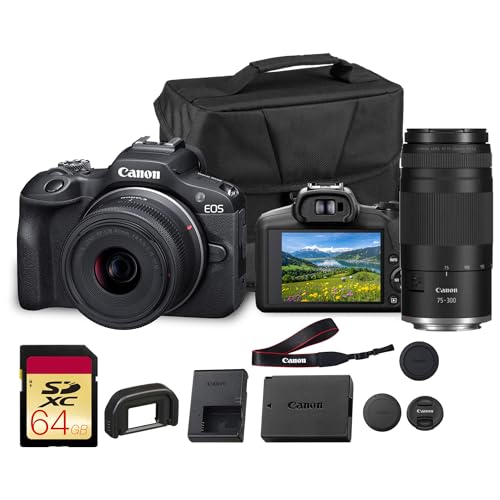
Consider the lens system you are investing in. Mirrorless cameras like the R50 and R100 use Canon’s RF mount, which offers a growing range of lenses but fewer budget options than the EF mount used by the Rebel T7. The Rebel T7 gives you access to decades of affordable EF and EF-S glass, making it a cost-effective choice for learning. However, RF lenses are lighter and more compact, which suits travel and daily carry.
Portability and Build Quality
If you plan to take your camera everywhere, weight and size matter. The EOS R50 and R100 are significantly lighter and smaller than the Rebel T7, thanks to their mirrorless design. The Rebel T7, while bulkier, feels more substantial in hand and has a longer battery life. For outdoor shooting, the compact mirrorless options are easier to pack. For more on landscape photography with Canon gear, see our best canon cameras for landscape photography article.
Final Thoughts
Choosing the right beginner camera comes down to your priorities. If you value modern features, 4K video, and a lightweight body for vlogging and daily use, the Canon EOS R50 Mirrorless Camera with 18-45mm Lens is our top recommendation. If you prefer a traditional DSLR experience with a vast lens library and a lower entry point, the Canon EOS Rebel T7 DSLR Camera with 18-55mm Lens offers excellent value and a solid foundation for learning photography.
Frequently Asked Questions
Which Canon camera is best for a complete beginner in 2026?
The Canon EOS R50 is ideal for complete beginners because of its user-friendly Creative Assist mode, reliable autofocus, and compact design. It also supports 4K video and vertical shooting, making it great for social media content.
Is the Canon Rebel T7 good for learning photography?
Yes, the Canon Rebel T7 is a classic choice for learning photography. Its optical viewfinder, manual controls, and compatibility with many affordable lenses help you understand exposure, composition, and focus techniques without overwhelming menus.
Should I buy a mirrorless or DSLR as a beginner?
It depends on your needs. Mirrorless cameras like the EOS R50 and R100 are lighter, quieter, and offer advanced video features, while DSLRs like the Rebel T7 provide longer battery life and a larger selection of used lenses. Both are excellent for learning, so consider portability versus expandability.
Can I use my old Canon lenses on these cameras?
Yes, but with an adapter. The Rebel T7 uses EF/EF-S lenses natively. For the R50 and R100, you need the Canon EF-EOS R adapter to use older lenses. This adapter maintains autofocus and image stabilization, so your existing glass works seamlessly.




