Building a small form factor (SFF) gaming rig is an exciting challenge. You want powerful performance, but your case has strict space limits. That is why choosing the right compact graphics card is critical. It must fit perfectly, run cool, and still deliver smooth frame rates at your preferred resolution.
In this guide, we focus on the best compact graphics cards for 2026, covering options from low-profile cards for slim builds to dual-slot powerhouses for slightly larger SFF cases. Whether you are upgrading an office PC or building a new LAN-friendly system, our picks are evaluated for performance, cooling, and compatibility. If you are also exploring other space-saving options, check out our roundup of the best low profile graphics cards for more ideas.


Buying Guide: What to Look for in a Compact Graphics Card
Before you make a purchase, consider these essential factors. They will help you choose a card that not only fits your case but also meets your gaming needs.
Physical Dimensions and Clearance
Measure your case’s maximum GPU length, width, and slot thickness. Low-profile cards are ideal for slim cases, while dual-slot cards fit most SFF cases but may block adjacent PCIe slots. Always check the manufacturer’s specifications for clearance.
For instance, the ZOTAC Gaming GeForce RTX 5060 Low Profile DLSS 4 is a true low-profile card, perfect for compact cases. In contrast, the ASUS Dual GeForce RTX 3050 6GB GDDR6 OC Edition is a dual-slot card that still works in many SFF builds. For more tailored advice, explore our cards category.
Cooling Performance and Noise
Compact graphics cards generate significant heat. Look for models with advanced fan designs, such as axial-tech fans or composite heatpipes. Features like 0dB technology allow fans to stop under low load for silent operation.
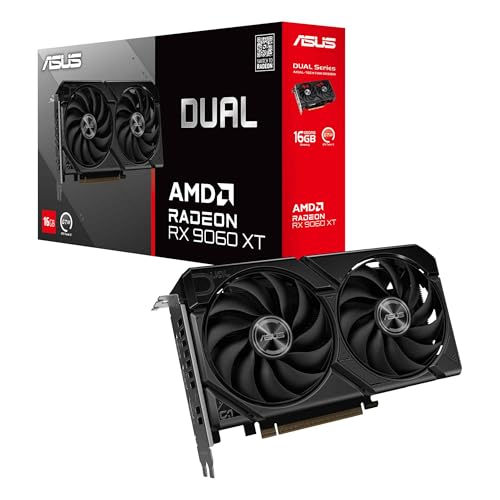
The ASUS Dual Radeon RX 9060 XT 16GB GDDR6 uses axial-tech fans and a dual BIOS switch, giving you both quiet and performance modes. Proper cooling ensures stable performance during long gaming sessions.
Performance and VRAM
For 1080p gaming, 6GB to 8GB of VRAM is sufficient, but for higher resolutions or future-proofing, consider 16GB options. The ZOTAC RTX 5060 offers 8GB of fast GDDR7 memory, while the ASUS RX 9060 XT provides 16GB GDDR6. More VRAM helps with texture-heavy games and productivity tasks.
If you plan to run multiple monitors, check the card’s display outputs. For multi-display setups, our guide to graphics cards for quad monitors might be helpful.
Power Requirements and Connectivity
Ensure your power supply unit (PSU) has enough wattage and the required PCIe power connectors. Low-profile cards typically need a single 8-pin connector, while larger cards may require more. Also, verify the card supports the latest PCIe standards for optimal performance.
All our picks feature modern connectivity, including DisplayPort 2.1 and HDMI 2.1, ensuring compatibility with current monitors and VR headsets.
Final Thoughts
Choosing the right compact graphics card depends on your case size and performance needs. For a low-profile option that delivers excellent 1080p gaming, the ZOTAC Gaming GeForce RTX 5060 Low Profile DLSS 4 is a fantastic choice. If you prefer more VRAM for future-proofing and content creation, the ASUS Dual Radeon RX 9060 XT 16GB GDDR6 offers great value. Both cards are verified to fit in most SFF cases and provide the performance you need for a satisfying gaming experience.
Frequently Asked Questions
What is the smallest compact graphics card available in 2026?
Low-profile cards like the ZOTAC Gaming GeForce RTX 5060 Low Profile are among the smallest, designed to fit in slim cases. Always check the card’s dimensions against your case’s specifications.
Can compact graphics cards handle 4K gaming?
Yes, many compact cards support 4K gaming, but performance varies. Cards with 16GB VRAM, like the ASUS Dual Radeon RX 9060 XT, can handle 4K in many titles, though you may need to adjust settings for demanding games.
Do I need a special power supply for compact graphics cards?
Not necessarily, but you need a PSU with sufficient wattage and the right connectors. Most compact cards require a single 8-pin connector, but always verify the card’s power requirements.
Are compact graphics cards as powerful as full-size ones?
Yes, compact cards often use the same GPU chips as full-size models, so performance is comparable. However, cooling and power delivery may be limited by size, which can affect sustained performance under heavy load. For more insights, check our cards category.