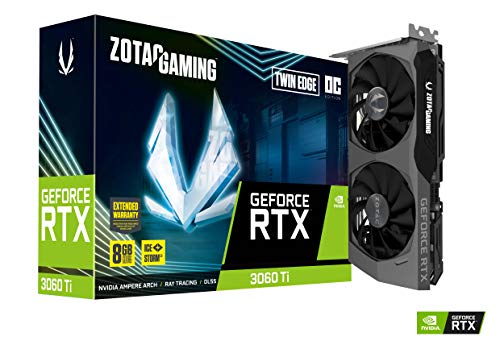
You’ve saved up for months, and now it’s time to build or upgrade your gaming PC. But with so many graphics cards on the market, choosing the right one can feel overwhelming. Whether you crave ray-traced realism in AAA titles or need a budget-friendly card for esports, the GPU you pick determines your entire experience. In this guide, we break down the best graphics cards for gaming PC in 2026, focusing on performance, cooling, and value. We’ve reviewed five top contenders from ASUS and GIGABYTE to help you make an informed decision. For a broader look at options, check out our best graphics cards for PC guide.


Buying Guide: What to Look For in a Gaming GPU
Performance and Architecture
The heart of any graphics card is its GPU architecture. NVIDIA’s Blackwell and AMD’s RDNA 4 bring major leaps in ray tracing, AI upscaling, and power efficiency. For 2026, cards like the ASUS TUF Gaming GeForce RTX 5080 deliver cutting-edge DLSS 4, while the ASUS Prime Radeon RX 9070 XT offers excellent rasterization performance. If you’re building a Linux gaming rig, our top graphics cards for Ubuntu guide can help you choose a compatible card.
Cooling and Build Quality
Thermal management directly affects performance and noise. Look for cards with large heatsinks, multiple fans, and advanced thermal pads. ASUS uses Axial-tech fans with a smaller hub for longer blades and higher air pressure, while GIGABYTE’s WINDFORCE system employs Hawk fans and server-grade thermal gel. Phase-change GPU thermal pads on high-end models keep temperatures lower for longer boost clocks.
Form Factor and Compatibility
Not all cases can fit a massive 3.6-slot card. Measure your case clearance before buying. The ASUS Dual RTX 3050 is a compact 2-slot design ideal for small builds, while the ASUS TUF RTX 5080 requires a 348mm length and a 850W PSU. Always verify PSU connector requirements (16-pin 12V-2×6 for newer NVIDIA cards).
Software and Features
GPU tuning software like ASUS GPU Tweak III lets you overclock, monitor temps, and control fan curves. Dual BIOS switches on some cards let you toggle between quiet and performance modes. Features like 0dB technology stop fans during light gaming for silent operation. These extras can enhance your daily experience.
Final Thoughts
Choosing the right graphics card comes down to your budget and resolution goals. For high-end 4K gaming with ray tracing, the ASUS TUF Gaming GeForce RTX 5080 16GB GDDR7 OC offers top-tier performance with DLSS 4. If you want excellent 1440p performance without breaking the bank, the ASUS Prime Radeon RX 9070 XT 16GB GDDR6 OC Edition delivers outstanding value and robust cooling. Both cards represent the best graphics cards for gaming PC in 2026 for their respective segments.
Frequently Asked Questions
What is the best graphics card for gaming in 2026?
The answer depends on your budget and resolution. For 4K ultra settings, the ASUS TUF RTX 5080 is a top choice. For 1440p high refresh rates, the ASUS Prime RX 9070 XT offers excellent performance. Both are among the best graphics cards for gaming PC this year.
How much VRAM do I need for gaming?
For 2026, 12GB is the sweet spot for 1440p, while 16GB or more is recommended for 4K and future-proofing. Cards like the RX 9070 XT and RTX 5080 come with 16GB, while budget models like the RTX 3050 have 6GB, which is fine for 1080p esports titles.
Is it worth upgrading from an older GPU?
If you’re still on a GTX 1000 series or RX 5000 series, upgrading to a current-gen card will dramatically improve performance, especially with ray tracing and DLSS. Check our cards category for more comparisons.
Which brand is better for gaming GPUs: ASUS or GIGABYTE?
Both are reliable. ASUS tends to offer more robust cooling solutions and software features like GPU Tweak III, while GIGABYTE provides competitive pricing and solid build quality. Pick based on specific model reviews and your case compatibility.