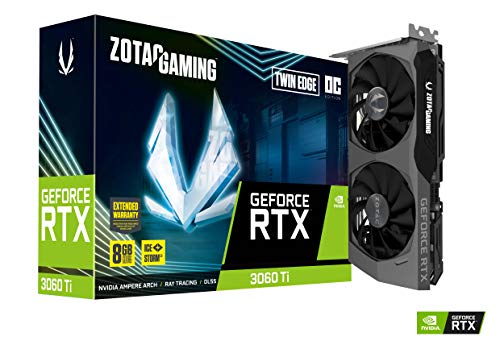
Rendering complex 3D scenes, training AI models, or exporting high-resolution video can bring even the most powerful desktop to a crawl. You need a graphics card engineered for compute-heavy tasks, not just gaming. This guide covers the top graphics cards for rendering, from professional workstation beasts to value-focused options, helping you choose the right one for your creative workflow.
Whether you’re a 3D artist, video editor, or AI researcher, we’ve evaluated each card’s architecture, memory capacity, and cooling solution. We’ll break down what matters most, so you can make an informed decision and get back to creating. For more insights on building a powerful creative PC, check out our guide to graphics cards for 3D animation.


Buying Guide
Choosing the right graphics card for rendering involves more than just picking the most expensive option. You need to match the card’s capabilities to your specific software and workload. Here are the key factors to consider before you make a purchase.
Memory Capacity and Bandwidth
For rendering, VRAM is non-negotiable. Large scenes, high-resolution textures, and complex AI models can quickly exhaust your video memory. A card with at least 16GB is recommended for modern workloads, but 24GB or more provides a significant cushion for future-proofing and handling massive datasets.
Memory bandwidth also plays a critical role. GDDR7 and GDDR6 memory with a wide bus interface ensure that data flows quickly between the GPU and its memory, reducing bottlenecks during rendering. For example, the latest graphics cards often feature high-bandwidth memory to accelerate performance.
Compute Performance and Architecture
The GPU architecture determines how efficiently it handles parallel compute tasks. Look for cards with dedicated AI accelerators, ray tracing cores, or tensor cores, as these accelerate rendering and AI inference. Architectures like NVIDIA’s Blackwell and AMD’s RDNA 3 are designed with these features in mind.
Pay attention to the number of stream processors or CUDA cores, as well as the clock speed. A higher core count and boost clock generally translate to faster rendering times. However, software optimization matters too, so consider which brand your favorite applications support best.
Cooling and Form Factor
Rendering pushes your GPU to its limits, generating significant heat. A robust cooling solution is essential to maintain performance and prevent thermal throttling. Look for cards with triple-fan designs, vapor chambers, or blower-style coolers, which are common in professional workstations.
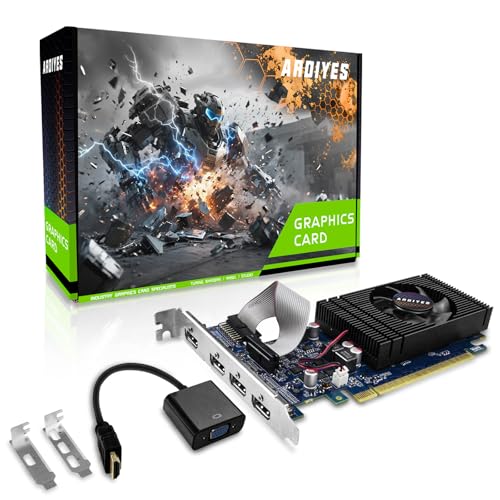
Also check the physical dimensions and power requirements. Some cards are multi-slot and may not fit in smaller cases. Ensure your power supply has the necessary connectors and wattage headroom. For compact builds, consider low-profile options, though they often compromise on performance.
Software and Driver Support
Professional rendering applications rely on optimized drivers for stability and performance. ISV certification ensures that a card has been validated with specific software packages. Look for cards that offer dedicated workstation drivers, which are updated more frequently and provide better reliability for long render jobs.
Consider the ecosystem around the card. NVIDIA’s CUDA and Intel’s oneAPI are widely supported in rendering software, while AMD’s HIP is also gaining traction. Choose a platform that aligns with your favorite tools. For more insights on optimizing your audio setup, check out our guide to PC sound cards for gaming.
Final Thoughts
Selecting the best graphics card for rendering comes down to balancing your budget, software requirements, and performance needs. For professionals needing maximum compute power and massive memory, the NVIDIA RTX PRO 4000 Blackwell Graphics Card is our top pick, while the ASRock Intel Arc Pro B70 Creator 32GB Workstation offers an excellent balance of performance and value for creators. Both options provide the reliability and speed needed to tackle the most demanding rendering projects.
Frequently Asked Questions
What is the best graphics card for rendering in 2026?
The best graphics card for rendering depends on your specific workload and budget. For high-end 3D and AI tasks, professional cards with 24GB or more VRAM like the NVIDIA RTX PRO 4000 or ASRock Arc Pro B70 are excellent choices. For more modest needs, cards with 16GB of VRAM can still handle most rendering projects efficiently.
How much VRAM do I need for rendering?
For 1080p and 1440p rendering, 8GB to 16GB is often sufficient. However, for 4K or complex 3D scenes, 24GB or more is recommended to avoid running out of memory. More VRAM also allows you to handle larger textures and more complex AI models without performance hits.
Is a gaming graphics card good for rendering?
Gaming cards can handle rendering, but they often lack the optimized drivers and ISV certification that professional cards offer. For occasional rendering, a gaming card with sufficient VRAM can work fine. However, for professional work, a workstation card provides better stability, support, and performance in certified applications.
What is the difference between NVIDIA and AMD graphics cards for rendering?
NVIDIA cards excel in CUDA-accelerated applications and AI workloads, while AMD cards offer competitive performance with more affordable price points. Intel’s Arc Pro series is also emerging as a viable option for creators. Your choice should depend on software compatibility and specific performance needs. For more on optimizing your creative setup, see our blog.