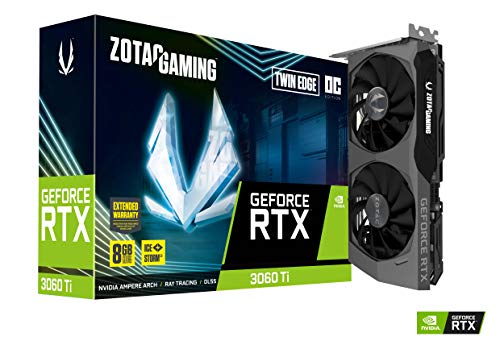
When you are building a PC for modern gaming or creative work, 12GB of VRAM has become a sweet spot. It handles high-resolution textures, ray tracing, and large projects without stuttering. Two compelling options from ASRock are the Intel Arc B580 Challenger and the Radeon RX 7700 XT Challenger. Both pack 12GB of GDDR6 memory, but they differ in architecture and performance focus. If you are also considering cards with 8GB VRAM, see our comparison of 8GB GPUs for a different budget tier.


Buying Guide
VRAM Capacity and Bandwidth
Both cards offer 12GB of GDDR6 memory on a 192-bit bus, but clock speeds differ. The ASRock Intel Arc B580 Challenger runs at 19 Gbps, while the ASRock Radeon RX 7700 XT Challenger operates at 18 Gbps. Higher memory bandwidth helps with texture-heavy games and 1440p resolutions. For most users, both provide ample headroom for 2026 titles.
Cooling and Noise Levels
Each card uses a dual-fan design with striped axial fans and 0dB Silent technology, meaning fans stop at low temperatures for quiet operation. The RX 7700 XT adds Ultra-fit Heatpipe technology for better heat dissipation. If you plan to push your GPU hard, consider waterblock solutions for even lower temperatures. For most users, these stock coolers are more than adequate.
Connectivity and Future-Proofing
Both cards support PCIe 4.0 and include DisplayPort 2.1 and HDMI 2.1 outputs. The RX 7700 XT offers three DisplayPort 2.1 ports, while the Arc B580 has one. This makes the RX 7700 XT better for multi-monitor setups. For high-refresh-rate gaming at 4K, these modern outputs are essential. Browse our full cards category for more options.
Architecture and Features
The Intel Arc B580 uses Xe2-HPG architecture with XMX engines for AI acceleration and XeSS 2 upscaling. The Radeon RX 7700 XT relies on AMD RDNA 3 with 54 Compute Units and RT+AI Accelerators. Both support ray tracing, but the RX 7700 XT generally has stronger raw rasterization performance. For content creation, the Intel card’s AV1 encoding and XeSS can be valuable. If you are comparing with older GPUs, check our water cooling guide for high-end alternatives.
Final Thoughts
Choosing between these two 12GB GPUs comes down to your priorities. The ASRock Intel Arc B580 Challenger 12GB OC Graphics is a strong value pick with Intel’s latest upscaling and AV1 encoding, ideal for gamers who want modern features without a premium. The ASRock Radeon RX 7700 XT Challenger 12GB OC delivers higher raw performance and better multi-monitor support, making it a solid choice for demanding 1440p gaming and creative workflows. Both cards will serve you well in 2026.
Frequently Asked Questions
What is 12GB of VRAM good for in 2026? 12GB VRAM handles high-resolution textures, ray tracing, and large game assets without running out of memory. It also benefits 3D rendering and video editing, especially with 4K footage.
Which card is better for 1440p gaming? The ASRock Radeon RX 7700 XT generally offers higher frame rates in rasterized games, while the Intel Arc B580 competes well with upscaling enabled. Both can run 1440p smoothly, but the RX 7700 XT has a slight edge in raw performance.
Do these cards support ray tracing? Yes, both support hardware-accelerated ray tracing. The RX 7700 XT uses AMD’s RT accelerators, and the Arc B580 uses Intel’s ray tracing units. Performance varies by game, but both are capable for 2026 titles.
Can I use these cards for content creation? Absolutely. The Intel Arc B580 excels with AV1 encoding and AI acceleration, while the RX 7700 XT offers strong compute performance. For audio work, these cards can output high-quality sound via HDMI; see our home theater sound card guide if you need dedicated audio hardware.