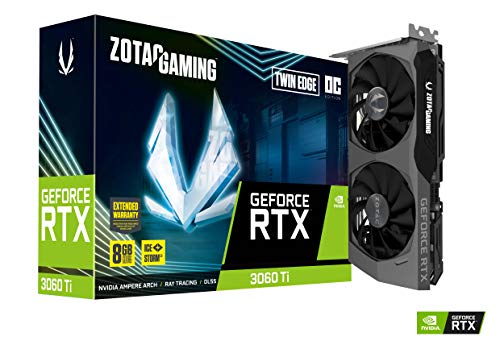
You are building a new rig or upgrading your current desktop, and you have settled on one critical requirement: 16GB of VRAM. Whether you are diving into 4K gaming, working with large 3D scenes, or running AI models locally, having that extra memory buffer makes the difference between smooth performance and frustrating stutters. In 2026, the GPU market offers several compelling options packing 16GB, ranging from the latest NVIDIA Blackwell architecture to AMD RDNA 4 powerhouses. This guide examines five standout models from trusted brands like ASUS, GIGABYTE, and ASRock, helping you choose the perfect graphics card for your specific needs.
Before we jump into the individual cards, it is worth noting that 8GB VRAM is becoming the bare minimum for modern titles at 1440p. If you are coming from an older card, our roundup of best graphics cards with 8GB VRAM for 2026 might be a useful comparison. But for today, we focus squarely on 16GB solutions that future proof your investment.


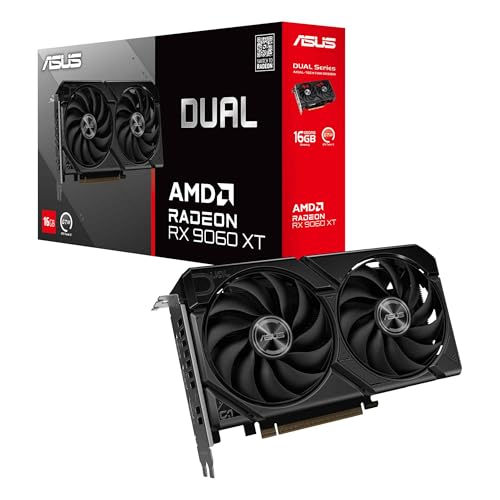
Buying Guide for 16GB Graphics Cards
Architecture and Feature Set
The underlying architecture determines how well a card handles ray tracing, upscaling, and AI workloads. NVIDIA’s Blackwell (found in the ASUS TUF Gaming GeForce RTX 5080) introduces DLSS 4, while AMD’s RDNA 4 (used across ASRock and GIGABYTE models) brings improved ray tracing accelerators and AI cores. For pure gaming, both are outstanding, but if you use GPU compute for rendering or machine learning, the NVIDIA card offers CUDA support that many professional apps rely on.
Cooling and Build Quality
A 16GB GPU generates significant heat, especially under sustained loads. Look for large heatsinks, multiple fans, and features like 0dB fan stop or dual BIOS for silent operation. The ASUS Dual and TUF series use Axial-tech fans with barrier rings to push air downward, while GIGABYTE’s WINDFORCE system employs Hawk fans and server-grade thermal gel. If you plan to water cool, check out our roundup of top graphics cards with waterblocks for pre-installed solutions.
Connectivity and Size
Modern cards support PCIe 5.0, HDMI 2.1b, and DisplayPort 2.1a for high refresh rate 4K/8K displays. But physical size matters too. The ASUS TUF RTX 5080 is 348mm (13.7 inches) and requires 3.6 slots, while the ASRock RX 9060 XT Steel Legend is more compact. Always measure your case clearance and check power supply requirements. Most 16GB cards recommend a 700W to 850W PSU with the appropriate 8-pin or 12V-2×6 connectors.
Price vs. Performance Balance
Not all 16GB GPUs are created equal. High-end models like the ASUS TUF RTX 5080 deliver top-tier frame rates with advanced features, while mid-range options like the ASRock RX 9060 XT Steel Legend offer excellent value for 1440p gaming and light 4K work. If your priority is raw rendering power or AI tasks, the pricier NVIDIA card may justify its cost. For pure gaming, the AMD cards provide superb performance per dollar. For more on water cooling compatibility, see our best graphics cards for water cooling.
Final Thoughts
Choosing the right 16GB graphics card boils down to your primary use and budget. If you need uncompromising ray tracing performance and plan to use AI or professional rendering software, the ASUS TUF Gaming GeForce RTX 5080 16GB GDDR7 OC is the top recommendation, with its military-grade components and DLSS 4 support. For gamers who want a fantastic 1440p/4K experience without overspending, the ASRock Radeon RX 9060 XT Steel Legend 16GB GDDR6 delivers strong performance, silent triple-fan cooling, and modern connectivity at a more accessible price point. Either way, you are getting a future-ready card with enough VRAM to handle the next few years of demanding titles and creative projects.
Related Guides
Frequently Asked Questions
Is 16GB of VRAM enough for 4K gaming in 2026?
Yes, 16GB is currently the sweet spot for 4K gaming. Most modern titles at ultra settings and with ray tracing enabled use between 10GB and 14GB, so a 16GB card gives you comfortable headroom. It also future proofs you against the growing memory demands of upcoming games.
What is the difference between GDDR6 and GDDR7 memory?
GDDR7 is the newer standard offering higher bandwidth and better power efficiency than GDDR6. In our lineup, the ASUS TUF RTX 5080 uses GDDR7, while the AMD cards use GDDR6. For most gamers, the difference is marginal unless you are pushing extreme resolutions or high frame rates in professional workloads.
Can I use a 16GB GPU for AI and machine learning?
Absolutely. 16GB of VRAM is ideal for running models like Stable Diffusion, LLaMA, or fine-tuning smaller neural networks. NVIDIA GPUs with CUDA cores (like the ASUS TUF RTX 5080) are especially well supported in popular frameworks. AMD ROCm compatibility is improving, but check your specific software requirements.
How much power supply do I need for a 16GB graphics card?
Most 16GB cards recommend a 700W to 850W power supply. High-end models like the RTX 5080 require an 850W unit with a 16-pin 12V-2×6 connector. Always verify the PSU requirements on the product page and ensure your case has enough clearance. For more advice on building your system, check our Cards category page for related guides.