Imagine juggling multiple supplier tabs, a live inventory dashboard, and a customer support chat window all at once. A lagging or underpowered laptop can turn these daily ecommerce tasks into a frustrating exercise in patience. You need a machine that keeps up with your business, whether you’re updating product listings, managing your store’s backend, or analyzing sales data.
This guide is designed for entrepreneurs and online store owners who need a new workhorse. We’ve evaluated a range of laptops that balance performance, storage, and portability for the demands of running an ecommerce business in 2026. We’ll break down key features, provide a comparison of top models, and help you choose the right one for your specific needs.


Buying Guide: What to Look for in a Laptop for Ecommerce
Choosing the right laptop for your ecommerce business involves more than just picking the cheapest option. You need a machine that can handle multitasking, secure connections, and long hours of work. Here are the key factors to consider before making your purchase.
Performance and Multitasking Capabilities
Your laptop’s processor and memory are the engine of your operation. For ecommerce, you’ll want a quad-core processor or better to handle multiple browser tabs, spreadsheet software, and communication tools without slowdowns. Look for at least 8GB of RAM, though 16GB is ideal if you often work with large files or run several applications at once.
This ensures smooth performance when you’re updating your online store, processing orders, or using resource-heavy apps. A responsive laptop minimizes downtime and keeps your workflow efficient. For more on performance, you might also find our guide for small business owners helpful.
Storage and Expandability
Storage is critical for your business files, product images, and software. Solid State Drives (SSDs) are a must for fast boot times and quick file access. Consider the total storage capacity, and see if the laptop includes or supports external drive options for backups and archiving.
Some models come with a portable external drive, which is a great way to expand your storage without opening the laptop. This is especially useful for ecommerce managers who need to keep a large library of product photos and videos. Check if the laptop has an SD card reader or extra USB ports for easy connection to other devices.
Portability and Battery Life
As an ecommerce professional, you might work from home, a coffee shop, or during travel. A lightweight and slim laptop is easier to carry around. Battery life is equally important, so you don’t have to constantly search for a power outlet. Look for models that offer a full workday of battery life.
A laptop that weighs around 3.5 pounds is easy to slip into a bag. This portability allows you to manage your business from anywhere, ensuring you never miss a sale or an important update. For more portable options, check out our picks for small business laptops.
Operating System and Software
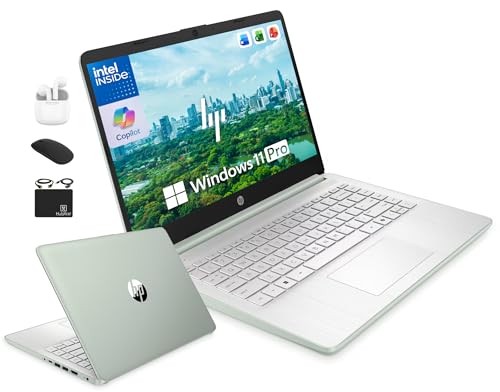
The operating system (OS) is your primary software interface. Windows 11 Pro is a popular choice for business users because it offers advanced security features and management tools. It also supports a wide range of business applications. Some laptops come with lifetime Microsoft Office, which is a significant value-add.
Consider whether you need pre-installed software like Office. The ability to use familiar tools like Word, Excel, and PowerPoint is essential for many ecommerce tasks. Also, ensure the laptop supports the latest Wi-Fi standards for a stable and fast internet connection. For more on essential features, see our guide for home businesses.
Final Thoughts
Choosing the right laptop for your ecommerce business is a balance of performance, storage, and portability. For those on a budget who still want a solid all-around machine, the HP 14″ Laptop Computer for 2026 Student Business offers a great balance for basic tasks. If you need a bit more power for multitasking and have a slightly larger budget, the HP 14″ Laptop 2025 Business Student Slim Computer is a fantastic option with its enhanced memory and storage. Both are reliable choices to keep your online store running smoothly.
Frequently Asked Questions
What is the best laptop for an ecommerce business?
The best laptop for ecommerce depends on your specific needs and budget. For most business owners, a laptop with a fast processor, at least 8GB of RAM, and an SSD is essential. Look for models that offer a good balance of performance and portability, like the HP 14-inch laptops we’ve reviewed, which are well-suited for managing an online store.
How much RAM do I need for ecommerce?
For ecommerce, 8GB of RAM is the minimum you should consider, but 16GB is recommended if you often work with multiple applications or heavy websites. More RAM ensures smoother multitasking, allowing you to switch between your store’s backend, email, and social media without lag. This is especially helpful in 2026 as web applications become more demanding.
Do I need a dedicated graphics card for online selling?
Generally, no. Most ecommerce tasks like managing inventory, editing text, and handling customer inquiries do not require a dedicated graphics card. Integrated graphics on modern processors are powerful enough for these tasks. However, if you plan to do heavy photo or video editing, a dedicated GPU might be beneficial, but it’s not a priority for most online sellers.
Is a lightweight laptop important for ecommerce?
Yes, portability is key for many ecommerce entrepreneurs who work from different locations. A lightweight laptop makes it easy to carry your business with you, whether you’re traveling, meeting a supplier, or working from a coffee shop. Models that weigh around 3.5 pounds strike a good balance between portability and screen size, making them ideal for the on-the-go business owner.