

You’ve laced up your shoes, queued your favorite playlist, and hit the pavement with every intention of making this the season you finally enjoy running. But within ten minutes, you’re checking your phone, trying to gauge your pace, wondering if you’re pushing too hard, and losing the rhythm you came for. A dedicated running watch removes that guesswork, letting you focus on your stride while it quietly tracks your distance, heart rate, and progress over time.
This guide is built for beginners, not marathoners or data scientists. We’ll explore two very different approaches to your first GPS running watch, and break down what actually matters when you’re just starting out. For more foundational advice on choosing a timepiece that fits your goals, our overview of watch categories is a helpful starting point.


Buying Guide for Beginner Running Watches
Before you hit the “add to cart” button, take a moment to consider what you truly need from a running watch. The right choice comes down to a few key factors that affect your daily comfort and long-term motivation.
Battery Life That Keeps Up With You
Nothing kills a training habit faster than a watch that dies mid-run. Consider how often you want to charge your device. Some watches last a full week or more in smartwatch mode, while others need a top-up every couple of days, especially with GPS active. Think about your routine: do you run daily, or a few times a week? A longer battery life means less charging and more freedom.
For those who also use their watch for sleep tracking, battery life becomes even more critical. You don’t want to choose between charging and tracking your rest. Look for a model that balances features with efficiency, and always check the estimated battery life under typical use.
GPS Accuracy and Signal Strength
Accurate GPS is the heart of any running watch. It tells you how far and how fast you’ve gone, which is essential for monitoring improvement. While most modern watches offer solid GPS, signal lock can vary, especially in areas with tall buildings or heavy tree cover. For beginners, a reliable signal is more important than advanced multi-band features.
Pay attention to reviews that mention GPS performance in different environments. If you plan to run in urban canyons or dense forests, you might want a watch with a stronger antenna or support for multiple satellite systems. Remember, a watch that struggles with signal can give you inaccurate data, which can be discouraging.
Comfort and Display Readability
You’ll be wearing this watch for hours, so comfort is non-negotiable. A lightweight design with a soft, breathable band is ideal. Also, consider the display. Do you prefer a bright, always-on screen that’s easy to see in direct sunlight, or a touchscreen with more vibrant colors? Think about where you’ll be looking at it: on a sunny trail or in a dimly lit gym.
Try to envision interacting with the watch mid-run. Large, clear numbers are a must for quick glances. Some watches offer customizable watch faces, letting you prioritize the stats you care about most. For more tips on what to look for, you might find our guide to running watches useful.
Training Features vs. Simplicity
As a beginner, you don’t need a watch that coaches you through complex interval sessions right away, but having some guidance can be motivating. Some watches offer daily suggested workouts, recovery time, and race predictions. Others keep it simple with basic pace, distance, and heart rate zones. Decide how involved you want your watch to be in your training.
If you’re the type who likes structure, look for a watch with a coach or training plans. If you prefer to keep things simple and just track your runs, a more basic model will suffice. Remember, the best watch is the one you actually want to wear and use every day.
Final Thoughts
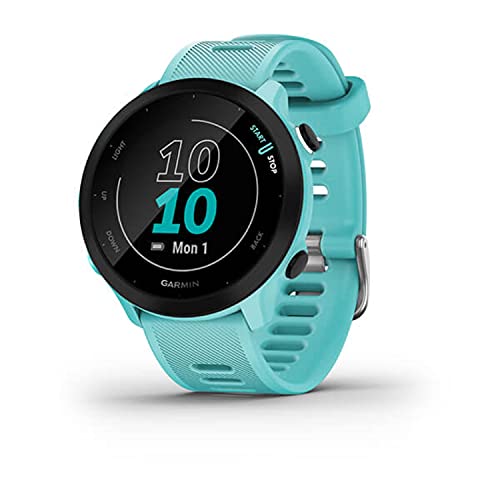
Choosing your first running watch is an exciting step, and the right one will feel like a natural extension of your training. For beginners who want a trusted name with robust guidance and long battery life, the Garmin Forerunner 55, GPS Running Watch with Daily is a fantastic all-around option that grows with you. If you’re on a tighter budget or want a feature-packed watch for everyday wear and multiple sports, the moutarlier Built-in GPS Distance Tracking Watch offers incredible value with its AMOLED screen and extensive health tracking. No matter which you pick, you’ll be taking a confident step toward your fitness goals.
Frequently Asked Questions
Do I really need a GPS running watch as a beginner?
While not strictly necessary, a GPS watch helps you track your distance, pace, and progress accurately, which is a huge motivator. It takes the guesswork out of your runs and lets you see improvement over time. If you’re serious about building a habit, it’s a worthwhile investment.
What is a good battery life for a beginner running watch?
For beginners, look for a watch that lasts at least a week on a single charge in smartwatch mode. This means you can track daily activities and sleep without constantly worrying about charging. If you run with GPS frequently, consider a model that can handle several hours of GPS tracking on a single charge.
Are more expensive running watches worth it for beginners?
Not necessarily. Expensive watches often come with advanced features like music storage, detailed maps, and advanced training metrics that a beginner may not use. Starting with a mid-range or budget-friendly option allows you to learn what features you actually need without overspending. You can always upgrade later once your running habit is established.
Can a running watch track other activities like swimming or cycling?
Many modern running watches are multi-sport, meaning they can track cycling, swimming, hiking, and more. Check the product specifications to see which activities are included. For example, both the Garmin Forerunner 55 and the moutarlier watch offer swim tracking and various sport modes, making them versatile companions for a healthy lifestyle.


