

Your BlackVue dash cam is a silent witness on the road, capturing every turn and near-miss. But without a reliable memory card, those critical moments could be lost. The right SD card ensures your camera records continuously without overheating or corrupting files. In this guide, we focus on SanDisk High Endurance microSD cards, specifically designed for the demands of dash cams. Whether you drive a few miles daily or spend hours on the highway, we have a recommendation for you. For more on selecting storage for other devices, check our Cards category.



Buying Guide: What to Look for in a Dash Cam SD Card
Endurance Rating: How Long Will It Record?
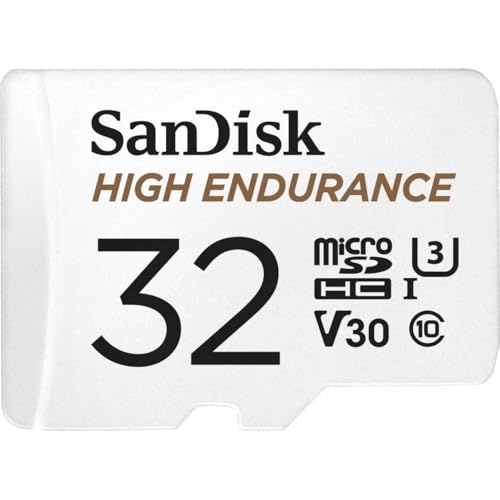
Dash cams write data constantly, often in loops. Standard SD cards can fail after months of continuous use. SanDisk High Endurance cards are built to handle thousands of hours of recording. The 32GB model is rated for up to 2,500 hours, while the 128GB version can last up to 10,000 hours. For heavy users, the 256GB and 512GB options offer even longer lifespans. This endurance is crucial for a set-and-forget device like a BlackVue.
Speed Class: Ensure Smooth 4K Recording
BlackVue dash cams often record in 4K resolution. You need a card with at least U3 and V30 speed ratings to handle the data stream without dropped frames. All the SanDisk High Endurance cards here meet these standards. They also support Full HD recording, so your camera can switch between resolutions seamlessly. For more on speed requirements for high-res recording, see our guide on SD cards for DJI Mavic Air.
Capacity: How Much Video Do You Need?
Higher capacity means fewer overwrites and more historical footage. A 32GB card stores roughly 4 to 5 hours of 4K video, while 128GB can hold 20+ hours. For daily commuters, 64GB or 128GB is a sweet spot. Long-haul drivers or fleet operators may prefer 256GB or 512GB. Remember that dash cams loop record, so capacity affects how far back you can retrieve clips. If you also use SD cards for drones, our DJI Mini SD card guide may help.
Durability: Built for the Car Environment
Your dash cam endures heat, cold, vibrations, and humidity. SanDisk High Endurance cards are temperature proof, water proof, shock proof, and magnet proof. They are verified to survive extreme conditions, from summer dashboards to winter windshields. This ruggedness ensures your footage is safe even if the card is ejected during an incident. For other automotive gear, explore our Automotive category.
Final Thoughts
After evaluating the entire SanDisk High Endurance lineup, we recommend the SANDISK 128GB High Endurance Video microSDXC Card for most BlackVue users. It offers a balanced mix of capacity, endurance, and value. For those who need maximum recording time or run multiple cameras, the SANDISK 256GB High Endurance microSD Card provides double the storage and an impressive 20,000-hour lifespan. Both cards are certified for continuous recording and will keep your dash cam running reliably for years.
Related Guides
- Top Dash Cams for Rideshare Drivers in 2026
- Top Picks for the Best Dash Cam Under $200 in 2026
- Best Dash Cam for Toyota Tacoma
Frequently Asked Questions
Can I use any microSD card in my BlackVue dash cam?
BlackVue recommends High Endurance cards for reliable operation. Standard cards may overheat or fail quickly due to constant writing. SanDisk High Endurance cards are specifically designed for this purpose and are a top choice.
How often should I replace my dash cam SD card?
Even High Endurance cards have a finite lifespan. SanDisk rates them for thousands of hours. For example, the 128GB model is certified for up to 10,000 hours of Full HD recording. As a rule, consider replacing your card every 2 to 3 years, or sooner if you notice errors. For more tips, visit our Blog.
What happens when the SD card gets full?
Dash cams use loop recording. Once the card is full, the oldest footage is overwritten by new clips. This is why a larger capacity card gives you a longer history. The SanDisk High Endurance cards handle loop recording smoothly without corruption.
Do I need a UHS-I or UHS-II card for my BlackVue?
BlackVue dash cams work with UHS-I cards, which are more than sufficient for 4K recording. UHS-II cards are faster but not necessary and often cost more. The SanDisk High Endurance cards are UHS-I and provide consistent performance.

