
You are on the sideline, camera in hand, finger ready on the shutter. The athlete explodes into motion, and you fire off a burst of frames. In that split second, your memory card needs to keep up, or you risk missing the decisive moment. For sports photography, a slow or unreliable SD card can turn a perfect sequence into a buffered mess. That is why choosing the right storage is as critical as selecting your camera body or lens.
In this guide, we evaluate the best SD cards for sports photography, all from SanDisk, a brand known for rugged performance and consistent speed. Whether you shoot fast-paced team sports or lone trail runners, these cards will help you capture every detail. For more on high-capacity options, check out our roundup of top 512GB SD cards for high-capacity storage.



Buying Guide: What to Consider in an SD Card for Sports Photography
Write Speed: The Key to Uninterrupted Bursts
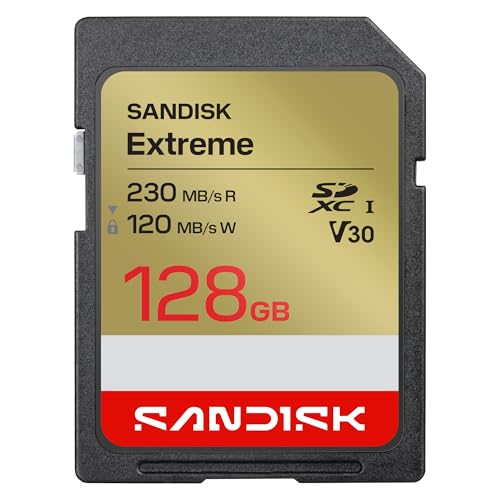
When you shoot in continuous mode, your camera writes data to the card as fast as it can. If the write speed is too slow, the buffer fills and the frame rate drops. For sports, aim for cards rated V30 or higher (UHS Speed Class 3). The SanDisk Extreme PRO series, with write speeds up to 170MB/s, keeps up with rapid-fire sequences. Even the SanDisk Extreme cards, rated at 160MB/s, handle most action scenarios without hiccups.
For demanding 4K video at high frame rates, consider UHS-II cards like the SANDISK 128GB Extreme PRO SD Memory Card with write speeds up to 300MB/s. That bandwidth ensures your camera never stutters during a critical play.
Capacity: Balancing Duration and Backup
A full day shooting a tournament can eat up gigabytes fast. A 64GB card may fill up during a single match, forcing you to swap cards. For most sports photographers, 128GB is the sweet spot, offering room for thousands of RAW files or hours of 4K footage. If you cover multi-day events, 256GB or even 512GB cards reduce the need to offload in the field.
SanDisk offers capacities up to 2TB in their Extreme PRO line, but for practical use, 256GB is ample. For a deeper look at large storage, read our guide to the best 256GB SD cards for 2026.
Durability: Withstanding the Elements
Sports photography often happens outdoors, in rain, dust, or extreme temperatures. SanDisk cards are engineered to be temperature-proof, shockproof, and waterproof. The Extreme PRO cards are rated IP68, meaning they survive dust and submersion. That ruggedness gives you peace of mind when you are shooting on a muddy field or in a dusty arena.
Even the more affordable Ultra cards offer basic durability, but for professional use, we recommend the Extreme PRO series. For more on durable memory cards, see our article on best 512GB micro SD cards for 2026.
Interface: UHS-I vs UHS-II
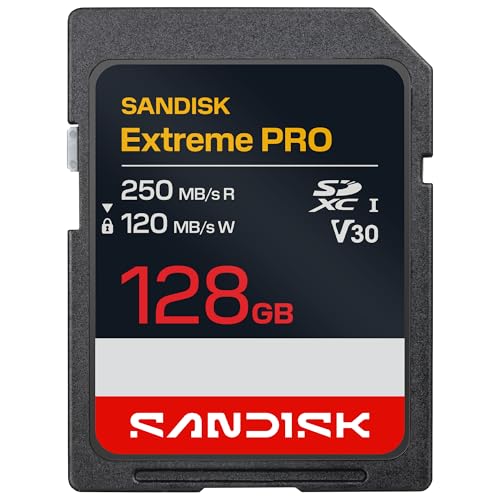
Most modern cameras support UHS-I, which reaches up to 104MB/s (though SanDisk’s proprietary technology pushes it to 250MB/s). For maximum performance, UHS-II cards offer double the bandwidth, but require a compatible camera and card reader. If your camera supports UHS-II, the SanDisk Extreme PRO UHS-II (like the 128GB model) is a worthy investment. If not, a high-end UHS-I card like the SanDisk 128GB Extreme PRO SD UHS-I Card is more than enough for most sports.
Also consider your workflow: UHS-II readers speed up file transfers to your computer, saving time during post-processing. For a broader look at memory card options, visit our Cards category page.
Final Thoughts
After evaluating the lineup, two cards stand out for sports photographers. The SanDisk 128GB Extreme PRO SD UHS-I Card delivers an excellent balance of speed, capacity, and durability at a reasonable price, making it our top pick for most shooters. If you need more storage for all-day events or want to shoot 4K slow motion, the SanDisk 256GB Extreme PRO SD UHS-I Card offers double the capacity with identical blazing performance. Both cards are V30 rated and built to endure harsh conditions, so you can focus on the action, not your gear.
Frequently Asked Questions
What speed class do I need for sports photography?
For burst shooting and 4K video, look for a U3 and V30 rating or higher. Speed class 10 (U1) may work for stills, but V30 ensures smooth video recording without dropped frames. SanDisk Extreme and Extreme PRO cards meet or exceed this standard.
Should I choose UHS-I or UHS-II for sports photography?
If your camera supports UHS-II, the extra bandwidth helps clear the buffer faster during rapid bursts. However, for most sports photography in 2026, a high-quality UHS-I card like the SanDisk Extreme PRO (up to 250MB/s read) is sufficient. Check your camera’s specifications before deciding.
How much capacity do I need for a day of sports photography?
A 128GB card can hold roughly 3,000 RAW images or about 2 hours of 4K video. For a full day tournament shooting both stills and video, 256GB or more is recommended. See our guide to best 256GB micro SD cards for more options.
Are SanDisk SD cards good for outdoor sports?
Yes, SanDisk memory cards are verified to withstand extreme temperatures, water, dust, and shocks. The Extreme PRO series, in particular, is IP68 rated, making it ideal for outdoor conditions like rain, mud, or snow.