You’re out on a shoot, the light is perfect, and your camera fires off a rapid burst of shots. Then it happens: the buffer fills, the camera stutters, and you miss the moment. That’s the reality of using a slow memory card. High performance SD cards eliminate this bottleneck, letting you shoot continuously and record smooth 4K video without dropped frames.
This guide covers the top high performance SD cards for 2026, focusing on models from SanDisk and Lexar. Whether you’re a professional photographer, a vlogger, or an enthusiast upgrading from a phone, we’ve selected cards that deliver the speed, capacity, and durability your work demands. We’ll also share what to look for so you can make a confident choice.
Top High Performance SD Cards: Quick Comparison




Buying Guide: What to Look For in High Performance SD Cards
Read and Write Speeds
The most critical spec is transfer speed, measured in megabytes per second (MB/s). Read speeds affect how fast you can copy files to your computer, while write speeds determine how quickly your camera saves images to the card. For burst photography and 4K video, look for cards with write speeds of at least 90 MB/s, though faster is always better.
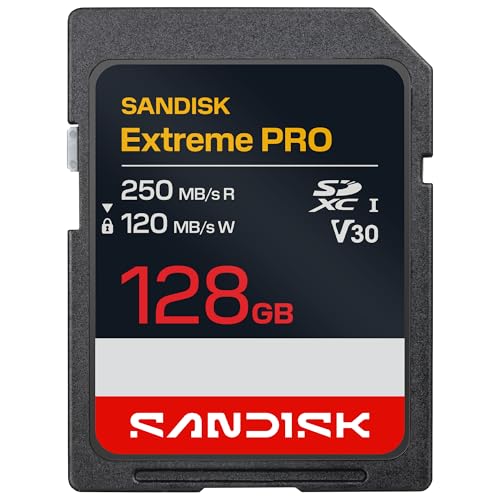
Cards like the SanDisk Extreme PRO SD UHS-I Card offer read speeds up to 250 MB/s, which makes a noticeable difference when offloading large files. If you shoot 8K video or need the fastest possible workflow, consider UHS-II cards like the SANDISK 128GB Extreme PRO SD Memory Card with speeds up to 300 MB/s.
Video Speed Class and Capacity
For video, the video speed class rating (V30, V60, V90) indicates the minimum sustained write speed. V30 cards guarantee at least 30 MB/s, which is sufficient for most 4K footage. If you’re shooting high-bitrate 4K or 8K, opt for V60 or V90 cards to ensure smooth recording without dropped frames.
Capacity matters too, especially if you shoot long events or travel without a laptop. A 128GB card holds roughly 45 minutes of 4K video at 100 Mbps, while a 512GB card gives you room to spare. For action cameras and drones, consider the SanDisk 512GB Extreme microSD UHS-I Card, which offers 5.3K video support.
Durability and Endurance
Memory cards are often used in demanding environments, so durability matters. Look for cards that are temperature-proof, waterproof, shock-proof, and X-ray-proof. For dash cams and security cameras, consider high endurance cards like the SANDISK High Endurance microSD Card, which are built to handle continuous recording for thousands of hours.
If you’re shooting in extreme conditions, check out our guide to rugged SD cards for additional protection. These cards are validated to withstand drops, water, and temperature extremes, so your data stays safe no matter where your work takes you.
Final Thoughts
Choosing the right high performance SD card comes down to your specific needs: if you’re a professional shooting 4K or 8K video, the SANDISK 128GB Extreme PRO SD Memory Card offers unmatched write speeds, while the SanDisk 128GB Extreme PRO SD UHS-I Card delivers a perfect balance of speed and value for most enthusiasts. Both are exceptional picks that will keep up with your creativity.
Frequently Asked Questions
What is the fastest SD card for 4K video?
For 4K video, look for cards with a V30 rating or higher. The SANDISK 128GB Extreme PRO SD Memory Card, with its UHS-II interface and 300 MB/s write speeds, is one of the fastest options available, ensuring your camera never lags.
Are high endurance SD cards worth it for dash cams?
Yes, high endurance cards are essential for dash cams and security cameras because they’re designed to handle continuous recording without degrading. The SANDISK High Endurance microSD cards are built for this purpose, offering up to 40,000 hours of recording time.
What does UHS-I vs UHS-II mean for SD cards?
UHS-I and UHS-II refer to the bus interface, with UHS-II supporting faster data transfer rates. UHS-II cards have two rows of pins and are ideal for professional workflows, while UHS-I cards are more affordable and sufficient for most consumers. Check your camera’s specs to see which one it supports.
How much storage do I need for 4K video?
For 4K video, a 128GB card holds about 45 minutes of footage at standard bitrates. If you plan to shoot extensively, consider a 256GB or 512GB card to avoid running out of space. The SANDISK 512GB High Endurance microSD Card offers ample storage for long recording sessions.