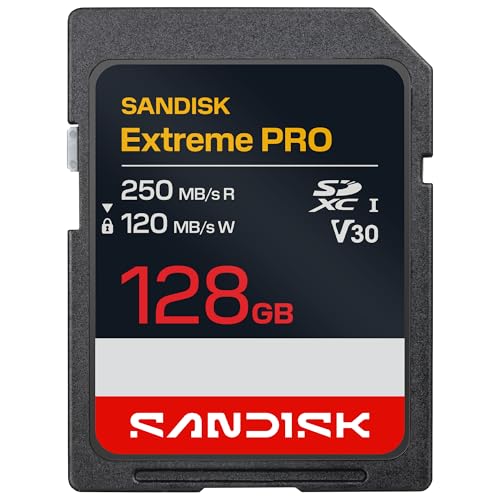
If you are shooting high-resolution video with your mirrorless camera or DSLR, you know the frustration of a slow card. Buffering, dropped frames, and long waits for file transfers can ruin a creative session. That is where V60 SD cards come in. Rated for sustained write speeds of at least 60 MB/s, these cards handle demanding 4K and even some 6K footage without stuttering. In this guide, we evaluate two top contenders: the Lexar 128GB Silver PRO and the SanDisk 128GB Extreme PRO. Both deliver impressive performance, but one is a true V60 card while the other offers a strong V30 alternative. We will help you decide which suits your workflow best. For more on high-performance storage, check out our roundup of top high performance SD cards for photography and video in 2026.


Buying Guide: What to Look for in a V60 SD Card
Video Speed Class Rating
The V60 rating guarantees a minimum sustained write speed of 60 MB/s. This ensures smooth recording of 4K UHD video at high bitrates. Both cards in this review support U3, but only the Lexar Silver PRO carries the V60 badge. The SanDisk Extreme PRO is rated V30, which is fine for most 4K but may struggle with higher frame rates or 10-bit footage. If you work with demanding video codecs, a V60 card like the Lexar is the safer bet.
Read and Write Speeds
Beyond the minimum, peak speeds affect how fast you can transfer files to your computer. The Lexar Silver PRO boasts read speeds up to 280 MB/s and write speeds up to 120 MB/s. The SanDisk Extreme PRO reaches 250 MB/s read and 170 MB/s write (on higher capacities). For photographers shooting bursts of raw images, faster write speeds reduce buffer clearing time. For videographers, quick offloads save precious minutes on set. Both cards use UHS-I interface, but the Lexar is UHS-II compatible, unlocking higher speeds when used with a UHS-II reader.
Capacity and Durability
Capacity matters for long shoots. Both cards come in 128GB, but the SanDisk Extreme PRO is available up to 2TB. The Lexar Silver PRO tops out at 512GB. If you need massive storage for extended 4K recording, SanDisk offers more room. Durability is also key: both are built to withstand temperature extremes, shocks, and X-rays. The SanDisk is rated for rough handling, while Lexar undergoes rigorous validation. For outdoor shoots, consider best rugged SD cards for durable storage.
Compatibility with Your Device
Most modern cameras support UHS-I cards, but UHS-II cards like the Lexar Silver PRO offer backward compatibility at UHS-I speeds. However, to get full UHS-II performance, you need a camera or reader that supports it. The SanDisk is UHS-I only, so it works with all SD slots. Check your camera’s manual to see if it can take advantage of UHS-II. If not, the SanDisk may be a more practical choice. For dash cam or security cam use, see our guide on best high endurance micro SD cards.
Final Thoughts
For videographers who need guaranteed V60 performance, the Lexar 128GB Silver PRO SD Memory Card is the clear winner with its 280 MB/s reads and UHS-II support. If you are a photographer or hybrid shooter who values massive capacity and blazing write speeds (up to 170 MB/s on higher capacities), the SanDisk 128GB Extreme PRO SD UHS-I Card offers outstanding value and reliability. Both cards are excellent choices, but your decision should hinge on whether you require V60 certification and UHS-II compatibility or prefer expandable storage and proven durability.
Frequently Asked Questions
What does V60 mean on an SD card?
V60 is a video speed class that guarantees a minimum sustained write speed of 60 MB/s. This rating ensures smooth recording of 4K UHD video at high bitrates without dropped frames. Cards with V60 are ideal for professional videographers and content creators using advanced mirrorless cameras.
Is the SanDisk Extreme PRO a V60 card?
No, the SanDisk Extreme PRO is rated V30, meaning it guarantees a minimum write speed of 30 MB/s. While it can handle most 4K video, it may not be sufficient for high-bitrate 4K or 6K footage. For V60 performance, choose the Lexar Silver PRO.
Can I use a V60 card in a UHS-I slot?
Yes, V60 cards are backward compatible with UHS-I slots. However, they will operate at UHS-I speeds (up to 104 MB/s) rather than the full UHS-II potential. For maximum performance, use a UHS-II compatible camera or card reader. Check our Cards category for more tips.
Which V60 SD card is best for 2026?
For 2026, the Lexar 128GB Silver PRO remains a top choice due to its V60 rating, high read speeds, and proven reliability. If you need higher capacities, the SanDisk Extreme PRO (though V30) offers up to 2TB and excellent write speeds. Both are highly recommended for different use cases.