

You know the feeling: you want to drill your backhand, but your hitting partner cancels. Or you are a coach who needs a consistent feed for every student. A tennis ball machine solves both problems. In 2026, the market offers smart, portable, and surprisingly affordable options that adapt to your skill level. We reviewed the top models to help you find the best tennis ball machine for your practice style.
Whether you are a beginner working on footwork or an advanced player simulating match rallies, the right machine can transform your training. Our guide covers ten products, from lightweight robots you can carry in one hand to feature-packed launchers with app integration. We evaluated battery life, ball capacity, spin control, and oscillation patterns. For related training gear, check out our best workout mat guide for post-practice stretching.




Buying Guide: What to Look for in a Tennis Ball Machine
Choosing the best tennis ball machine depends on your goals, court access, and budget. Here are the key factors we assessed during our review.
Portability and Weight
A heavy machine that stays in your garage is useless. Look for models under 35 pounds if you haul equipment yourself. The TENNIIX Basic at 18.7 pounds sets a new standard for lightweight design. Larger machines like the LOBSTER Elite Liberty (35 lb) include built-in wheels and a folding handle for smooth transport over curbs.
For those who need to carry their machine up stairs or into a compact car, a portable ball machine with a carry handle or telescoping handle is essential. PUSUN models around 17 to 33 pounds offer a good balance of stability and mobility. If you also use a jump rope for warmups, our best jump rope list can help you build a complete warmup routine.
Battery Life and Runtime
A dead battery mid-session stops your flow. Most machines offer 2 to 6 hours of runtime. The PONGBOT PACE S PRO leads with over 8 hours, perfect for long training sessions or multiple players. The TENNIIX Basic delivers 4 hours with a removable battery, so you can charge a spare while playing. For club or school use, machines with hot-swappable batteries reduce downtime.
Lithium-ion batteries are standard in 2026, but check if the battery is integrated or external. External batteries (like the PUSUN PT-Smart) allow charging separately from the machine. A longer battery life also means fewer interruptions—great for building muscle memory during repetitive drills.
Spin, Speed, and Shot Variety
To simulate real match conditions, you need adjustable topspin, backspin, and speed. Dual-wheel or triple-wheel systems give finer control. The TENNIIX Basic launches up to 75 mph with spin adjustments, while the PUSUN PT-Smart reaches 75 mph with 28 programmable landing points. The LOBSTER Elite Liberty offers spin from heavy topspin to heavy backspin, which is rare at its price point.
Oscillation patterns also matter. Horizontal oscillation moves the ball left and right; random oscillation mimics unpredictable opponents. Advanced machines like the PONGBOT PACE S PRO include smart sensors that adapt the feed based on your previous shot. For building power and endurance, combine machine drills with best weighted jump rope training.
Control Method: App vs. Remote
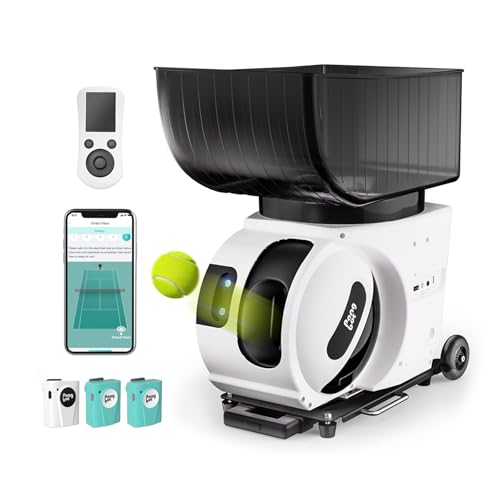
Stopping to adjust settings breaks your rhythm. Modern machines offer remote controls, smartphone apps, or voice control. The TENNIIX Basic uses a wrist controller with 46 voice commands, plus a companion app for fine-tuning. The PUSUN PT-Smart works with both Apple Watch and phone apps, allowing hands-free start/pause. If you value offline simplicity, the LOBSTER Elite Liberty uses a physical remote with easy tactile buttons.
Apps also store custom drill presets. You can repeat the same rally pattern tomorrow without reconfiguring. Some models, like the PONGBOT, let you share drills with a community. Consider how many training modes you realistically need. Nine preset patterns (TENNIIX) cover most needs; the PUSUN Smart offers 12 modes plus a padel mode. For protection during intense drills, see our best wrist wraps article.
Final Thoughts
After reviewing multiple models, we believe the TENNIIX Basic Tennis Ball Machine offers an unbeatable combination of portability, voice control, and training versatility for most solo players. If you need longer battery life and a more extensive drill library for club or academy use, the PONGBOT Tennis Ball Machine stands out with its 8‑hour runtime and adaptive smart sensors. Whichever you choose, a quality ball machine will elevate your practice sessions and help you develop consistent strokes without depending on a partner.
Frequently Asked Questions
How many balls does a tennis ball machine hold?
Most machines hold between 65 and 150 balls. The PUSUN PT-Smart holds 100+, while the PONGBOT PACE S PRO accommodates 150. Larger hoppers mean fewer reloads during a drill session.
Can I use a tennis ball machine on clay courts?
Yes, but ensure the machine has dust‑proofing for clay. The PUSUN PT-Smart and TENNIIX Basic feature sealed electronics that resist clay erosion. The LOBSTER Elite Liberty’s large wheels also roll smoothly on loose surfaces.
What type of balls should I use in a ball machine?
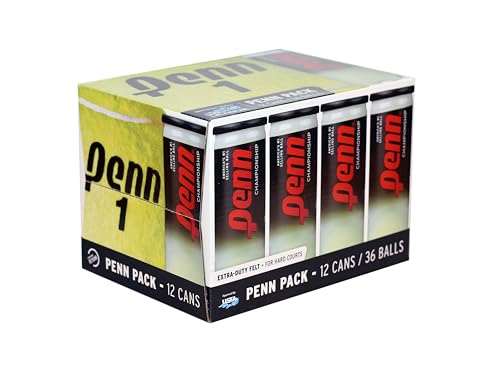
Pressureless balls are best because they maintain bounce consistency and last longer. The Tourna Tennis Ball Tote (50 balls) is a popular choice. Pressurized balls wear out faster and can affect machine performance. For a dedicated practice supply, consider the Penn Championship Tennis Balls for competitive play.
How do I maintain a tennis ball machine in 2026?
Clean the wheels and feed mechanism after each session to prevent dust buildup. Store the machine in a dry place and charge the battery at least once every three months if not used. Most manufacturers provide cleaning instructions. For extra care, some models have removable wheel assemblies for easy access. Pair your machine with a best lifting gloves to protect your hands during long loading sessions.
Remember to use the correct ball type and avoid overfilling the hopper. Routine checks of the oscillation motor and control board will extend the machine’s lifespan. We recommend referencing the user manual for specific maintenance intervals.


