

Picture this: you are sitting in a hotel lobby, airport lounge, or Airbnb, connected to public Wi-Fi. That free network may be convenient, but it is also a playground for hackers. Your passwords, banking details, and personal messages are exposed. A travel VPN router solves this by creating a private, encrypted network for all your devices. In this guide, we review two of the best travel VPN routers for 2026: the TP-Link Roam 6 AX1500 and the GL.iNet GL-SFT1200 Opal. Whether you are a digital nomad or a weekend traveler, these devices keep your connection secure. For more on securing your home network, check out our best WiFi routers for VPN guide.

Buying Guide
Speed and Performance
When you are on the road, you need a router that can handle video calls, streaming, and browsing without lag. The TP-Link Roam 6 AX1500 uses Wi-Fi 6 technology, offering speeds up to 1,201 Mbps on the 5 GHz band. That is ideal for bandwidth-heavy tasks like 4K streaming or large file uploads. The GL.iNet Opal uses AC1200 dual-band Wi-Fi, with 867 Mbps on 5 GHz. It is sufficient for most travel needs, but Wi-Fi 6 gives the Roam 6 a clear edge for future-proofing.
Portability and Design
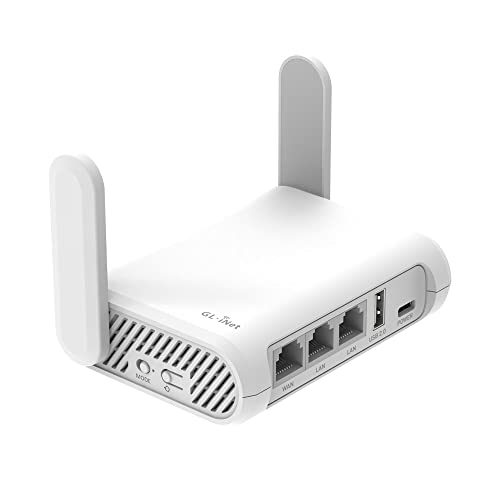
Both routers are pocket-sized, but the GL.iNet Opal is lighter at 145 grams and features retractable antennas for better signal. The TP-Link Roam 6 is also compact and durable, with a USB-C power option that works with power banks. If you prioritize ultra-light packing, the Opal wins. For a rugged build that fits in any bag, the Roam 6 is a solid choice. See our top mobile routers for travel for more compact options.
VPN Support and Security
VPN compatibility is the heart of a travel VPN router. Both models support OpenVPN and WireGuard protocols. The TP-Link Roam 6 also includes a physical toggle for VPN on/off via the Tether App, plus a captive portal login feature that saves time in hotels. The GL.iNet Opal has a dedicated hardware switch to enable VPN instantly once configured. Both routers allow you to connect to 30+ VPN providers. For home setups, read our best VPN routers for home guide.
Ease of Setup and Connectivity Modes
No one wants to spend hours configuring a router in a hotel room. The TP-Link Roam 6 simplifies setup with the Tether App and offers multiple modes: Router, AP, Repeater, and Client. The GL.iNet Opal is also user-friendly, with a web interface and video guides. Both support USB tethering (though Opal does not support EasyTethering). For a deeper look at mobile hotspot routers, visit our best mobile hotspot routers article.
Final Thoughts
Choosing the right travel VPN router depends on your priorities. If you want the fastest Wi-Fi 6 speeds, advanced security features, and a one-step captive portal login, the Roam 6 AX1500 Portable Wi-Fi 6 Travel Router is your best bet for 2026. For a lighter, more budget-friendly option that still delivers reliable VPN protection and dual-band performance, the GL.iNet GL-SFT1200 Opal Travel Router is an excellent companion. Either way, you will travel with peace of mind knowing your data is encrypted.
Frequently Asked Questions
What is a travel VPN router?
A travel VPN router is a portable device that connects to public Wi-Fi and creates a secure, encrypted network for all your gadgets. It routes your traffic through a VPN server, hiding your online activity from snoopers. This is essential for anyone who works remotely or uses hotel Wi-Fi frequently.
Do I need a VPN router for travel?
If you often connect to unsecured networks, a VPN router adds a layer of protection without installing software on each device. It is especially useful for devices that do not support VPN apps, like smart TVs or gaming consoles. For more on securing your whole network, see our best VPN routers guide.
Can I use a travel router without a VPN?
Yes, you can use a travel router as a standard Wi-Fi repeater or access point without enabling VPN. However, doing so leaves you vulnerable on public networks. For maximum safety, we recommend always pairing a travel router with a VPN service.
How do I set up a VPN on a travel router?
Most travel routers come with built-in VPN client support. You enter your VPN provider’s server details (OpenVPN or WireGuard) in the router’s admin panel. Both the TP-Link Roam 6 and GL.iNet Opal have straightforward setup wizards. Once configured, the router encrypts all traffic automatically.


