

You want to protect your entire home network with a VPN, but your current router doesn’t support it. A VPN router handles encryption at the hardware level, securing every device without per-app configuration. This guide covers the best VPN routers for 2026 from top brands like TP-Link and GL.iNet. Whether you need a powerful tri-band router for gaming and streaming or a compact travel companion for secure browsing on the go, we have you covered. Explore our full collection of router reviews at Routers.

Pros
- WiFi 6E delivers future-proof performance with access to the uncongested 6 GHz spectrum for faster, more stable connections
- Exceptional value at this price point for a tri-band router with PCMag Editors' Choice recognition
- Superior device capacity with 4x increase in simultaneous connections through OFDMA technology
- Robust security features including VPN server and client support plus HomeShield protection at no extra cost
- Excellent customer support with 24/7 availability and extended 3-year warranty coverage
Cons
- Requires a separate modem for most internet service providers, adding to overall setup costs
- 6 GHz band adoption still limited as many devices lack WiFi 6E compatibility, though backward compatibility ensures broad device support
- Advanced features like VPN and HomeShield premium features may require technical knowledge for optimal configuration
The TP-Link Archer AXE75 represents a significant leap forward in home networking, bringing WiFi 6E technology to users who demand next-generation performance. This tri-band router is engineered for households with multiple devices, gamers seeking competitive advantages, and streaming enthusiasts who refuse to compromise on speed or reliability.
What sets the AXE75 apart is its access to the new 6 GHz band, which provides a dedicated, interference-free channel for your most demanding tasks. The 5400 Mbps total bandwidth is distributed across three bands, with 2402 Mbps on both the 6 GHz and 5 GHz bands, plus 574 Mbps on 2.4 GHz. This architecture, combined with OFDMA technology, increases device capacity by four times compared to standard routers, meaning you can connect significantly more devices without experiencing slowdowns or lag.
The hardware design emphasizes longevity and reliability, featuring a 1.0 GHz dual-core CPU, 512 MB of high-speed memory, and an optimized housing design for superior heat dissipation. These specifications translate to consistent performance during extended use and fewer connection drops during peak usage times. EasyMesh compatibility allows you to expand your network seamlessly by adding compatible routers or extenders, effectively eliminating dead zones throughout your home.
Security and privacy features are comprehensive, including VPN server and client support for OpenVPN, PPTP, and L2TP protocols. The included HomeShield service provides network security scanning, IoT device identification, and parental controls at no additional cost, with premium features available for enhanced protection. Universal ISP compatibility means the router works with virtually every major internet provider without requiring proprietary equipment.
The primary consideration is that most ISPs require a separate modem, and full benefits require devices that support WiFi 6E, though backward compatibility ensures excellent performance with existing devices. At this price point with PCMag Editors' Choice recognition, the AXE75 delivers exceptional value for anyone ready to upgrade to next-generation wireless technology.
Performance: Total WiFi Speed: 5400 Mbps (6 GHz: 2402 Mbps, 5 GHz: 2402 Mbps, 2.4 GHz: 574 Mbps). Processor: 1.0 GHz Dual-Core CPU. Memory: 512 MB High-Speed RAM.
Connectivity: WiFi 6E Tri-Band Router. Gigabit Ethernet ports for wired connections. EasyMesh compatible for network expansion. Works with all major ISPs including Comcast, Verizon, AT&T, Charter, Xfinity, Spectrum, and others.
Security: VPN Server and Client support (OpenVPN, PPTP, L2TP). TP-Link HomeShield with basic network security, IoT device identification, parental controls, and quality of service management.
Support: 24/7 technical support. 3-year warranty coverage. EasyMesh technology for seamless whole-home mesh network expansion.
Best For: Power users, gamers, content creators, and households with 10+ connected devices. Ideal for those seeking future-proof WiFi 6E technology, low-latency gaming, 4K streaming, and comprehensive network security without monthly subscription fees.
Consider If: You have a large home with multiple dead zones, rely on multiple simultaneous high-bandwidth activities, need VPN capabilities for privacy, or want access to the latest WiFi standard at an affordable price.
May Not Be Right If: You only need basic WiFi for light browsing and email, have a very small space, or your devices don't support WiFi 6E (though backward compatibility with older devices is fully supported).
Buying Guide
VPN Performance and Protocol Support
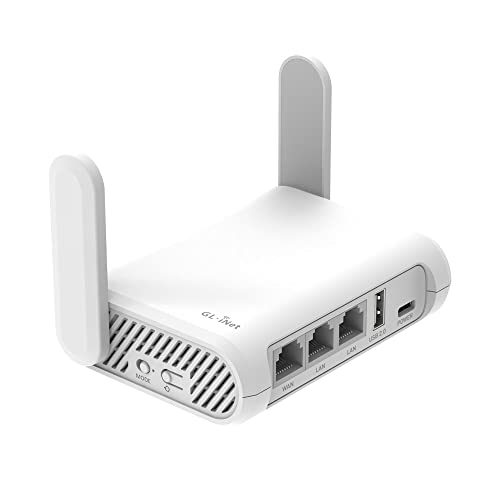
For a VPN router, the ability to handle encryption without slowing down your connection is critical. Look for routers that support OpenVPN and WireGuard out of the box. WireGuard offers faster speeds and modern security, while OpenVPN remains widely compatible. The TP-Link AXE5400 includes a VPN server and client for OpenVPN, PPTP, and L2TP, giving you flexibility. The GL.iNet Opal comes with OpenVPN and WireGuard pre-installed and even has a physical toggle to enable VPN instantly.
Both routers we reviewed handle VPN traffic smoothly, but the TP-Link’s faster processor and dedicated RAM ensure minimal speed loss during encrypted transfers. For more tips on optimizing your network, visit our Blog.
Wi-Fi Coverage and Speed
A VPN router must also deliver strong wireless performance. The TP-Link AXE5400 is a tri-band WiFi 6E router with speeds up to 5400 Mbps, including the new 6 GHz band for near-zero latency. It’s ideal for large homes with many devices. In contrast, the GL.iNet Opal is a dual-band AC1200 model, offering 300 Mbps on 2.4 GHz and 867 Mbps on 5 GHz. It’s more suited for travel or small apartments where coverage is less demanding.
If you need whole-home coverage, the TP-Link also supports EasyMesh for extending range with compatible devices. For compact setups, the Opal’s retractable antennas improve signal in tight spaces.
Ease of Setup and Management
Setting up a VPN router should not require a degree in networking. The GL.iNet Opal is designed for travelers: you can configure VPN profiles via a simple web interface or the GL.iNet app, and the physical toggle switch lets you enable VPN with one click. The TP-Link AXE5400 uses the TP-Link Tether app for easy management, and its HomeShield security features add parental controls and network protection.
Both routers provide intuitive dashboards. For step-by-step guides, check our Blog for additional walkthroughs.
Portability and Use Cases
Your choice depends on where you plan to use the router. The GL.iNet Opal weighs only 145 grams and fits in a pocket, making it perfect for hotels, cafes, or public Wi-Fi hotspots. It can convert a public network into a private secured Wi-Fi, and its VPN toggle ensures your data stays encrypted even on untrusted connections.
The TP-Link AXE5400 is a full-sized home router meant for stationary use. Its unique housing design dissipates heat efficiently, and the 1.0 GHz dual-core CPU handles simultaneous VPN connections for multiple devices. If you work from home and require consistent VPN performance, this model is a reliable choice.
Final Thoughts
Choosing the best VPN router comes down to your specific needs. For a powerful, future-proof home network that handles VPNs without sacrificing speed, the TP-Link AXE5400 Tri-Band WiFi 6E Router is an excellent investment. If you travel frequently or need a portable solution for secure browsing on public Wi-Fi, the GL.iNet GL-SFT1200 Opal Travel Router offers remarkable value in a compact form. Both routers deliver verified VPN performance and are among the top picks for 2026.
Frequently Asked Questions
Do all routers support VPNs?
Not all routers have built-in VPN support. Many consumer routers can be flashed with custom firmware like DD-WRT or OpenWrt to enable VPN capabilities, but that requires technical know-how. The models we reviewed come with VPN client and server features pre-installed, making setup straightforward. For more router recommendations, visit our Routers category.
Can I use a VPN router with any internet service provider?
Yes, VPN routers work with any ISP as long as you have a modem or gateway that connects to the internet. The TP-Link AXE5400 is compatible with all major providers like AT&T, Verizon, Xfinity, and more. The GL.iNet Opal also works with any ISP, and its compact design makes it easy to use with hotel or public Wi-Fi.
What is the best VPN router for travel in 2026?
For travel, the GL.iNet GL-SFT1200 Opal is our top pick. It’s lightweight, has a physical VPN toggle, and can repeat public Wi-Fi while encrypting your traffic. Its dual-band AC1200 speeds are sufficient for streaming and browsing on the go. If you need faster speeds and are willing to carry a larger device, the TP-Link AXE5400 can also be used in travel settings, but it’s less portable.
How do I set up a VPN on my router?
Setting up a VPN on a router typically involves logging into the router’s admin panel, navigating to the VPN section, and entering the server details from your VPN provider. Both the TP-Link and GL.iNet routers offer guided wizards. The GL.iNet Opal even has a dedicated toggle switch to enable VPN instantly after configuration. Always refer to the user manual for your specific model.


