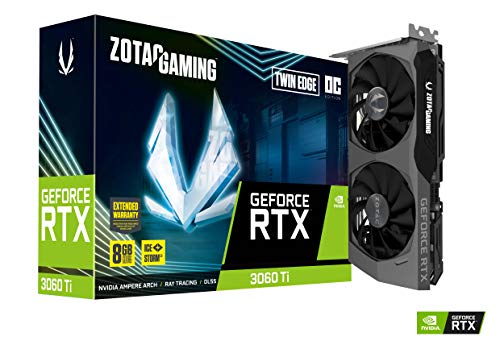
Whether you are training large AI models, rendering complex 3D scenes, or editing 8K video, a reliable workstation graphics card is the backbone of your productivity. The market now offers options from NVIDIA and ASRock with cutting-edge architectures, massive memory pools, and professional features. In this review, we have evaluated four top contenders to help you find the ideal match for your workflow. For a broader look at the category, check out our best workstation graphics cards guide.
From the flagship NVIDIA RTX PRO 4000 Blackwell with 24GB GDDR7 and PCIe 5.0 to ASRock’s Intel Arc Pro B60 with 24GB GDDR6, each card targets specific professional needs. We cover their architectures, memory, cooling, and connectivity to simplify your decision.


Buying Guide: What to Look for in a Workstation Graphics Card
VRAM Capacity for AI and Large Datasets
When running LLMs or generative design tools, VRAM often becomes the bottleneck. Cards with 24GB or 32GB let you load larger models locally and avoid out-of-memory errors. The ASRock Radeon AI PRO R9700 and Intel Arc Pro B70 each offer 32GB GDDR6, while the NVIDIA RTX PRO 4000 provides 24GB of faster GDDR7. For architecture workloads, see our top graphics cards for architecture.
Architecture and AI Accelerators
Modern workstation GPUs integrate dedicated AI cores. NVIDIA’s Blackwell architecture with ray tracing, AMD’s RDNA 4 with second-gen AI accelerators, and Intel’s Xe2-HPG with XMX engines all accelerate inference and rendering. The NVIDIA RTX PRO 4000 excels in AI frameworks like PyTorch, while ASRock’s Intel Arc Pro cards deliver strong performance in media encoding and AV1 support.
Cooling and Form Factor for Multi-GPU Setups
For server racks or dense workstation builds, single-slot or blower-style coolers are ideal. The NVIDIA RTX PRO 4000 is a single-slot full‑height card, while all three ASRock models use efficient blower fans with vapor chambers. This design exhausts heat out of the chassis, keeping internals cool during sustained loads. If you need multiple GPUs, the compact 2‑slot form factor of ASRock cards maximizes density.
Connectivity and PCIe Generation
PCIe 5.0 support ensures maximum bandwidth for data transfer and future‑proofing. All four cards here utilize PCIe 5.0 x16, and they offer multiple DisplayPort 2.1 outputs (2.1b on NVIDIA, 2.1a on AMD, and 2.1 on Intel). This allows you to drive multiple high‑resolution professional monitors. For more on workstation GPU standards, visit our Cards category page.
Final Thoughts
After assessing each card’s specs and target use cases, we recommend the NVIDIA RTX PRO 4000 Blackwell Graphics Card for professionals who need top-tier AI performance, ray tracing, and single‑slot density. For those seeking massive memory at a more accessible price, the ASRock Intel Arc Pro B60 Creator 24GB Graphics offers 24GB GDDR6 and solid AI acceleration, making it an excellent choice for budget‑conscious workstation builders.
Frequently Asked Questions
What is the best VRAM size for workstation graphics cards in 2026?
For most professional workloads, 24GB is the new baseline. If you work with large AI models, 32GB or more provides extra headroom. The ASRock Radeon AI PRO R9700 and Intel Arc Pro B70 both offer 32GB, while the NVIDIA RTX PRO 4000 delivers 24GB of faster GDDR7 memory.
Are workstation graphics cards with blower cooling better for multiple GPUs?
Yes, blower-style coolers exhaust heat directly out of the chassis, preventing hot air from recirculating inside the case. This makes them ideal for multi-GPU workstation builds or server racks. All three ASRock cards reviewed here use advanced blower fans with vapor chambers or phase-change thermal material.
Do I need PCIe 5.0 for a workstation GPU in 2026?
While PCIe 4.0 still works for most applications, PCIe 5.0 doubles bandwidth and future-proofs your system for upcoming software. All four cards in this roundup support PCIe 5.0, ensuring maximum data transfer rates with compatible motherboards. For more guidance, browse our Cards category.
Which workstation GPU is best for AI inference?
NVIDIA’s Blackwell architecture with dedicated AI accelerators and 24GB GDDR7 is highly optimized for AI inference. The ASRock Intel Arc Pro B70 with 32GB and XMX engines also performs well, especially for INT8 workloads. Choose based on your specific framework and model size requirements.