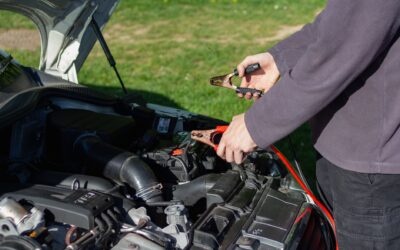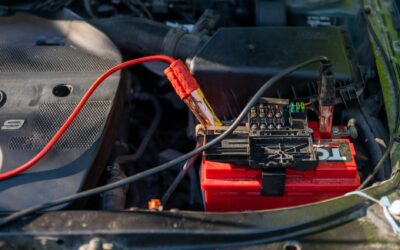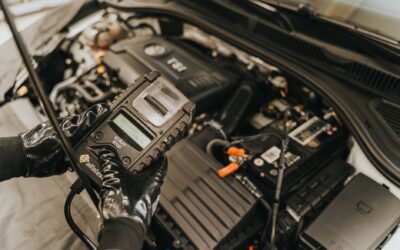
A car battery charger for AGM battery must be a smart charger with a dedicated AGM mode to deliver the correct voltage and current profile. AGM (Absorbent Glass Mat) batteries are more sensitive to overcharging than conventional flooded batteries, so using a standard charger can damage them or shorten their lifespan. A smart charger automatically adjusts its output to match the battery’s state, preventing overvoltage and ensuring a full, safe charge.


Pros
- Versatile 12V/24V compatibility with lead-acid, AGM, gel, and LiFePO4 batteries.
- Adjustable current from 2A to 25A plus Auto mode for precise charging.
- Booster mode offers emergency jump-start assistance for 12V batteries.
- Aluminum housing and cooling fan deliver durable, heat-resistant performance.
- 8-stage repair mode helps extend battery life.
Cons
- Booster mode does not work on 24V batteries, limiting its emergency use for some trucks and equipment.
- No customer reviews yet, so long-term reliability is not yet proven.
- At 3.7 pounds, it is heavier than some plastic maintainers, which could be less convenient for portable use.
The E-FAST 25A Smart Car Battery Charger is a heavy-duty charging solution designed for vehicles that demand more power than standard maintainers can supply. It works with both 12V and 24V systems and is compatible with a wide range of battery types including lead-acid, AGM, gel, and LiFePO4. This is a strong fit for truck, SUV, boat, and RV owners who need fast and reliable charging.
What sets this charger apart is its combination of speed and control. It delivers up to 25A for 12V batteries and 15A for 24V batteries, significantly cutting charge time. The five adjustable current settings let you choose from 2A for small batteries like motorcycles and lawn mowers up to 25A for larger 75-400AH batteries, while Auto mode uses internal resistance to pick the optimal rate.
The built-in Booster Mode delivers a 200-second surge current to revive a completely dead 12V battery, making it a practical emergency tool. The 8-stage charging process includes a dedicated 16-hour repair mode that helps reduce sulfation and extend battery life. Temperature sensors adjust charging voltage for winter and summer conditions, and safety protections guard against reverse polarity, sparks, and short circuits.
Build quality is another strong point. The charger is housed in a rugged aluminum alloy shell rather than plastic, and it includes a cooling fan to manage heat during high-amp operation. At 3.7 pounds, it feels substantial, and the dimensions of 8.5 by 4.9 by 7.5 inches make it easy to place in a garage or shop.
One limitation is that Booster Mode works only for 12V batteries, not for 24V systems, so owners of larger trucks may need to keep that in mind. Also, because this is a newer product with no customer reviews yet, there is little field feedback on long-term durability. Still, for its combination of rapid charging, adjustable control, repair modes, and sturdy aluminum casing, the E-FAST 25A offers a compelling package for anyone serious about battery maintenance.
Color: Red
Dimensions: 8.5 x 4.9 x 7.5 inches
Weight: 3.7 pounds
Compatibility: 12V and 24V systems with Lead-Acid (AGM, GEL, SLA, Flooded, EFB) and LiFePO4 batteries
Charge Output: 25A for 12V, 15A for 24V
Adjustable Current: 2A, 8A, 20A, 25A, Auto Mode
Booster Mode: 200-second surge for 12V batteries only
Charging Stages: 8-stage with 16-hour Repair Mode

Pros
- Automatic float mode prevents overcharging and extends battery lifespan.
- Versatile compatibility with lead acid, AGM, gel, and lithium batteries.
- Safety features include spark-proof connection and reverse polarity detection.
- Long 11-foot cord reach allows convenient placement away from the battery.
- Compact size makes it easy to store and use in small spaces.
Cons
- 5 amp output may be slow for deeply discharged large batteries.
- LED indicator is two-color only, not as detailed as some digital displays.
- Alligator clips could be more robust for heavy-duty use.
The Battery Tender 5 Amp 12V Charger and Maintainer is a smart automatic charger designed for car, SUV, and truck batteries. It supports lead acid, AGM, gel, and lithium chemistries, making it a versatile choice for most vehicle owners. This charger is perfect for anyone who wants a reliable, low-maintenance solution to keep batteries topped off.
Its standout feature is the automatic float mode, which prevents overcharging by switching to a maintenance charge once the battery is full. The ISM adaptive charging also ensures that if the battery voltage drops under load, the charger resumes full output. In real-world use, this means you can connect it and forget it, confident that your battery stays healthy.
The charger is compact and lightweight, weighing only 1.44 pounds, with a combined 11 feet of cord reach. The build quality is solid, with spark-proof reverse polarity protection for safe connections. It includes both ring terminal and alligator clip cables, giving you flexibility in how you attach it to the battery.
One potential drawback is the 5 amp output, which may be slow for deeply discharged large batteries. The two-color LED indicator provides basic status info but lacks the detail of a digital display. Also, the alligator clips feel adequate but not exceptionally heavy-duty.
Overall, the Battery Tender 5 Amp Charger is a dependable choice for maintaining batteries in vehicles that are stored or used occasionally. Its safety features and automatic operation make it a valuable tool for any garage. We recommend it for its ease of use and long-term reliability.

Why AGM Batteries Require a Different Charging Profile
AGM batteries have a lower internal resistance and a different electrolyte absorption method than flooded batteries. This means they accept charge more quickly but also risk overheating if the charging voltage exceeds around 14.7 volts. A standard charger designed for flooded batteries often applies a constant voltage that can push an AGM battery into thermal runaway.
Smart chargers with an AGM setting use a multi-stage process: bulk, absorption, and float. The absorption stage is kept at a precise voltage (typically 14.4 to 14.7 volts) and then drops to a lower float voltage (around 13.2 to 13.5 volts) to maintain the charge without overcharging. This tailored approach is essential for AGM longevity.
The Risk of Using a Conventional Charger on an AGM Battery
If you connect a conventional car battery charger to an AGM battery, the charger may not detect when to reduce current. AGM batteries can be permanently damaged by sustained high voltage, leading to reduced capacity or complete failure. Overcharging also causes excessive gassing, which AGM batteries are designed to minimize, and can dry out the electrolyte.
Many modern chargers marketed as “automatic” still lack a specific AGM program. They may work for flooded batteries but fail to switch to an appropriate float voltage for AGM. Always check the charger’s specifications or mode selection before connecting.
Key Features to Look for in a Car Battery Charger for AGM Battery
When shopping for a car battery charger for AGM battery, look for a unit that explicitly lists an AGM or Gel mode. The charger should be a smart or microprocessor-controlled model that automatically selects the correct charging profile based on battery type. Temperature compensation is another important feature, as AGM batteries are sensitive to heat and cold.
Charging current matters too. A charger that delivers too high an amperage can overheat an AGM battery. A good rule is to choose a charger with an output between 10 and 20 amps for most automotive AGM batteries, unless the manufacturer specifies a higher rate. A lower amp charger (e.g., 5 amps) is safer for maintenance charging.
How Battery Age and Condition Affect Charging Needs
An older or deeply discharged AGM battery may require a different charging approach. Some smart chargers have a recovery or desulfation mode that can revive a battery that has been left flat for too long. However, if the battery voltage has dropped below a certain threshold (usually around 10.5 volts), many chargers will refuse to charge it for safety reasons.
It is also wise to test the battery’s state of health before charging. A battery that holds a surface charge but quickly drops under load may need replacement rather than a simple recharge. A smart charger can help diagnose this by reporting the battery’s voltage and charge acceptance.
How to Fix or Avoid Charging Issues with Your AGM Battery
- Always use a smart charger with a dedicated AGM mode.
- Verify the charger’s voltage settings: absorption around 14.4-14.7V, float around 13.2-13.5V.
- Choose a charger with temperature compensation for extreme climates.
- Select a charging current that matches your battery’s capacity (typically 10-20% of amp-hour rating).
- Monitor the battery’s voltage before charging; if below 10.5V, consider a charger with recovery mode or replace the battery.
- Disconnect the battery from the vehicle before charging to avoid interference from onboard electronics.
For more detailed guidance on selecting the right charging equipment, visit our automotive category where you will find reviews and comparisons of reliable chargers and other vehicle maintenance tools.
Related Guides
Frequently Asked Questions
Can I use a regular car battery charger on an AGM battery?
It is not recommended. A regular charger may overcharge the AGM battery because it lacks a specific AGM voltage profile. Overcharging can cause permanent damage, reduced lifespan, or even safety hazards like thermal runaway. Always use a charger with an AGM or smart mode.
What is the ideal charging voltage for an AGM battery?
The ideal absorption voltage is typically between 14.4 and 14.7 volts, with a float voltage of 13.2 to 13.5 volts. These values ensure a full charge without overcharging. Always check the battery manufacturer’s specifications, as some high-performance AGM batteries may have slightly different requirements.
How long does it take to charge an AGM battery with a smart charger?
Charging time depends on the battery’s capacity, depth of discharge, and charger amperage. A 50Ah AGM battery charged at 10 amps may take 5-6 hours from a deeply discharged state. A smart charger will automatically slow down as the battery reaches full charge to avoid overcharging.
What happens if I overcharge an AGM battery?
Overcharging an AGM battery causes excessive gassing, which can dry out the electrolyte and lead to internal damage. The battery may swell, lose capacity, or fail completely. In extreme cases, thermal runaway can occur, posing a fire risk. A smart charger with AGM mode prevents this.
Can I use a car battery charger for AGM battery on a flooded battery as well?
Yes, many smart chargers with an AGM mode also have a setting for flooded batteries. The charger will adjust its voltage and current profile accordingly. However, if the charger only has an AGM mode, it may not be optimal for a flooded battery because the float voltage might be too low.
Choosing the right car battery charger for AGM battery is about matching the charger’s charging profile to the battery’s chemistry and condition. A smart charger with an AGM mode is the only safe and effective option. For more in-depth reviews and comparisons of top chargers, explore our automotive category to find the best tools for your vehicle maintenance needs.