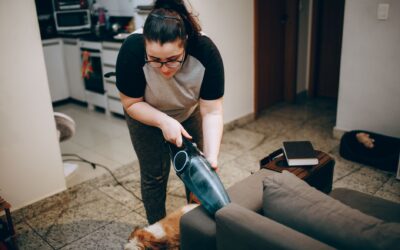
A cordless vacuum for stairs works best when it is light enough to carry one-handed and compact enough to balance on a step. The key is not raw suction power but how easily you can maneuver the nozzle into corners and along risers. Most people find that a stick model with a detachable hand vac, or a small handheld unit, handles steps far better than a full-size upright. Before you buy, focus on weight, runtime, and the attachments included, because those features decide how often you actually use it.
Why Stairs Are a Unique Cleaning Challenge
Stairs combine several problems at once: they are vertical, narrow, and often have edges that trap dust and pet hair. A corded vacuum forces you to manage a cord while balancing, which is awkward and risky. A heavy vacuum strains your wrist and shoulder as you lift it from step to step. That is why a cordless vacuum for stairs needs to feel almost weightless in your hand, even if it means sacrificing a little power.
Beyond weight, the shape of the cleaning head matters. A wide floor nozzle is useless on a narrow step. You need a slim nozzle or a brush tool that can reach into the crevice where the tread meets the riser. Without that reach, you will end up on your hands and knees with a cloth, which defeats the purpose of a vacuum.
Weight and Balance: The Most Important Factor
When you carry a vacuum up and down stairs, every extra pound multiplies. A cordless stick vacuum that feels fine on a flat floor becomes unwieldy after ten steps. Look for a model where the motor and battery are positioned near the handle, so the weight stays close to your grip rather than at the floor end. That balance makes a huge difference when you are reaching over your head to clean a landing.
Handheld vacuums are the lightest option, often weighing under three pounds, but they have smaller dust cups and shorter runtimes. If you have a large staircase or multiple levels, a stick vacuum with a detachable handheld unit gives you the best of both worlds: a long reach for steps and a compact tool for tight corners. Test the weight in a store if you can, because the spec sheet number does not tell you how it feels in motion.
Runtime and Charging: Don’t Get Caught Mid-Staircase
A cordless vacuum for stairs needs enough runtime to finish the job in one session. Most staircases take five to ten minutes to vacuum thoroughly, so a 20-minute runtime is usually plenty. But if you also plan to use the same vacuum for car interiors or above-floor cleaning, look for a model with at least 30 minutes on a full charge. Battery technology varies widely, and some budget models drop off significantly after a year of use.
Check whether the battery is removable. A removable battery lets you buy a spare and swap it mid-task, which is a lifesaver in a large home. It also means you can replace the battery when it degrades instead of throwing away the whole vacuum. Some models have a battery indicator light, so you are not caught off guard when the power fades halfway up the stairs.
Attachments and Tools: The Real Performance Difference
The right attachment turns a mediocre vacuum into a stair-cleaning champion. A crevice tool is essential for the gaps between the tread and riser, and along baseboards. A motorized brush roll helps lift pet hair from carpeted stairs, but it adds weight and can be hard to maneuver on narrow steps. A rubber or silicone brush is often better for hardwood stairs because it does not scratch the finish.
Look for a vacuum that stores its attachments on board, so you do not have to carry them separately or go back to the charging dock mid-cleaning. Some models have a clip for the crevice tool right on the wand, which is a small detail that makes a big difference in convenience. If the attachments are hard to click on and off, you will skip them and leave dirt behind.
Filtration and Dust Management
Stairs are often a high-traffic area with dust, pet dander, and tracked-in dirt. A vacuum with a HEPA filter traps those particles instead of blowing them back into the air. This matters especially if you or someone in your home has allergies or asthma. The filter should be washable, so you do not have to buy replacements frequently.
The dust cup size is another consideration. A tiny cup fills up fast on carpeted stairs, forcing you to empty it mid-task. Look for a cup that is at least 0.5 liters, and check how easy it is to empty. A one-touch release that opens from the bottom is far more convenient than a cup you have to pull apart and tap out over a trash can.
How to Test a Cordless Vacuum for Stairs
If you are shopping online, read user reviews that specifically mention stairs. Look for comments about weight, balance, and whether the vacuum tips over when placed on a step. If you can visit a store, try lifting the vacuum with one hand and imagine carrying it up a flight of stairs. Run it on a carpeted step if possible, and check how well the nozzle hugs the corner.
Pay attention to the noise level as well. A loud vacuum is unpleasant to use for even five minutes, especially in a hallway where sound echoes. Some models have a quiet mode that reduces suction but is still effective for light dust on stairs. The best cordless vacuum for stairs is the one you will actually use regularly, so comfort and convenience matter more than peak suction specs.
How to Fix the Most Common Stair-Vacuuming Problems
- If the vacuum feels too heavy, switch to a handheld model or one with a detachable hand vac for stairs.
- If you miss the crevice between tread and riser, use a crevice tool or a narrow brush attachment every time.
- If the battery dies before you finish, look for a model with a removable battery and keep a spare charged.
- If pet hair clings to carpeted stairs, use a motorized brush roll or a rubber bristle tool designed for pet hair.
- If dust blows back into the air, choose a vacuum with a HEPA filter and empty the dust cup before it gets full.
Choosing the right tool is half the battle, but knowing how to use it is the other half. For a deeper look at what makes a cordless vacuum effective for pet hair, see our guide on cordless car vacuum for pet hair. That article explains the same principles of suction, brush design, and filtration that apply to stairs.
Frequently Asked Questions
Can I use a regular cordless vacuum on stairs?
Yes, but you may need to switch to a handheld mode or use a crevice tool for the edges. Full-size stick vacuums are often too bulky to balance on a step, so a detachable hand vac is more practical. If your vacuum does not have a handheld mode, consider a separate small handheld unit for stairs.
Is a handheld vacuum enough for stairs?
A handheld vacuum is often sufficient for small staircases or quick touch-ups. It is lightweight and easy to carry, but it may lack the suction power for deep cleaning of carpeted stairs. If you have a large home or heavy pet hair, a stick vacuum with a handheld attachment is a better all-rounder.
How long should a cordless vacuum battery last for stairs?
Most staircases take 5 to 10 minutes to vacuum, so a battery that lasts at least 20 minutes is sufficient. If you plan to use the vacuum for other tasks, look for 30 minutes or more. A removable battery is a plus, as you can swap in a spare if needed.
What is the best way to vacuum carpeted stairs?
Use a motorized brush roll to lift dirt and pet hair from the carpet fibers. Work from the top step down, using a crevice tool along the edges and corners. Go slowly to give the brush time to agitate the carpet, and empty the dust cup frequently to maintain suction.
Related Guides
Final Thoughts
Choosing a cordless vacuum for stairs comes down to weight, reach, and the right attachments. A light model with a crevice tool and a detachable hand unit will make the job quick and painless. For more guidance on selecting a vacuum that handles pet hair effectively, check out our cordless car vacuum for pet hair guide.