To inflate car tires, start by checking the recommended PSI (pounds per square inch) listed on the driver’s side doorjamb sticker or in your owner’s manual. Then, use an air compressor or tire inflator to add air until the gauge reads the correct pressure. Always check and adjust pressure when tires are cold—meaning the car hasn’t been driven for at least three hours—for the most accurate reading. This simple routine helps maintain proper handling, fuel efficiency, and tire lifespan.

Checking Your Tire Pressure Correctly
Before you add any air, you need a reliable tire pressure gauge. Digital gauges are easy to read, while analog stick gauges are inexpensive and durable. Remove the valve cap from the tire, press the gauge firmly onto the valve stem, and read the pressure.
If the reading is below the recommended PSI, you need to inflate. If it is above, you must release air by pressing the pin in the center of the valve stem. Always check all four tires, including the spare if your vehicle has one, and record each reading so you can spot slow leaks later.
Finding the Correct PSI for Your Vehicle
The ideal tire pressure for your car is not the number molded into the tire sidewall. That figure is the maximum pressure the tire can hold, not the recommended operating pressure. Instead, look for a sticker on the driver’s side doorjamb, inside the fuel door, or in the glove box.
The owner’s manual also lists the correct PSI for front and rear tires. Many modern cars specify different pressures for front and rear axles, especially if the vehicle is often loaded with cargo or passengers. Use that exact number when inflating.
Using a Gas Station Air Compressor
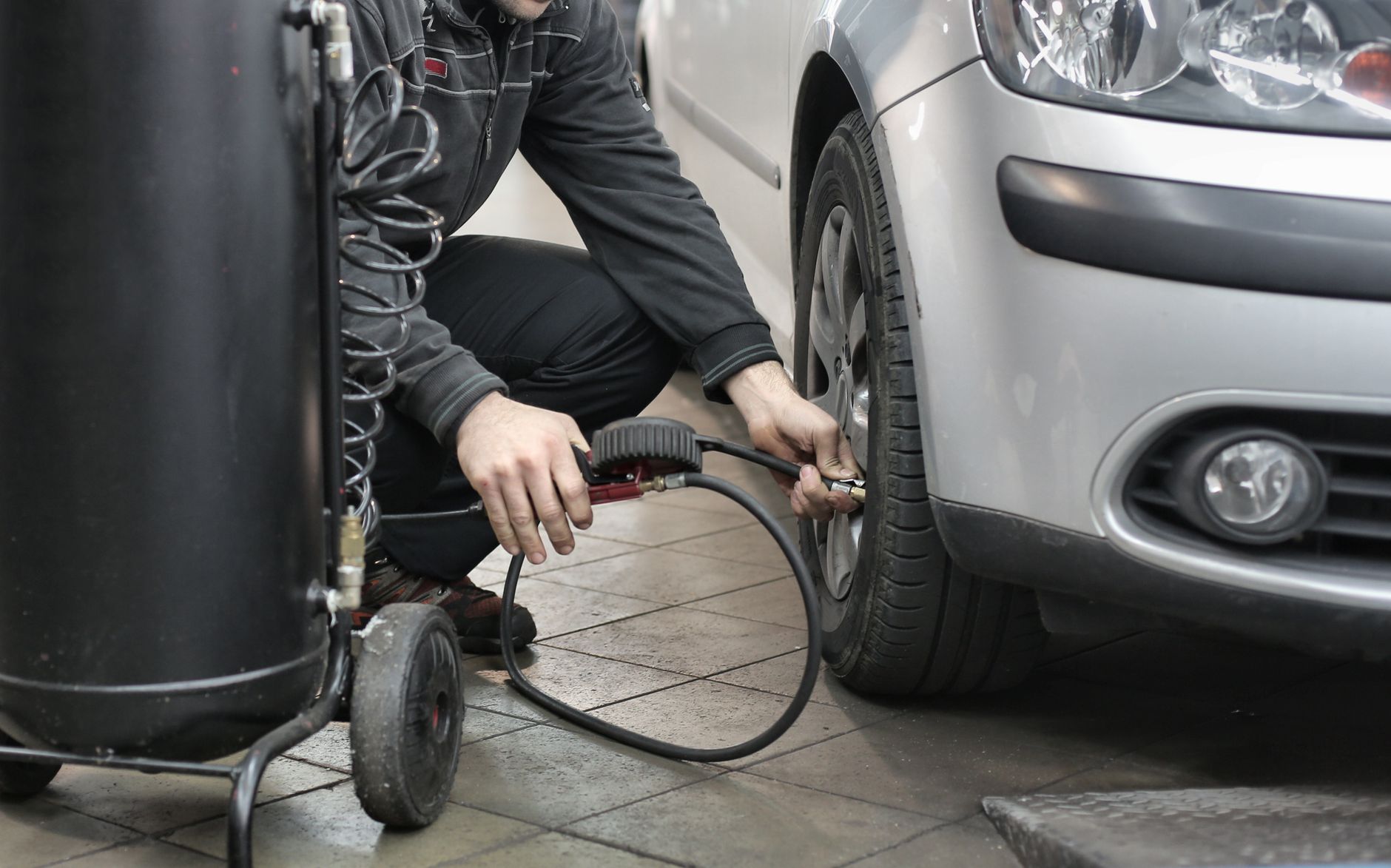
Gas station air compressors are the most common way to inflate tires on the go. Park your car so that all tires reach the hose, and check the pressure before adding air. Insert coins or use the digital payment system if required, then set the desired PSI on the machine if it has an auto-stop feature.
Attach the air hose to the valve stem firmly and squeeze the trigger. Inflate in short bursts, checking the pressure frequently with your own gauge, because station gauges are often inaccurate. Once the tire reaches the correct pressure, replace the valve cap and move to the next tire.
Using a Portable Tire Inflator at Home
Portable tire inflators plug into your car’s 12-volt outlet (cigarette lighter) or a household wall socket. They are convenient for topping off pressure in your driveway or garage without driving to a station. Make sure the inflator has a built-in pressure gauge or use your own to set the target PSI.
Attach the hose to the valve stem, turn on the device, and let it run until the gauge reads the correct pressure. Many inflators automatically shut off when the set PSI is reached. After inflating, check the pressure with a separate gauge to confirm accuracy, then replace the valve cap.
Adjusting Pressure After Inflation
After you add air, the tire pressure will rise as the tire warms up during driving. If you inflated when the tires were cold, the pressure may increase by 1 to 2 PSI after a few miles. That is normal and safe, as long as it stays below the maximum sidewall pressure.
If you accidentally overinflate, press the pin in the valve stem with the back of the gauge or a small tool to release air. Recheck the pressure until it matches the recommended PSI. Always double-check all four tires after a long drive to ensure they are within range.
When to Inflate Your Tires (Regular Maintenance)
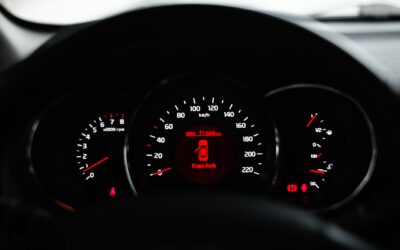
Check tire pressure at least once a month and before any long road trip. Seasonal temperature changes cause pressure to drop roughly 1 PSI for every 10°F decrease in temperature, so expect to add more air in winter months. The tire pressure warning light on your dashboard signals a significant loss—check all tires immediately.
Also inspect tires visually for bulges, cuts, or embedded objects that could cause leaks. Maintaining proper pressure not only improves safety but also extends tread life and saves fuel, making it one of the easiest car maintenance tasks you can perform.
How to Fix Common Inflation Issues
- Check pressure with a calibrated gauge before adding air.
- Find the correct PSI on the doorjamb sticker, not the tire sidewall.
- Use a gas station compressor or portable inflator to add air in short bursts.
- Recheck pressure after inflation and adjust if overfilled.
- Inspect tires for damage that may cause repeated pressure loss.
For more general car maintenance guidance, visit our Automotive resource page.
Frequently Asked Questions
How often should I check my tire pressure?
You should check tire pressure at least once a month and before any long trip. Seasonal temperature changes can cause pressure to drop, so more frequent checks in winter are wise.
What PSI should my car tires be?
The recommended PSI is specific to your vehicle and is printed on a sticker inside the driver’s door or in the owner’s manual. It is typically between 30 and 35 PSI for most passenger cars.
Can I use a bicycle pump to inflate car tires?
Yes, but it requires significant effort and time because car tires hold much more air than bike tires. A floor pump with a gauge is better than a mini pump, but an air compressor or portable inflator is far more efficient.
Why does my tire pressure light come on when it is cold?
Cold weather causes the air inside tires to contract, lowering pressure by about 1 PSI per 10°F drop. This can trigger the warning light even if there is no leak. Inflate tires to the correct PSI on a cold day to reset the light.
How do I know if I overinflated my tires?
Overinflated tires feel harder and may cause a harsh ride. You will also see the center tread wearing faster than the edges. If the gauge reads above the maximum sidewall number, release air immediately.
Related Guides
Final Thoughts
Inflating your car tires correctly is a simple skill that improves safety, fuel economy, and tire life. For more automotive care tips and troubleshooting guides, explore our Automotive category.