
To reduce dust in a room, you need to stop the sources that feed it: outdoor particles tracked in, indoor shedding from skin and fabrics, poor air filtration, and clutter that traps dust. Tackling each cause with the right habit cuts the dust load by a noticeable amount without buying anything special.
Outdoor Dust Carried Indoors
The largest single source of indoor dust is the air and dirt from outside. Every time you open a window or door, microscopic particles of soil, pollen, and road grit settle on surfaces. Shoes and clothing bring in even more.
If you live near a busy road, a construction site, or dry, windy terrain, your room will collect dust faster than a home in a sheltered area. A simple doormat and a no-shoes policy can cut this influx by more than half.
Indoor Sources: Skin, Hair, and Fabric Fibers
Your own body is a constant dust factory. Dead skin cells flake off at a rate of millions per day. Pet dander, hair, and lint from clothes, bedding, and upholstery add to the mix. These organic particles are what you see floating in sunbeams.
Regular vacuuming of carpets and furniture, plus washing bedding weekly in hot water, removes these particles before they become airborne. Using a vacuum with a HEPA filter helps trap the smallest particles instead of blowing them back out.
Poor Air Filtration and HVAC Issues
Your heating and cooling system can either help or hurt. A dirty or low‑quality furnace filter recirculates dust throughout the house. Leaky ducts pull dusty attic or crawlspace air into the room.
Change your HVAC filter every three months, or monthly if you have pets or allergies. Choose a filter with a MERV rating of at least 8 to catch common dust particles. Sealing duct gaps with mastic or foil tape also keeps dust out of the airflow.
High Humidity and Dust Mites
Dust itself is not alive, but dust mites thrive in humid air. Their droppings and body fragments make up a large portion of household dust. Rooms with humidity above 50 percent give mites ideal breeding conditions.
Using a dehumidifier to keep indoor humidity between 30 and 50 percent reduces dust mite populations and makes the dust less sticky. This also cuts down on mold spores, another dust component.
Clutter That Traps and Holds Dust
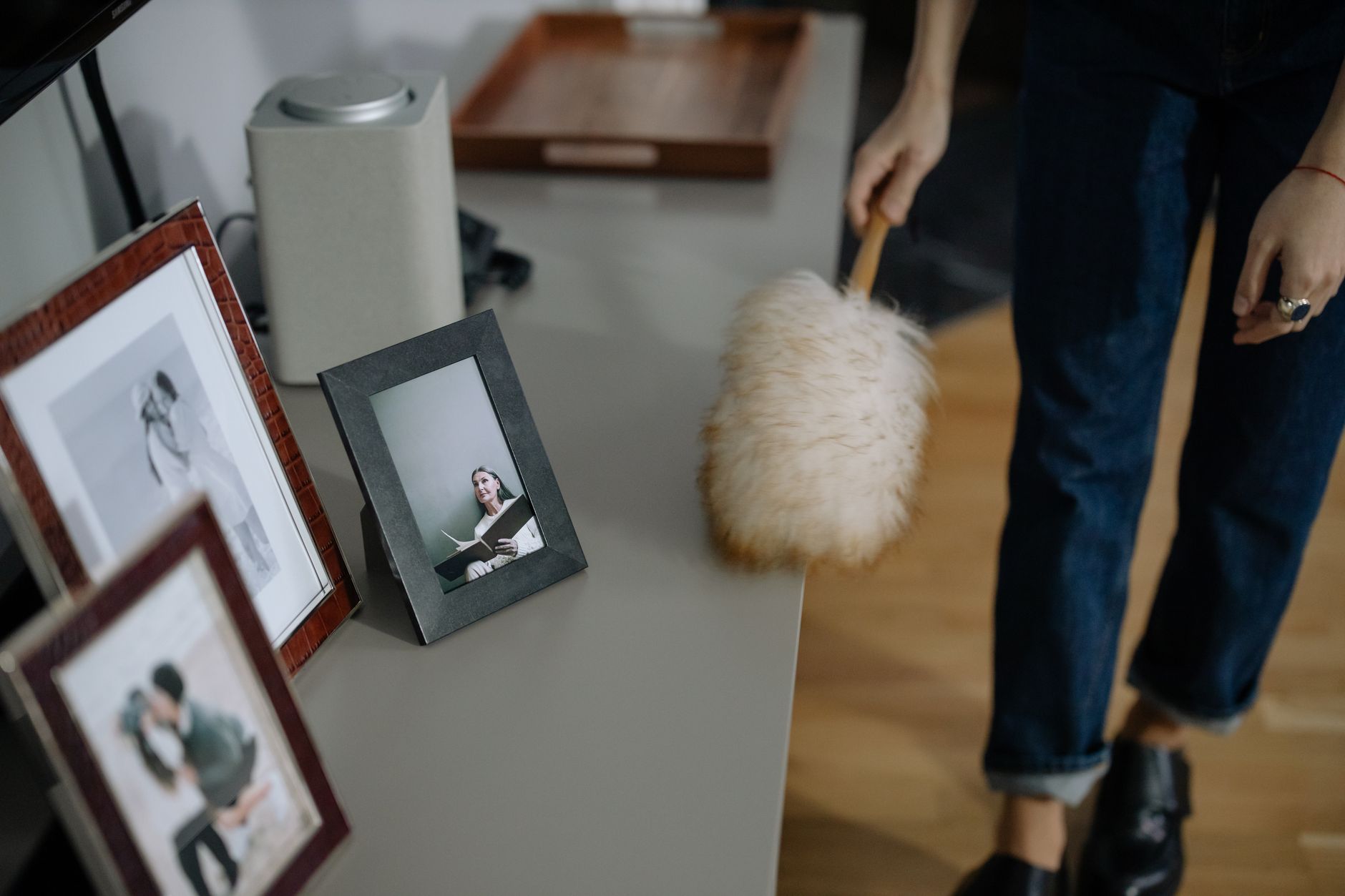
Every knick‑knack, stack of books, and decorative surface gives dust a place to settle and stay. The more horizontal surfaces in a room, the more dust you see and the harder it is to clean efficiently.
Reduce clutter to a minimum. Store items in closed cabinets or bins. When you do dust, work from top to bottom (ceiling fans first, then shelves, then floors) so particles fall onto surfaces you have not cleaned yet.
How to Fix Dust in Your Room: A Practical Action List
- Place doormats at all entrances and enforce a no‑shoes rule inside.
- Vacuum carpets and upholstery weekly with a HEPA‑filter vacuum; wash bedding in hot water.
- Upgrade your HVAC filter to MERV 8 or higher and change it regularly.
- Seal duct leaks and keep windows closed on windy, dry days.
- Use a dehumidifier to keep indoor humidity under 50 percent.
- Reduce clutter and store items in closed containers.
For deeper guidance on air quality tools and cleaning routines, browse our Home & Living section, it covers air purifiers, vacuums, and humidity control without pushing a specific product.
Related Guides
Frequently Asked Questions
Does opening windows reduce dust?
Opening windows can let fresh air in, but it also brings outdoor dust and pollen inside. On high‑pollution days, keep windows closed and rely on a good HVAC filter or an air purifier instead.
How often should I dust to keep it under control?
A weekly dusting routine is enough for most rooms. Use a microfiber cloth or electrostatic duster that traps particles rather than spreading them. Focus on high‑touch areas like shelves, electronics, and windowsills.
Can houseplants help reduce dust?
Some indoor plants can trap a small amount of dust on their leaves, but they do not remove it from the air. The effect is minimal compared to regular cleaning and good filtration. Plants also need dusting themselves.
Does an air purifier eliminate dust?
An air purifier with a HEPA filter can capture airborne dust particles, reducing what you breathe and see floating. However, it cannot remove dust that has already settled on surfaces, you still need to wipe and vacuum.
Dust in a room comes from a mix of outdoor and indoor sources, poor filtration, humidity, and clutter. Address each cause with the steps above, and you will see a lasting difference. For more home‑improvement tips, visit our Home & Living category.