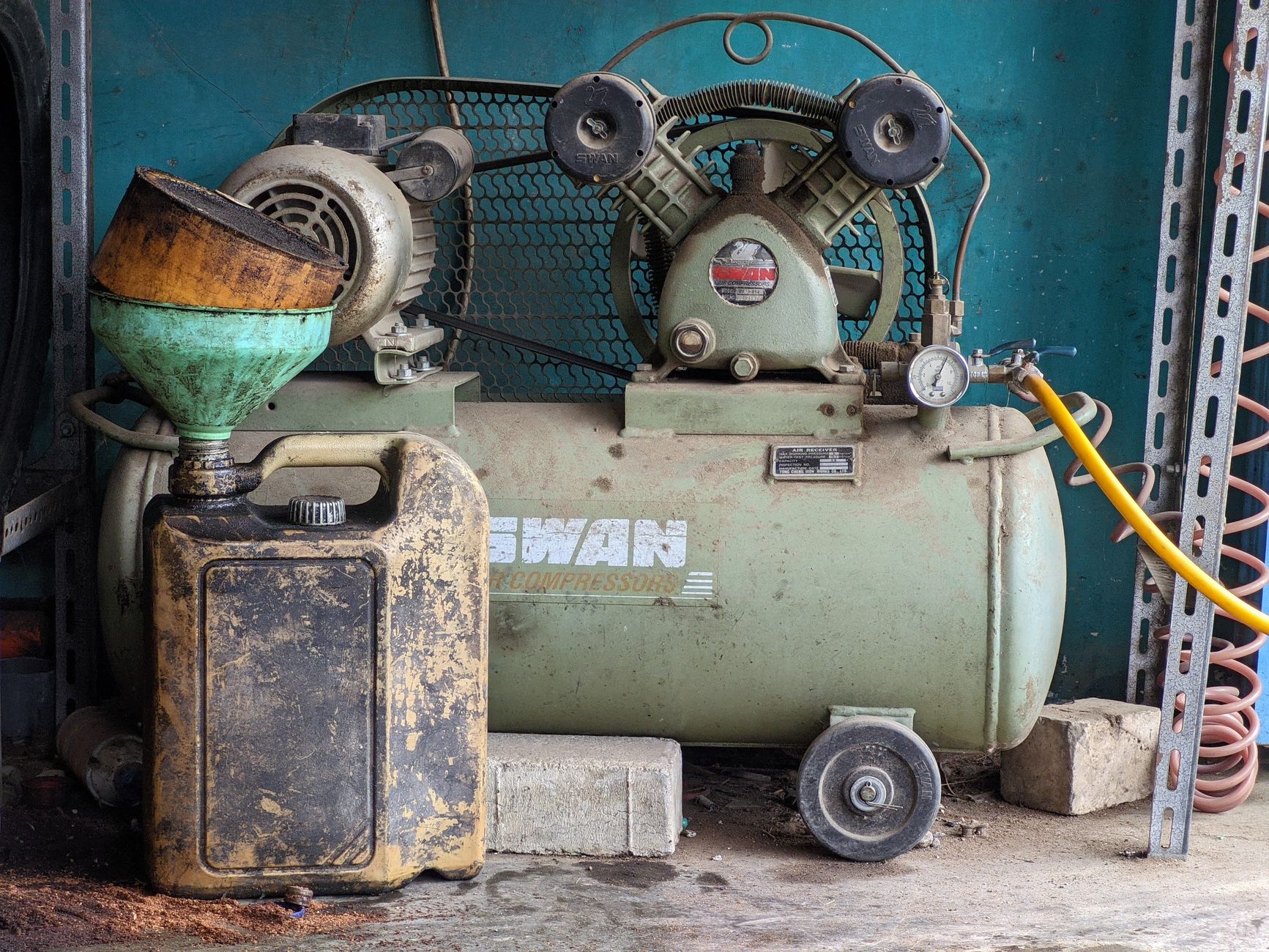
To drain an air compressor, you open the drain valve at the bottom of the tank to release accumulated moisture, ideally after each use or daily. This prevents water buildup that can cause rust, reduce tank capacity, and damage tools. Regular draining is a simple but essential maintenance step that keeps your compressor reliable and safe.
Why You Need to Drain an Air Compressor
When your air compressor runs, it compresses air, which also compresses water vapor naturally present in the atmosphere. As the air cools inside the tank, that vapor condenses into liquid water. Over time, this water collects at the bottom of the tank.
If left undrained, the water causes internal rust and corrosion. Rust flakes can break loose and travel through your air lines, damaging tools or clogging fittings. A heavily rusted tank can also weaken structurally, posing a safety risk.
Draining the tank removes this moisture before it causes problems. It is one of the simplest ways to extend the life of your compressor and maintain its performance.
How Often Should You Drain an Air Compressor?
The frequency depends on how often you use the compressor and the humidity in your environment. As a general rule, drain the tank after every use or at least once a day if you run it continuously.
In humid climates, you may need to drain it more frequently, sometimes every few hours during heavy use. In dry conditions, you might get away with draining it weekly. Check the manufacturer’s recommendations for your specific model.
A good habit is to make draining part of your shutdown routine. After you finish using the compressor, open the drain valve and let the water out before storing it.
Types of Drain Valves on Air Compressors
Most air compressors have one of three types of drain valves: a manual petcock valve, a manual ball valve, or an automatic drain valve. The manual petcock is a small knob that you turn to open and close. The ball valve uses a lever for quick on/off control.
Automatic drain valves open periodically without manual intervention, often using a timer or a float mechanism. They are convenient but can fail over time, so you should still check them periodically.
Knowing which valve you have helps you use the correct method to drain it. If you are unsure, look at the bottom of the tank for a small valve or fitting.
How to Drain an Air Compressor: Step-by-Step
Follow these steps to drain your air compressor safely and effectively. Always prioritize safety by releasing tank pressure first.
- Turn off the compressor and unplug it. Disconnect power to prevent accidental startup.
- Release the air pressure from the tank. Open the pressure relief valve or run a tool until the gauge reads zero. Never drain a pressurized tank, as the rushing water and debris can cause injury.
- Position a container under the drain valve. Use a bucket or pan to catch the water. Some water may spray, so wear safety glasses.
- Open the drain valve slowly. Turn the petcock or lever to open. Water will flow out, often mixed with oil or rust particles.
- Allow all water to drain completely. Tilt the compressor slightly if needed to get all the water out. Close the valve when only air comes out.
- Wipe up any spills and store the compressor. Dispose of the water properly, especially if it contains oil.
Frequently Asked Questions
What happens if I never drain my air compressor?
If you never drain the tank, water accumulates and causes rust and corrosion from the inside. This can lead to reduced tank capacity, rust particles clogging your tools, and eventually a weakened tank that may rupture.
Can I drain an air compressor while it is pressurized?
No, you should never drain a pressurized tank. The force of the compressed air can blast water and debris out violently, causing injury. Always release the pressure first until the gauge reads zero.
How do I know if my air compressor has an automatic drain?
Look for a small device attached to the bottom drain port with wires or a timer knob. Automatic drains are often cylindrical and may have a clear sight glass to see water level. Check your owner’s manual for confirmation.
Should I drain my air compressor after every use?
Yes, draining after every use is the best practice. It prevents moisture from sitting in the tank and causing rust. In humid conditions, it is even more important to drain frequently to avoid buildup.
Can I use an automatic drain on any air compressor?
Most compressors with a standard drain port can accept an automatic drain kit. However, you need to ensure compatibility with your tank’s thread size and pressure rating. Some small portable models may not have a suitable port.
Related Guides
- Best Portable Air Compressor for Off Road Adventures
- Why Does My Air Compressor Keep Shutting Off?
- Air Compressor Not Building Pressure
Final Thoughts
Draining your air compressor regularly is a simple task that prevents costly damage and keeps your equipment safe. Make it a habit after each use, and your compressor will serve you reliably for years.