You are on the trail, the terrain steep and uneven. Your knees feel every step, and your balance wavers on loose rocks. A good set of trekking poles transforms this experience, providing stability, reducing joint strain, and boosting your pace. In this guide, we review the best trekking poles for hiking in 2026 to help you choose a pair that matches your style, from ultralight backpacking to rugged day hikes. We have evaluated seven top-selling models based on material, lock reliability, grip comfort, and portability. For a complete hiking setup, pair your poles with a quality pack from our top daypacks for hiking list.




Buying Guide: What to Look for in Trekking Poles
Shaft Material: Carbon Fiber vs. Aluminum
The shaft material determines weight, durability, and vibration dampening. Carbon fiber poles are lighter (around 7 to 8 oz per pole) and absorb shock better, making them ideal for long-distance treks. Aluminum poles are heavier but more affordable and resistant to bending under heavy loads. For most hikers, 7075 aluminum offers a great balance of strength and weight. If you prioritize ultralight gear, consider the 100% Carbon Fiber Trekking Poles by USA Brand or the Foxelli carbon model.
Locking Mechanism: Flip Locks vs. Twist Locks
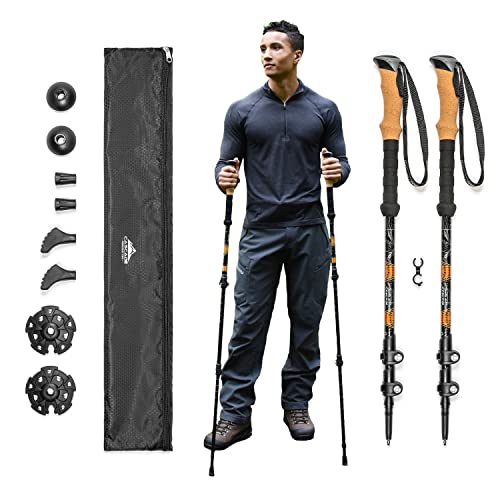
Flip locks are easier to adjust with one hand and hold securely under pressure. Twist locks can slip over time if not maintained. Many modern poles use quick-release flip locks with metal components for durability. For example, TrailBuddy and Cascade Mountain Tech poles feature lever locks that are reliable on rocky descents. Avoid plastic locks; metal is far more durable.
Grip Comfort and Extensions
Natural cork grips mold to your hand, wick moisture, and reduce vibration. Extended EVA foam sections below the grip allow you to choke up on steep climbs. Padded wrist straps also reduce fatigue. Models like the Hiker Hunger and Foxelli poles combine cork with foam extensions for all-day comfort. If you have larger hands, look for ergonomic contours.
Weight, Adjustability, and Portability
Lightweight poles (under 10 oz each) reduce arm fatigue on long hikes. Adjustable height from about 24 to 54 inches accommodates different user heights and terrain. Collapsible or foldable designs pack small for travel. The Trekology Trek-Z folds to 15 inches, while the TrailBuddy collapses to 24.5 inches. For backpacking trips, check our best backpacking backpack for men and best backpacking backpack for women guides to complete your gear.
Final Thoughts
After reviewing these seven models, our top recommendation for hikers seeking ultralight performance is the 100% Carbon Fiber Trekking Poles by USA Brand, which deliver exceptional strength at just 7.6 oz per pole with reliable flip locks and comfortable cork grips. For a budget-friendly aluminum option that still offers premium features, the TrailBuddy Trekking Poles provide a secure hold, easy one-hand adjustment, and a travel-ready design that fits in carry-on luggage. Both choices will elevate your hiking experience on any trail.
Frequently Asked Questions
How do I choose the right length for trekking poles?
Stand upright and bend your elbow to 90 degrees; the pole tip should rest on the ground. Most adjustable poles cover heights from 24 to 54 inches, fitting users from 4’11” to 6’5″. For steep terrain, shorten the poles for better leverage.
Are carbon fiber trekking poles worth the extra cost?
Yes, if you prioritize weight savings and shock absorption. Carbon fiber poles reduce arm fatigue on long hikes and dampen trail vibrations. They are also more expensive and can snap under extreme lateral stress, so choose aluminum if you need maximum durability.
How do I maintain my trekking poles?
Rinse off mud and grit after each hike, dry the shafts, and lubricate the locking mechanisms occasionally with silicone spray. Check the carbide tips for wear and replace them as needed. Store poles collapsed in a dry place.
Can I use trekking poles for snowshoeing?
Yes, many poles come with snow baskets that prevent sinking. Models like the Foxelli and Cascade Mountain Tech include interchangeable baskets for snow, mud, and hardpack. For winter hiking, ensure the grips provide a secure hold even with gloves.
For more gear recommendations, see our top hiking backpacks on Amazon and best backpacking backpack for beginners guides.