You sit down at your desk, cue up your favorite track, and wait for that first note to hit. But instead of rich, detailed sound, you get thin, muddy audio that kills the mood. If this sounds familiar, it is time to upgrade your desktop audio. This guide covers the best computer speakers for music in 2026, whether you are a casual listener, a budding producer, or someone who simply wants their playlists to sound alive. We have evaluated seven top models from trusted brands like Klipsch, Edifier, and PreSonus to help you choose the right pair for your setup.
For a broader look at desktop audio options, check out our best desktop speakers guide.



Buying Guide
Sound Accuracy and Clarity
For music listening, accuracy matters. You want speakers that reproduce the original recording without adding coloration. Studio monitors like the PreSonus Eris 3.5 are designed for this, with flat frequency response and minimal distortion. Bookshelf speakers with silk dome tweeters and woven composite woofers also deliver balanced highs and tight bass. Avoid overly bass-heavy designs if you value detail over thump.
Our best computer speakers article covers more options for critical listening.
Connectivity and Inputs
Your speakers need to connect to your computer, phone, or game console. Look for multiple inputs: USB, 3.5mm aux, Bluetooth, and optical. The Edifier M60 offers Bluetooth 5.3 with LDAC for high-resolution wireless streaming, while the Logitech Z313 uses a simple 3.5mm plug. If you have an audio interface, balanced TRS inputs (like on the PreSonus Eris) give you professional flexibility.
Size and Desk Fit
Desktop real estate is precious. Compact speakers like the Amazon Basics Stereo 2.0 take up almost no space, while a 2.1 system with a subwoofer requires more room. The Edifier M60 includes angled aluminum stands to direct sound to your ears, saving space and improving imaging. Measure your desk before buying.
Power and Room Filling
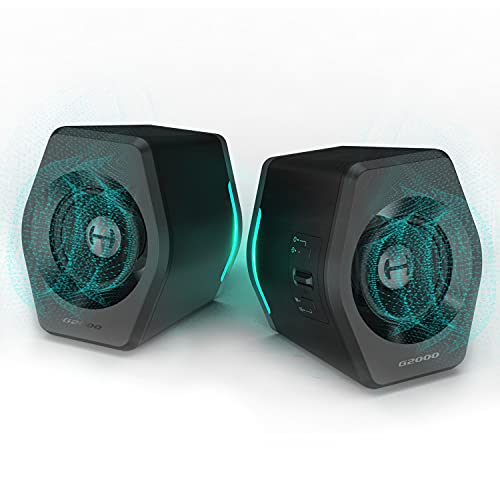
If you like to feel the bass or fill a medium-sized room, consider total wattage. The Klipsch ProMedia 2.1 delivers 200 watts peak power with a dedicated subwoofer, while the Edifier G2000 offers 32 watts with RGB lighting. For near-field listening at a desk, lower power is often sufficient, but higher headroom reduces distortion at louder volumes. For gaming and music combined, see our top computer speakers for gaming in 2026 list.
Final Thoughts
After reviewing these seven models, our top recommendation for pure music fidelity goes to the PreSonus Eris 3.5 Powered Studio Monitors, Pair for their accurate sound and acoustic tuning controls. If you want a more immersive, room-filling experience with powerful bass, the Klipsch ProMedia 2.1 THX Certified Computer system is a stellar choice. Both offer outstanding value for their respective use cases, and either will transform your daily listening sessions.
Frequently Asked Questions
What are the best computer speakers for music production in 2026?
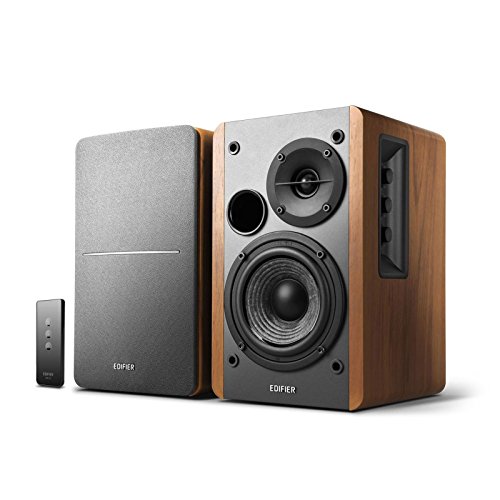
For music production, studio monitors like the PreSonus Eris 3.5 are ideal because they provide a flat frequency response, allowing you to hear your mix accurately. The Edifier R1280T is another solid option for near-field monitoring on a budget. Both deliver the clarity needed for critical listening.
Do I need a subwoofer for computer speakers when listening to music?
It depends on your music preferences. If you enjoy bass-heavy genres like EDM or hip-hop, a 2.1 system like the Logitech Z313 or Klipsch ProMedia 2.1 adds depth and impact. For acoustic, classical, or vocal-focused music, a quality pair of bookshelf speakers with good low-end extension often suffices without a sub.
Can I use Bluetooth computer speakers for music?
Yes, many modern speakers like the Edifier M60 support high-resolution Bluetooth codecs such as LDAC for wireless streaming. However, for the lowest latency and best audio fidelity, a wired connection via USB or aux is still recommended, especially for music production or competitive gaming. For portable options, see our best portable speakers list.
What is the difference between studio monitors and regular computer speakers?
Studio monitors are designed to reproduce sound without coloration, giving you a true representation of the audio. Regular computer speakers often add bass boost or treble enhancement to sound more exciting, which can mask flaws in a mix. For music listening, both can be enjoyable, but monitors offer greater accuracy for critical ears.