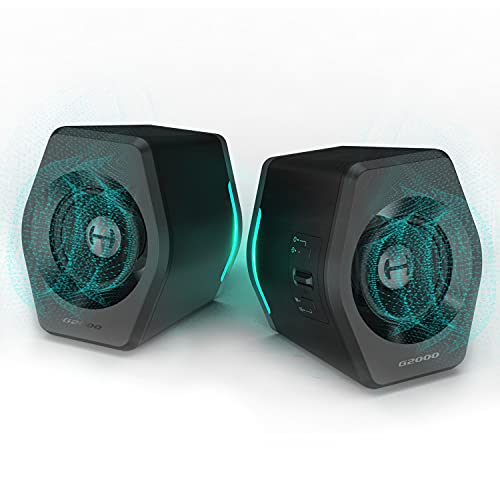
You have a growing vinyl collection, a desktop setup that needs an audio upgrade, or a small living room craving fuller sound. Bookshelf speakers are the answer, but with so many options, choosing the right pair for music can feel overwhelming. This guide cuts through the noise, focusing on the best bookshelf speakers for music in 2026. We have evaluated active and passive models from leading brands like Edifier, Polk Audio, and MEVOSTO to help you find the perfect match for your listening habits and space. For those also considering home theater use, check out our guide to bookshelf speakers for TV.



Buying Guide
Active vs. Passive: Which Is Right for You?
Active bookshelf speakers have a built-in amplifier, so you just plug them into a power source and your audio source. They are ideal for desktop setups, record players, and anyone who wants a simple, all-in-one solution. Passive speakers require an external amplifier or receiver, offering more flexibility to upgrade components later. If you are building a traditional stereo system or home theater, passive speakers like the Polk Audio T15 give you room to grow. For a compact music setup, powered options from Edifier and MEVOSTO save space and hassle.
Connectivity Options
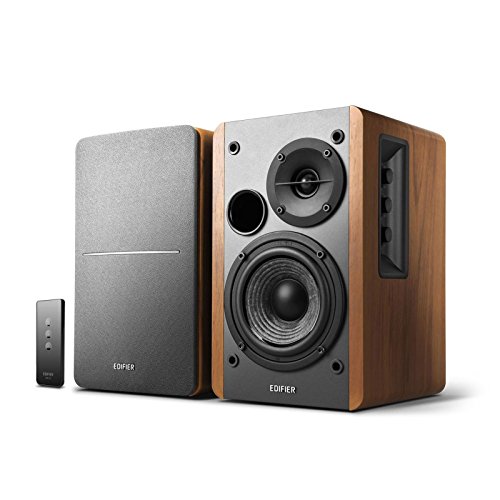
Consider what sources you will connect: a turntable, TV, computer, or smartphone. Bluetooth 5.0 is common and convenient for wireless streaming from your phone. USB input allows direct digital connection to a PC, bypassing the computer’s sound card for cleaner audio. RCA and auxiliary inputs are essential for older gear. Optical and coaxial inputs (like on the Edifier R1280DBs) ensure lossless audio from TVs and game consoles. Think about your current devices and future plans when choosing connectivity.
Driver Size and Room Fit
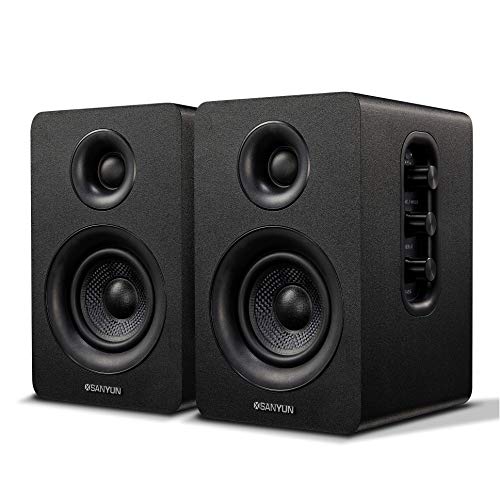
Larger drivers (5 inches and above) produce deeper bass and fill a bigger room, but they need more space on a shelf or desk. Smaller 3- or 4-inch drivers are perfect for near-field listening on a desk or in a small room. The MEVOSTO 5-Inch Powered Speakers offer a good balance for medium spaces, while the Sanyun SW208 with 3-inch drivers excel on a cramped desktop. Measure your available area and consider the speaker depth, as rear-ported designs need breathing room from the wall.
For even more tailored advice, read our best bookshelf speakers for small room guide. And if you often take music outdoors, explore top Bluetooth speakers for camping.
Final Thoughts
Selecting the best bookshelf speakers for music comes down to your specific needs: for a versatile, modern setup with Bluetooth and multiple inputs, the Edifier R1280DBs Active Bluetooth Bookshelf delivers excellent sound and connectivity, while for a budget-friendly powered pair that works beautifully with a turntable and computer, the MEVOSTO 5-Inch Powered Bookshelf Speakers offer outstanding value and control. Both are top contenders in 2026 and will transform how you experience music at home.
Frequently Asked Questions
Can I use bookshelf speakers for a turntable without a preamp?
Yes, many powered bookshelf speakers like the MEVOSTO and Electrohome models have built-in amplifiers and accept RCA input directly from a turntable with a built-in phono preamp. If your turntable lacks a preamp, you will need an external phono stage or speakers with a phono input.
Do I need a subwoofer with bookshelf speakers for music?
Not necessarily. Many bookshelf speakers with 5-inch or larger drivers produce satisfying bass for most music genres. However, if you enjoy deep bass-heavy music like electronic or hip-hop, adding a subwoofer can enhance the experience. The Edifier R1280DBs includes a subwoofer output for easy expansion.
What is the difference between active and passive bookshelf speakers?
Active speakers have a built-in amplifier and are ready to use with just a power cord and audio source. Passive speakers require an external amplifier or receiver to power them. Active speakers are simpler and more compact, while passive systems offer more upgrade flexibility and often higher power handling.
How do I connect bookshelf speakers to my TV?
If your speakers have optical or coaxial inputs, use those for the best sound quality. Many powered speakers like the Edifier R1280DBs include optical input. You can also use RCA or a 3.5mm headphone output if available. For Bluetooth speakers, pair wirelessly, but note potential audio delay. For more details, see our guide to bookshelf speakers for TV.