You just dropped the needle on a fresh pressing and the sound falls flat. Your turntable deserves more than a basic soundbar or laptop speakers. A pair of good bookshelf speakers can unlock the warmth, detail, and depth that make vinyl so addictive.
The best bookshelf speakers for turntable transform your listening space without taking over the room. They deliver the rich midrange, sparkling highs, and controlled bass that your collection was meant to have. Whether you prefer powered convenience or passive flexibility, there is a model that fits your setup.
In this guide, we assess four popular options from Polk Audio, Edifier, MEVOSTO, and Electrohome. We look at connectivity, driver design, and ease of use for turntable owners. If you also love movies, our roundup of the best bookshelf speakers for TV covers models that work in a home theater system.



Buying Guide
Before you choose a pair of bookshelf speakers, think about your turntable’s output, the size of your room, and the gear you already own. Here is a quick checklist to guide your decision.
- Confirm your turntable has a phono preamp or add an external one
- Decide between powered and passive based on your current equipment
- Match the driver size to your room and listening position
- Allow rear ported designs enough clearance from the wall
Powered vs Passive Speakers
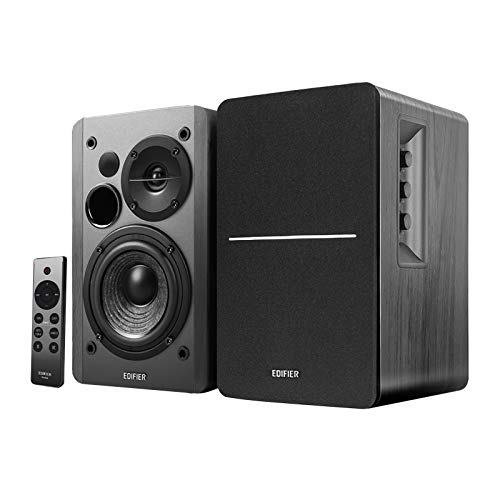
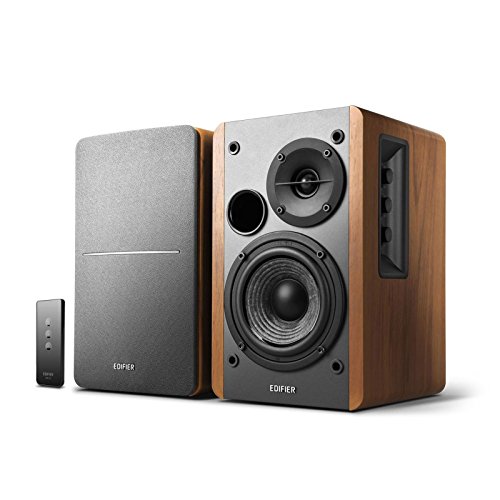
Powered speakers include a built-in amplifier, so you only need a line-level signal from your turntable. The Edifier R1280T Powered Bookshelf Speakers have a remote control and onboard bass and treble knobs, making them very user-friendly. The MEVOSTO 5-Inch Powered Bookshelf Speakers also come with a remote and independent bass and treble controls.
Passive speakers like the Polk Audio T15 rely on an external amp or AV receiver. The Polk T15 uses a 0.75-inch tweeter and a 5.25-inch Dynamic Balance driver to deliver clear, balanced sound. They are also wall-mountable, giving you more placement flexibility.
That distinction matters before you even think about sound quality. If you want the simplest chain between the turntable and your ears, powered speakers win. If you already own a receiver, passive speakers let you match amplifier power to your exact taste.
Connectivity and Phono Compatibility
The key to connecting a turntable is understanding phono preamps. A turntable with a built-in phono preamp outputs line-level audio, which any powered or passive speaker can handle. Without a preamp, you need to add one before the signal reaches the speakers.
The Electrohome Huntley Powered Bookshelf Speakers accept RCA and AUX inputs and add Bluetooth 5 for wireless streaming. That means you can switch from vinyl to a phone playlist without changing cables. The Edifier R1280T offers two AUX inputs, so you can keep both a turntable and a TV connected at the same time.
The MEVOSTO model takes connectivity further with a USB audio input for desktop use and support for various DC power inputs, including 12V, 15V, or 18V. If you want a very simple setup, one RCA pair from your turntable to the speakers is enough.
Driver Size and Sound Quality
Driver size shapes the entire listening experience. A 5-inch woofer moves more air and produces deeper bass than a smaller unit. The Polk T15 features a 5.25-inch driver, while the MEVOSTO uses dual 5-inch woofers for a rich 2.0 stereo sound.
Smaller drivers can still be excellent. The Electrohome Huntley uses 3-inch drivers in a rear ported cabinet, creating a warm and natural sound for near-field listening. The Edifier R1280T pairs a 4-inch full-range driver with a 13mm silk-dome tweeter for smooth highs.
Think about your listening position. For a desk, a compact speaker is usually enough. For a living room, a larger woofer gives you better dynamics and punch. Our best bookshelf speakers for small room guide can help if space is limited.
Cabinet Construction and Placement
Well-built cabinets reduce resonances and let the drivers work more accurately. The Edifier R1280T uses MDF with a wood-effect vinyl finish, which looks classic and keeps costs down. The Electrohome Huntley uses handcrafted acoustically tuned wood cabinets with a rear port for enhanced bass response.
The MEVOSTO speaker features a walnut wood grain finish that fits both retro and modern rooms. Positioning matters too. Rear ported designs need a few inches of clearance from the wall, while front-firing speakers are more forgiving.
Placement also affects the soundstage. Set tweeters at ear height and angle the speakers toward your listening spot. Browse our Electronics category for more audio gear reviews and comparisons.
Power Handling and Room Size
Power handling tells you how much amplifier power a speaker can accept without distortion. For a desktop setup, 15 to 30 watts per channel is plenty. For a larger living room, look for speakers that can handle 50 watts or more.
The Polk T15 is rated for 100 watts, meaning it can get very loud when paired with a capable receiver. The MEVOSTO speaker has a built-in 36W RMS amplifier, designed for near-field listening and average room sizes. The compact Electrohome Huntley is best for small to medium rooms.
Think about your typical listening levels. If you enjoy quiet background music, smaller speakers are perfectly fine. If you host gatherings, choose a model with a larger driver and higher power handling. For a curated set of musically accurate options, our best bookshelf speakers for music guide is a great reference.
Final Thoughts
Finding the right pair starts with how you want to connect and control your system. The Edifier R1280T Powered Bookshelf Speakers -2.0 are an excellent all-in-one choice for most turntable owners, while the Polk Audio T15 100 Watt Home Theater Bookshelf reward those who already have an amplifier and want to shape the sound themselves.
Frequently Asked Questions
Do I need an amplifier for bookshelf speakers?
If you choose powered bookshelf speakers, no separate amplifier is needed because the amp is built into the cabinet. The Edifier R1280T and MEVOSTO speakers both include amplifiers, so you can connect a turntable with a line-level output directly. Passive speakers like the Polk T15 require a standalone amplifier or AV receiver.
Are powered or passive bookshelf speakers better for vinyl?
Powered speakers are the easiest route for most people because they simplify the chain from source to sound. Passive speakers offer more flexibility for future upgrades, especially if you like experimenting with different amplifiers. Both designs can deliver excellent vinyl sound when the rest of the chain is set up correctly.
What size bookshelf speakers are best for a turntable?
A 4-inch or 5-inch woofer is the sweet spot for most living rooms. A 3-inch driver works well on a desk or in a bedroom, like the Electrohome Huntley. Stick with a larger driver for more bass and dynamic range, and set your chosen pair on a shelf or console from our Home & Living category.
How do I connect bookshelf speakers to a turntable?
Connect the RCA output from your turntable or phono preamp to the RCA input on powered speakers. If you use passive speakers, run speaker wire from your amplifier to the speakers. Many powered speakers also accept AUX input, giving you an alternative cable option.
Can I stream music from my phone to bookshelf speakers?
Many powered bookshelf speakers include Bluetooth wireless streaming. The Electrohome Huntley uses Bluetooth 5, so you can play music from your phone while your turntable stays connected to the RCA input. For portable audio away from home, our best bluetooth speaker under 200 guide is worth checking.