When you are deep into a video editing timeline, every frame matters. A slow render, a stutter in playback, or a crash during export can derail your creative flow. Choosing the right graphics card for video editing is not just about raw horsepower; it is about balancing VRAM, encoding support, and thermal management for your specific editing software. Whether you are cutting 8K footage in DaVinci Resolve, building motion graphics in After Effects, or simply editing home videos, this guide will help you find a GPU that fits your workflow and budget. For editors who also work with multiple displays, our guide to best graphics cards for multiple monitors offers additional perspective.




Buying Guide: What to Look for in a Video Editing Graphics Card
VRAM Capacity and Memory Bandwidth
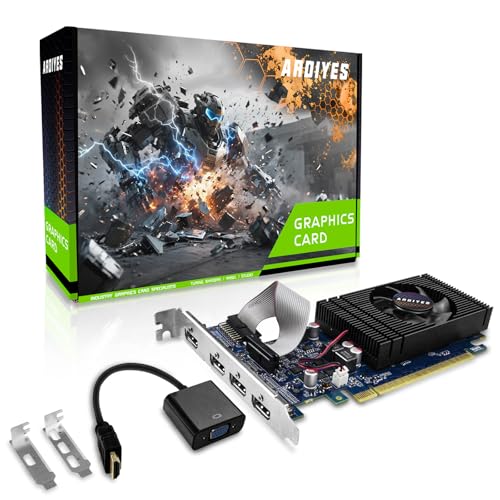
Video editing software relies heavily on VRAM to store frame buffers, color grades, and effects. For 1080p or 1440p editing, 4GB to 6GB may suffice, but 4K and higher resolutions demand 8GB or more. The ASRock Radeon AI PRO R9700 Creator comes with a massive 32GB of GDDR6 memory, ideal for complex 8K timelines and large AI models. On the budget end, the ARDIYES GT 740 offers 4GB GDDR5, which handles 1080p editing but will struggle with multi-layer 4K projects.
GPU Architecture and Encoding Engines
Modern GPUs include dedicated hardware encoders (NVENC for NVIDIA, VCN for AMD) that speed up exports and real-time playback. The ASUS Dual GeForce RTX 3050 features NVIDIA’s Ampere architecture with 2nd generation RT Cores and 3rd generation Tensor Cores, offering excellent performance in Premiere Pro and DaVinci Resolve. For professional AI-assisted editing, the ASRock card’s RDNA 4 architecture with 2nd Gen AI Accelerators provides groundbreaking compute power. If you also work with 3D modeling, check out our best graphics cards for SolidWorks guide.
Cooling and Form Factor
Long rendering sessions generate substantial heat. The ASRock Radeon AI PRO R9700 uses a professional blower cooler with vapor chamber and Honeywell PTM7950 thermal interface, ideal for multi-GPU workstations. The ASUS RTX 3050 features Axial-tech fans with IP5X dust resistance, keeping it quiet and cool in standard cases. For small form factor builds, the ARDIYES GT 740 and QTHREE GT 730 offer low-profile designs with silent cooling, perfect for HTPCs or compact office systems.
Connectivity and Multi-Monitor Support
Video editors often use multiple displays for timeline, preview, and reference monitors. The ASRock card provides four DisplayPort 2.1a outputs supporting high-resolution professional displays. The ARDIYES GT 740 features four HDMI ports for quad-monitor setups out of the box. The QTHREE GT 730 offers VGA, DVI-D, and HDMI for legacy monitors. For audio monitoring alongside video, consider pairing your GPU with a top external sound card for music production.
Final Thoughts
After evaluating these four graphics cards, we believe the ASRock Radeon AI PRO R9700 Creator 32GB stands as the ultimate choice for professional editors and AI-assisted workflows, offering unmatched VRAM and compute capabilities. For those on a tighter budget or editing 1080p to 1440p projects, the ASUS Dual GeForce RTX 3050 6GB GDDR6 OC Edition delivers solid performance with modern encoding features. Whichever you choose, ensure your GPU aligns with your editing software and resolution demands.
Frequently Asked Questions
How much VRAM do I need for 4K video editing in 2026?
For 4K editing, we recommend at least 8GB of VRAM, though 16GB or more is better for complex timelines with effects and color grading. The ASRock Radeon AI PRO R9700’s 32GB is overkill for most but future-proofs your workstation.
Can a budget GPU like the QTHREE GT 730 handle video editing?
The QTHREE GT 730 is suitable for basic 1080p editing and older software. It lacks modern encoding hardware, so export times will be slow. For any serious editing, consider at least the ASUS RTX 3050.
Should I choose an NVIDIA or AMD GPU for video editing?
Both brands work well, but NVIDIA’s NVENC encoder is widely supported in apps like Premiere Pro and HandBrake. AMD’s RDNA 4 with AI accelerators offers advantages in DaVinci Resolve and AI tools. For machine learning tasks, see our best graphics cards for machine learning guide.
Do I need a professional workstation card for video editing?
Not necessarily. Consumer cards like the RTX 3050 are often sufficient. Professional cards like the ASRock Radeon AI PRO R9700 are designed for 24/7 reliability, multi-GPU setups, and certified drivers for enterprise software. If you are building a dedicated editing suite, a professional card can be worth the investment.