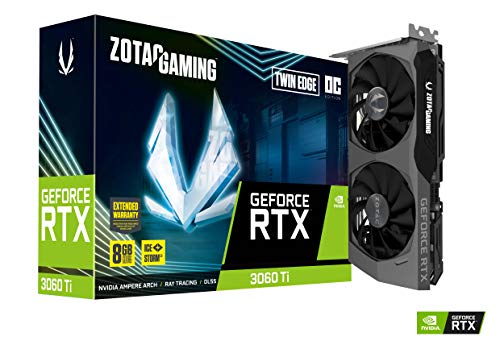
As a graphic designer, you know that a sluggish graphics card can ruin your creative flow. Whether you are working on complex vector illustrations, high-resolution photo editing, or 3D modeling, the right GPU ensures smooth previews and fast rendering. In this guide, we have reviewed five top contenders to help you choose the best graphics cards for graphic design in 2026. Our selections cater to various budgets and workflows, from entry-level to professional-grade. For more insights into performance-driven GPUs, check out our review of cards for 3D rendering.


Buying Guide
Video Memory (VRAM) Matters
When handling large design files or multi-layer compositions, VRAM is critical. A card with at least 6GB is recommended for most graphic design tasks, while 12GB or more is ideal for 4K editing and complex 3D work. The ASRock Intel Arc B580 Challenger offers 12GB GDDR6, providing ample headroom for creative applications. For a deeper look at memory requirements, read our article on GPUs for DaVinci Resolve.
Architecture and AI Acceleration
Modern graphics cards leverage AI to speed up tasks like denoising and upscaling. NVIDIA’s Blackwell architecture in the ASUS RTX 5070 offers 1005 AI TOPS, while Intel’s Xe2-HPG with XMX engines enables XeSS 2. These features directly benefit design software that uses AI filters or real-time previews. For After Effects users, our guide to After Effects GPUs explains how AI boosts performance.
Cooling and Form Factor
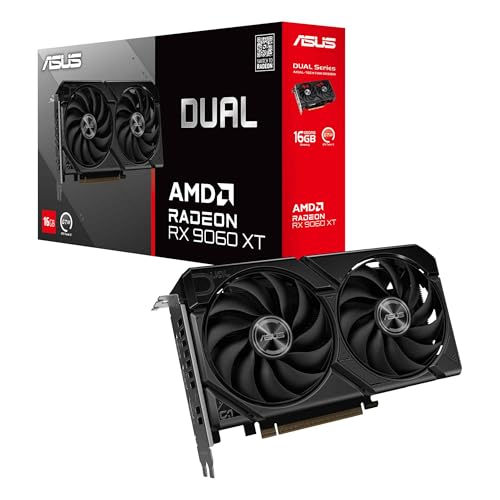
A quiet, cool system is essential for long design sessions. Dual-fan designs with 0dB silent operation, like those on the ASRock Arc B580 and ASUS RX 9060 XT, keep noise low under light loads. If you have a small form factor case, the maxsun GeForce RTX 3050 (low profile) or the ASUS SFF-Ready RTX 5070 are excellent choices. Learn about other components for quiet builds in our sound card guide.
Connectivity and Multi-Monitor Support
Graphic designers often run multiple displays. Cards with HDMI 2.1 and DisplayPort 2.1 support high resolutions and refresh rates. The ASUS GT 730 offers four HDMI ports for up to four monitors, while the ASUS RX 9060 XT includes modern outputs for future-proofing. For a broader selection of cards, visit our Cards category.
Final Thoughts
After reviewing these options, the ASUS SFF-Ready Prime NVIDIA GeForce RTX 5070 OC stands out for professionals needing top-tier AI performance and compact compatibility, while the ASRock Intel Arc B580 Challenger 12GB OC Graphics offers outstanding value with generous VRAM and silent operation. Both cards deliver the reliability and speed that graphic designers require in 2026.
Frequently Asked Questions
What is the best graphics card for graphic design in 2026?
The best choice depends on your software and budget. For high-end AI-accelerated workflows, the ASUS RTX 5070 is excellent. For a balanced option with ample VRAM, the ASRock Arc B580 is a strong contender. Explore more picks in our Cards category.
How much VRAM do I need for graphic design?
For most design tasks, 6GB is a minimum, but 8GB or more is recommended for 4K work and complex projects. Cards with 12GB, like the ASRock Arc B580, provide future-proofing.
Is a gaming graphics card good for graphic design?
Yes, many gaming GPUs work well for design because they offer strong compute performance and VRAM. However, professional-grade cards may have certified drivers for specific software. The cards in this review are all suitable for both gaming and creative work.
Can I use a low-profile graphics card for graphic design?
Absolutely. The maxsun GeForce RTX 3050 low-profile card fits in small cases and still delivers capable performance for 2D design and light 3D work. It is a great choice for compact workstations.