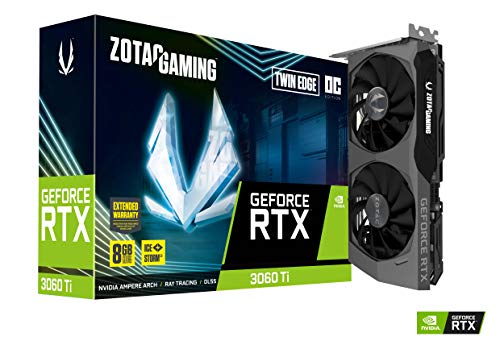
You have saved up for months, researched every component, and now you stand at the final frontier of your PC build: choosing the graphics card. It is the heart of your gaming experience, the engine for creative workflows, and often the most significant investment you will make. Whether you are aiming for silky smooth 4K gaming, diving into AI-assisted creation, or building a compact powerhouse, the right GPU can transform your digital life. This guide cuts through the noise, presenting eight of the most compelling graphics cards for 2026 from trusted brands like ASUS, GIGABYTE, and ASRock. We have evaluated their features, cooling solutions, and performance potential to help you make an informed decision.
If you are also looking to upgrade your overall system storage, check out our guide on the best budget SD cards for 2026 for reliable storage options. For portable storage needs, the best SanDisk micro SD cards for reliable storage in 2026 offer top-tier speed and durability.


Buying Guide: How to Choose the Right Graphics Card
Performance Tier and Resolution
Your target resolution and refresh rate are the primary drivers for choosing a GPU. For 1080p high-refresh-rate gaming, cards like the ASUS Dual GeForce RTX 3050 6GB GDDR6 OC Edition provide excellent value. For 1440p and entry-level 4K, the ASUS Prime Radeon RX 9070 XT or the GIGABYTE Radeon RX 9070 XT Gaming OC 16G deliver outstanding performance. If you demand the absolute best for 4K ultra settings and ray tracing, the ASUS TUF Gaming GeForce RTX 5080 16GB GDDR7 OC or the ASUS ROG Astral GeForce RTX 5080 16GB GDDR7 White are top-tier contenders.
Cooling and Build Compatibility
Graphics cards generate significant heat, and effective cooling is crucial for sustained performance and longevity. Look for cards with advanced cooling solutions like ASUS’s Axial-tech fans, phase-change GPU thermal pads, and large heatsinks. The ASUS SFF-Ready Prime NVIDIA GeForce RTX 5070 OC is specifically designed for small-form-factor builds, with a 2.5-slot design that fits compact cases. Always verify your case dimensions and clearance, especially for larger cards like the 3.6-slot ASUS TUF Gaming RTX 5080. For reliable performance in challenging environments, consider the IP5X dust resistance featured on the ASUS Dual GeForce RTX 3050.
Memory and VRAM Capacity
Video RAM (VRAM) is essential for handling high-resolution textures, complex scenes, and modern games. For 1080p gaming, 6GB to 8GB is sufficient, but for 1440p and 4K, 12GB or more is recommended. The ASUS Prime Radeon RX 9070 XT and ASRock Radeon RX 9070 Challenger 16GB OC Graphics both offer 16GB of GDDR6 memory, providing ample headroom for future titles. The ASUS ROG Astral RTX 5080 features 16GB of faster GDDR7 memory, ideal for professional workloads and high-end gaming. If you are a beginner in automotive projects, you might also find our picks for the best automotive products for beginners useful.
Power Supply and Connectivity
High-performance GPUs demand robust power delivery. The ASUS TUF Gaming RTX 5080 requires a minimum 850W PSU with a 16-pin 12V-2×6 connector, while the ASRock Radeon RX 9070 Challenger recommends a 700W unit with two 8-pin connectors. Ensure your power supply can handle the card’s requirements and has the necessary cables. Also, consider connectivity: modern cards feature HDMI 2.1 and DisplayPort 2.1 for high-bandwidth displays. For related insights, explore the Automotive category for power-related components.
Final Thoughts
After reviewing these eight graphics cards, two stand out for different user profiles. For gamers seeking a balanced blend of performance and value at 1440p, the ASUS Prime Radeon RX 9070 XT 16GB GDDR6 OC Edition offers exceptional rasterization power and a robust cooling solution. Meanwhile, content creators and enthusiasts who demand the absolute best for 4K gaming and AI workloads will find the ASUS TUF Gaming GeForce RTX 5080 16GB GDDR7 OC an unrivaled powerhouse with its advanced DLSS 4 support and military-grade durability. Whichever you choose, you are investing in a component that will drive your digital experiences for years to come. For those interested in other high-performance categories, check out our Beauty recommendations for top-tier essentials.
Frequently Asked Questions
What is the best graphics card for 4K gaming in 2026?
For native 4K gaming with high settings and ray tracing, the ASUS TUF Gaming GeForce RTX 5080 16GB GDDR7 OC and the ASUS ROG Astral GeForce RTX 5080 16GB GDDR7 White are top choices. They deliver exceptional performance with NVIDIA’s latest architecture and DLSS 4. For a more budget-friendly option, the ASUS Prime Radeon RX 9070 XT and GIGABYTE Radeon RX 9070 XT Gaming OC 16G also handle 4K very well.
How much VRAM do I need for gaming in 2026?
For 1080p gaming, 6GB to 8GB is generally sufficient. For 1440p, 12GB is recommended, and for 4K, 16GB or more provides future-proofing. Cards like the ASUS Prime Radeon RX 9070 XT and ASRock Radeon RX 9070 Challenger 16GB OC Graphics offer 16GB of GDDR6 memory, which is excellent for modern titles.
Are ASUS graphics cards reliable?
Yes, ASUS is a highly reputable brand known for quality and durability. Their graphics cards feature advanced cooling solutions like Axial-tech fans, phase-change thermal pads, and Auto-Extreme manufacturing for precision and reliability. Many models also include dual BIOS switches and protective PCB coatings for enhanced longevity.
What is the difference between GDDR6 and GDDR7 memory?
GDDR7 memory offers significantly higher bandwidth and improved power efficiency compared to GDDR6. It is found on newer high-end cards like the ASUS TUF Gaming RTX 5080 and ASUS ROG Astral RTX 5080, providing faster data transfer for demanding applications and high-resolution gaming. GDDR6 remains a solid choice for mid-range and value-oriented cards.