You boot up your favorite battle royale, headphones on, ready to hear every footstep. But the audio feels flat, directionless. That integrated motherboard sound just cannot deliver the spatial awareness you need for competitive play. A dedicated 7.1 gaming sound card changes everything. Whether you prefer a PCIe card for maximum fidelity or a USB external adapter for portability, this guide covers the top options available in 2026. We have evaluated seven leading models from brands like Creative, StarTech, and Cubilux to help you choose the right upgrade for your setup. For more component guidance, check out our roundup of best single slot graphics cards for compact builds in 2026 if you are building a space-conscious rig.




Buying Guide
Audio Resolution and DAC Quality
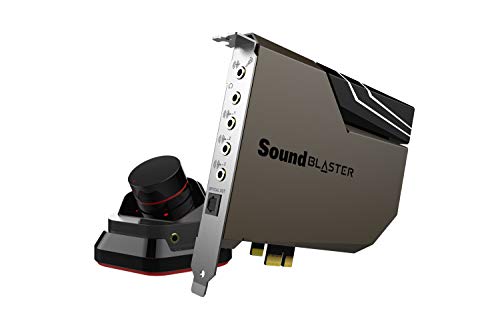
The heart of any sound card is its digital-to-analog converter (DAC) and supported sample rates. Higher resolution (32-bit / 384 kHz) and a higher signal-to-noise ratio (SNR) mean cleaner, more detailed sound. For gaming, a DAC with at least 114 dB SNR ensures you hear subtle cues like distant reloads or environmental shifts. Cards like the Creative Sound Blaster AE-7 use an ESS SABRE-class DAC for audiophile-grade clarity. If you also produce music, see our top USB sound cards for music production for specialized recording needs.
Connectivity and Form Factor
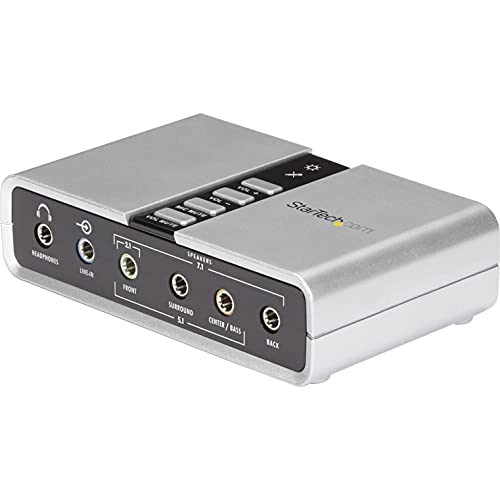
Decide between an internal PCIe card or an external USB adapter. PCIe cards like the Creative Sound Blaster Audigy Fx Pro offer dedicated hardware processing and lower latency, ideal for desktop gamers with an available slot. USB sound cards, such as the StarTech 7.1 USB Audio Adapter, provide plug-and-play convenience for laptops or systems where internal space is tight. Look for multiple 3.5mm jacks for discrete surround output, optical SPDIF for digital connections, and headphone amplifiers that can drive high-impedance headsets.
Surround Sound Implementation
True 7.1 surround requires discrete analog outputs for each channel. Some USB adapters offer virtual 7.1 via software processing, which can still improve spatial awareness but may not match the precision of discrete outputs. For competitive gaming, hardware-accelerated surround sound with Dolby Digital Live or DTS Connect encoding gives you an edge. The Creative Sound Blaster AE-7 supports both discrete 5.1 over speakers and virtual 7.1 on headphones, while the VENTION 7.1 Gaming DAC adds customizable equalizer presets for fine-tuning.
Build Quality and Durability
A sound card that lives inside your PC or sits on your desk should withstand daily use. Look for metal shielding to reduce electromagnetic interference, as seen in the Cubilux 7.1 USB Surround Sound Card with its full aluminum alloy case. Low-profile brackets (like the half-height bracket on the Creative Sound Blaster Audigy Fx Pro) ensure compatibility with small form factor builds. For compact PC builds, you might also appreciate our guide on top compact graphics cards for small form factor builds.
Final Thoughts
After reviewing these seven 7.1 gaming sound cards, the choice comes down to your priorities. If you want uncompromising audio fidelity and a dedicated headphone amplifier for studio-grade cans, the Creative Sound Blaster AE-7 Hi-Res PCIe delivers reference-level performance with its ESS DAC and Xamp bi-amp. For gamers who need a versatile, portable solution that works across PC and consoles without sacrificing surround sound, the VENTION 7.1 Gaming DAC External USB Sound Card offers virtual 7.1, RGB lighting, and an independent equalizer at a friendly price point. Either way, upgrading to a dedicated sound card will transform your gaming audio from muddy to precise, giving you the competitive edge you deserve.
Frequently Asked Questions
What is the difference between discrete 7.1 and virtual 7.1 surround sound?Discrete 7.1 uses separate analog outputs for each of the eight channels (front, rear, side, center, subwoofer), requiring a multi-speaker setup. Virtual 7.1 processes stereo signals to simulate directional audio using headphones or two speakers. For gaming, virtual surround can improve spatial awareness, but discrete outputs provide the most accurate soundstage for multi-speaker systems.
Can I use a PCIe sound card in a laptop?No, PCIe sound cards are designed for desktop motherboards with available PCIe slots. Laptop users should choose a USB external sound card, which connects via USB-A or USB-C and works with Windows, macOS, and even game consoles like PS4 and PS5. Many USB models offer plug-and-play convenience without driver installation.
Do I need a 7.1 sound card if I only use gaming headsets?Yes, a 7.1 sound card can still benefit headset users by providing virtual surround sound processing and a cleaner audio signal. Many headsets have built-in virtual surround, but a dedicated sound card often yields better clarity, lower noise floor, and more precise positional audio. Look for models with a headphone amplifier to drive high-impedance headsets effectively.
Will a USB sound card reduce audio latency compared to onboard sound?In many cases, yes. Dedicated USB sound cards have their own DAC and processing chip, reducing the load on your CPU and motherboard audio codec. This can lower audio latency, which is critical for real-time games where every millisecond matters. However, PCIe cards generally offer the lowest latency due to direct connection to the system bus.