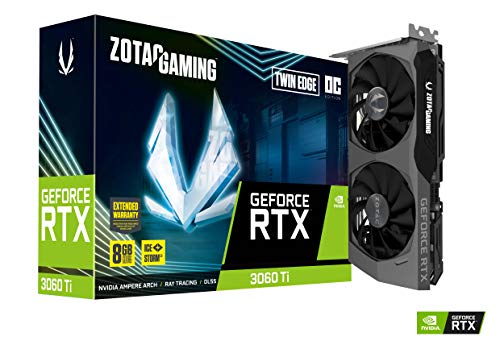
If you crave the sharpest visuals and buttery-smooth frame rates at 4K resolution, your graphics card is the most critical component. Whether you are diving into the latest AAA titles or immersive open-world adventures, only a high-end GPU can deliver the performance you need. In this guide, we have evaluated the top contenders for 2026, focusing on models that excel at native 4K gaming with ray tracing and high refresh rates. If you are leaning toward NVIDIA’s Blackwell architecture, our roundup of the best RTX graphics cards offers further insights.
We have handpicked seven graphics cards spanning both AMD Radeon and NVIDIA GeForce platforms, from the powerful ASUS Prime Radeon RX 9070 XT to the flagship ASUS TUF Gaming GeForce RTX 5080. Each model has been assessed for its 4K gaming prowess, cooling efficiency, and build quality. Read on to find your perfect match.


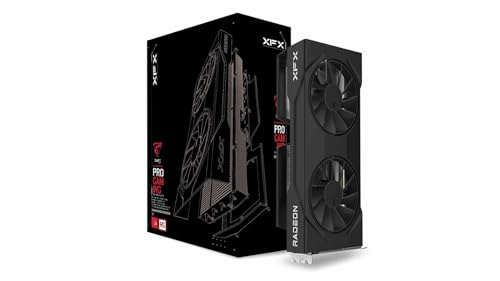


Buying Guide
Performance and VRAM for 4K Gaming
For 4K gaming, a GPU with ample video memory is essential. Most modern titles require at least 12 GB of VRAM to handle high-resolution textures and ray tracing. Cards like the ASUS Prime Radeon RX 9070 XT with 16 GB GDDR6 and the ASUS TUF Gaming RTX 5080 with 16 GB GDDR7 provide the headroom needed for ultra settings.
Cooling Solutions and Noise Levels
Sustained 4K gaming generates significant heat. Look for robust cooling systems such as triple-fan designs or advanced vapor chambers. The ASRock Radeon RX 9060 XT Steel Legend features a triple-fan 0dB cooling setup that keeps fans off during light loads, while the GIGABYTE Radeon RX 9070 XT Gaming OC uses a WINDFORCE system with Hawk fans for efficient heat dissipation. For more on AMD’s cooling innovations, see our best AMD graphics cards article.
Connectivity and Future-Proofing
Modern 4K monitors with high refresh rates require the latest display outputs. Look for HDMI 2.1b and DisplayPort 2.1a support for 8K/120Hz or 4K/240Hz. The ASRock Radeon RX 9060 XT Steel Legend offers both, along with PCIe 5.0 for future bandwidth. Similarly, the XFX Swift RX 9060 XT models feature triple-fan cooling and boost clocks up to 3320 MHz. For a broader selection, visit our Cards category page.
Build Quality and Durability
A high-end GPU should last through years of gaming. Look for features like metal backplates, dual-ball fan bearings, and protective PCB coatings. The ASUS TUF Gaming RTX 5080 includes military-grade components and a protective coating, while the ASRock RX 7700 XT Challenger has a stylish metal backplate for added rigidity.
Final Thoughts
For most gamers seeking a balance of performance and value, the ASUS Prime Radeon RX 9070 XT 16GB GDDR6 OC Edition delivers outstanding 4K gaming with its advanced cooling and reliable build. If you demand the absolute best and want cutting-edge ray tracing and DLSS 4, the ASUS TUF Gaming GeForce RTX 5080 16GB GDDR7 OC is the ultimate choice for uncompromising performance.
Frequently Asked Questions
Is 12 GB VRAM enough for 4K gaming in 2026?
While 12 GB can handle many current titles at 4K, upcoming games may require more. For future-proofing, we recommend at least 16 GB. Cards like the ASUS Prime Radeon RX 9070 XT and XFX Swift RX 9060 XT offer 16 GB for added headroom.
Which is better for 4K: NVIDIA or AMD?
Both brands offer excellent options for 4K gaming. NVIDIA’s RTX 5080 excels with DLSS 4 and ray tracing performance, while AMD’s Radeon RX 9070 XT provides strong rasterization and competitive pricing. Your choice depends on your preference for features like DLSS or FSR.
What power supply do I need for a 4K gaming GPU?
High-end GPUs require a robust PSU. For the ASUS TUF Gaming RTX 5080, a minimum 850W unit with a 16-pin 12V-2×6 connector is recommended. Always check the manufacturer’s specifications before purchasing. If you are building a more modest system, our guide to 1080p gaming GPUs may help.
Can I use a 4K GPU with a 1440p monitor?
Absolutely. A 4K-capable GPU will deliver exceptional performance at 1440p, often achieving very high frame rates. This can be beneficial for competitive gaming or high-refresh-rate monitors.