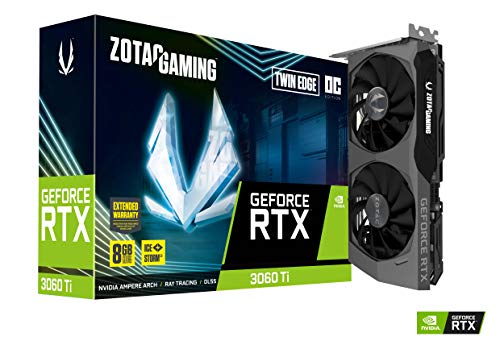
You have your mouse, keyboard, and monitor dialed in. But if your graphics card can’t keep up at 144Hz or higher, those fast reflexes won’t matter. Esports titles like Valorant, CS2, League of Legends, and Overwatch 2 reward consistent high frame rates over raw graphical fidelity. That means you don’t need a flagship card to compete, you need a well-balanced GPU that delivers smooth performance at 1080p or 1440p without breaking the bank.
nIn this guide, we have evaluated seven graphics cards that excel in esports scenarios. From ultra-budget options that revive older PCs to mid-range powerhouses that handle modern competitive titles with ease, each card here has been selected for its ability to deliver the responsive, stutter-free gameplay that competitive gamers demand. Whether you are building a new rig or upgrading an existing one, these picks cover a range of needs and budgets.
nFor more insights on graphics card selection, check out our best graphics cards for esports overview, or explore other categories like ultrawide monitor GPUs and 4K monitor options.
n



Buying Guide: What to Look for in an Esports Graphics Card
nPerformance at 1080p and 1440p
nEsports games are often CPU-bound, but the GPU still matters for maintaining high frame rates. Look for cards that can push 144+ fps at 1080p on medium to high settings. The MSI Gaming RTX 3050 Ventus 2X 6G OC and ASUS Dual RTX 3050 6GB are solid choices here, offering modern architecture and decent clock speeds. For ultra-budget builds, the MOUGOL RX 580 8GB still holds its own in older titles.
nIf you play at 1440p, consider cards with at least 6GB of VRAM. The GIGABYTE RTX 3050 Windforce OC V2 6G provides enough memory headroom for competitive settings without overspending.
nForm Factor and Compatibility
nNot every case can fit a triple-fan behemoth. Small form factor (SFF) builds are popular in esports for their portability and clean aesthetics. The ASRock Intel Arc A380 Challenger ITX 6GB OC is a compact 2-slot card that fits easily into mini-ITX cases. Similarly, the SOYO GT 740 low-profile card is perfect for slim desktop PCs that need a dedicated GPU for light competitive gaming.
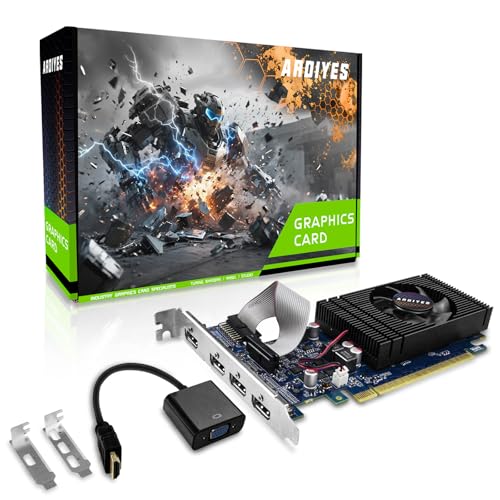
nAlways check your case clearance and power supply requirements. Some cards like the ARDIYES GT 740 draw power directly from the PCIe slot, making them ideal for upgrades in older systems without a dedicated PCIe power cable.
nCooling and Noise Levels
nDuring long gaming sessions, a quiet cooling system is a blessing. The ASRock A380 features a 0dB Silent mode that stops the fan entirely at low temperatures. Dual-fan designs like those on the MSI Ventus and GIGABYTE Windforce keep temperatures in check without excessive noise. For office or HTPC use, the ARDIYES GT 740 offers near-silent operation.
nFan noise can be a distraction in competitive play, so prioritize cards with intelligent fan control or larger heatsinks. Check out our 4K gaming graphics card guide for more on cooling performance in different form factors.
nConnectivity and Multi-Monitor Support
nMany esports players use dual or triple monitors for streaming, Discord, or game overlays. The ARDIYES GT 740 excels here with four HDMI ports for a quad-monitor setup. The MOUGOL RX 580 offers HDMI, DP, and DVI outputs, giving flexibility for older and modern displays alike. Ensure the card has enough ports for your workflow.
nFor a deeper dive into multi-monitor GPU options, visit our Cards category page.
nFinal Thoughts
nAfter reviewing these seven graphics cards, two stand out for different esports scenarios. For budget-conscious players who want a modern, power-efficient card that handles 1080p esports titles effortlessly, the ASUS Dual GeForce RTX 3050 6GB GDDR6 OC Edition delivers reliable frame rates and ray tracing capabilities. If you need an ultra-compact card for a small form factor build and want to save a bit more, the ASRock Intel Arc A380 Challenger ITX 6GB OC offers impressive performance in a tiny package with silent cooling. Both cards will keep you competitive without requiring a huge investment.
nFrequently Asked Questions
nDo I need a high-end graphics card for esports?
nNot at all. Most esports games are optimized to run well on mid-range hardware. A card like the MSI Gaming RTX 3050 Ventus 2X 6G OC provides excellent frame rates at 1080p without the cost of a flagship GPU. Even older cards like the MOUGOL RX 580 can handle Valorant and CS2 at high settings.
nCan I use a low-profile graphics card for esports?
nYes, but performance will be limited. The SOYO GT 740 and ARDIYES GT 740 are designed for light gaming and office use. They can run older esports titles like League of Legends or CS:GO at 1080p with medium settings, but for modern competitive games, a full-height card like the ASUS RTX 3050 is recommended.
nHow much VRAM do I need for competitive gaming in 2026?
nFor 1080p esports, 4GB is the minimum, but 6GB offers more headroom for texture quality and future titles. The GIGABYTE RTX 3050 Windforce OC V2 6G and ASUS RTX 3050 both come with 6GB GDDR6, which is ideal for competitive settings at 1080p or 1440p.
nWhat about AMD vs NVIDIA for esports?
nBoth brands work well. NVIDIA cards like the RTX 3050 series offer features like DLSS and lower power consumption, while AMD cards like the RX 580 provide good raw performance at a lower price. For esports specifically, driver stability and consistent frame pacing matter more than brand. Check our 4K graphics card guide for a broader comparison.