You have just finished rotating your tires, but as you go to tighten the lug nuts, you hesitate. How tight is tight enough? Too loose and the wheel could wobble. Too tight and you risk stripping the studs or warping the brake rotor. This is the exact moment a reliable torque wrench becomes your best friend. This guide focuses on finding the best torque wrench for lug nuts, covering durable and accurate options from EPAuto and LEXIVON for both home mechanics and seasoned pros. We will help you choose the right tool to keep your wheels secure and your rides safe. If you are also looking for the right sockets to pair with your new wrench, check out our guide on the best 1/2 inch socket sets.


Buying Guide: Choosing the Right Torque Wrench for Your Wheels
Selecting the best torque wrench for lug nuts involves more than just picking the first one you see. You need to consider the tool’s accuracy, its range, and the drive size that fits your sockets. A wrong choice can lead to improper tightening, which is a safety hazard. Let’s break down the key factors to help you make an informed decision.
Accuracy and Calibration
For lug nuts, accuracy is non-negotiable. Over-tightening can damage the wheel studs, while under-tightening is dangerous. Look for a wrench that is pre-calibrated to a certain percentage of accuracy, typically within plus or minus 4 percent. This ensures that the torque you set is the torque you deliver. Many quality wrenches come with a calibration certificate, giving you confidence in their performance right out of the box.
We recommend choosing a model with a clear, easy-to-read scale. This helps you set the correct torque value quickly and accurately, even in low-light conditions. A dual-range scale is a great feature, as it allows you to work in both foot-pounds and Newton-meters, which is handy for different vehicle specifications.
Torque Range and Drive Size
The torque range of the wrench should match the requirements of your vehicle. Most passenger cars have lug nut torque specs between 80 and 100 foot-pounds, while trucks and SUVs may require more. A 1/2-inch drive wrench with a range of 10 to 150 foot-pounds is versatile enough for most cars, light trucks, and SUVs. This range covers the vast majority of lug nut applications.
For those who work on larger vehicles or need a bit more muscle, a 1/2-inch drive wrench with a higher maximum torque, like 250 foot-pounds, offers extra headroom. On the other hand, if you primarily work on motorcycles or smaller cars, a 3/8-inch drive model might be more suitable. It is lighter and easier to handle in tight spaces. To ensure you have the right sockets, consider browsing our best 3/8 inch socket set guide.
Build Quality and Durability
Your torque wrench will be subjected to grease, grime, and the occasional drop. A durable construction is essential for a tool that lasts. Look for wrenches with a ratchet head made from hardened chrome vanadium steel. This material offers excellent strength and resistance to wear. A corrosion-resistant finish, such as a satin or electro-black coating, protects the tool from rust and ensures smooth operation over time.
A comfortable, non-slip grip is also important, especially when you are torquing multiple fasteners. A knurled handle provides a secure hold, even with oily hands. This reduces the risk of the wrench slipping and damaging the fastener or your hand.
Ease of Use and Convenience
Finally, consider how easy the wrench is to use. A clear “click” sound when the preset torque is reached is a must. This audible and tactile feedback lets you know exactly when to stop applying force, preventing over-tightening. A reversible ratchet head is also a convenient feature, allowing you to tighten and loosen fasteners without readjusting your grip.
Storage is another factor. A sturdy plastic case keeps your wrench protected and organized when not in use. Some models even come with a small extension bar, which can be handy for reaching recessed lug nuts. For a complete toolkit, you might also be interested in the best wrench set to handle other fasteners on your vehicle.
Final Thoughts
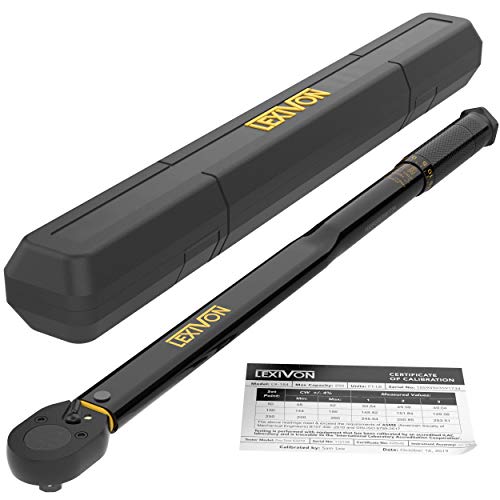
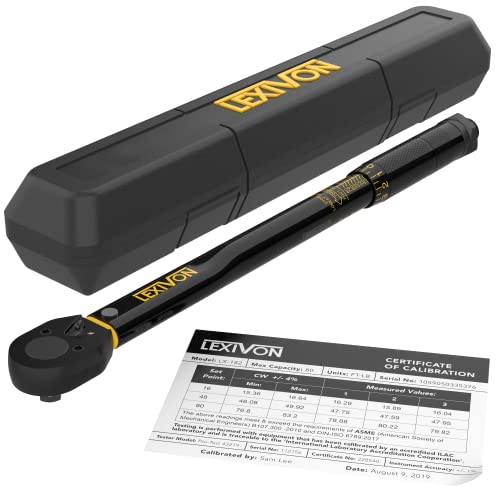
Choosing the right torque wrench is a small step that makes a big difference in your safety and your vehicle’s maintenance. For most DIYers, the EPAuto 1/2-inch Drive Click Torque Wrench offers a great balance of accuracy and reach, making it a reliable everyday companion. For those who want a professional-grade tool with a higher torque ceiling and a rugged finish, the LEXIVON 1/2-Inch Drive Click Torque Wrench 25-250 is a superb choice that will serve you well for years to come.
Frequently Asked Questions
What is the ideal torque setting for lug nuts?
The ideal torque setting for lug nuts varies by vehicle, but a common range is between 80 and 100 foot-pounds for most passenger cars. Always consult your vehicle’s owner’s manual for the exact specification. Using a torque wrench that is accurate within this range is crucial to avoid over- or under-tightening.
Can I use a 3/8-inch drive torque wrench for lug nuts?
Yes, you can use a 3/8-inch drive torque wrench for lug nuts, provided it has a sufficient torque range. Many 3/8-inch models go up to 80 foot-pounds, which is at the lower end for some cars. However, for most vehicles, a 1/2-inch drive wrench is recommended because it offers a higher torque range and more leverage, making the task easier and safer.
How do I know if my torque wrench is accurate?
Most quality torque wrenches come with a calibration certificate. To maintain accuracy, it is a good practice to have your wrench recalibrated annually if you use it frequently. You can also perform a simple check by comparing it against a known accurate torque wrench or a torque adapter. If you notice any unusual “click” sounds or if the wrench feels loose, it is time to have it inspected.
Is a click torque wrench better than a beam type for lug nuts?
For most people, a click torque wrench is more convenient and easier to use for lug nuts. It provides a clear audible and tactile signal when the preset torque is reached, reducing the risk of error. Beam types are less expensive but require you to look at a scale, which can be awkward in tight spaces. For more tool recommendations, you might find our guide on ratcheting wrench sets helpful.