When your tire pressure light blinks for about a minute and then stays on, it means the Tire Pressure Monitoring System (TPMS) has detected a fault, not just low tire pressure. A steady light without blinking usually signals underinflated tires, while the blink-then-steady pattern points to a sensor or receiver problem. You should check your tire pressures first, but the real fix will likely involve diagnosing the monitoring system itself.
Why Your Tire Pressure Light Blinking Then Stays On
The blink-then-steady sequence is a deliberate diagnostic signal from your TPMS. It tells you the system cannot verify the pressure data from one or more wheels. The causes below are ordered from most to least common, so start at the top and work your way down.
Dead TPMS Sensor Battery Is the Most Common Cause
Each tire pressure sensor runs on a small battery built into the valve stem. Those batteries typically last five to ten years, and when one dies, the system loses that wheel’s signal.
The light will often blink for about 60 to 90 seconds, then stay on to tell you the system is no longer working properly. If your car is older or you have never replaced a sensor, a dead battery is a strong suspect.
Sensor Not Programmed After a Tire Change
Seasonal tire swaps, new wheels, or a fresh set of tires can leave a sensor unregistered with your car’s TPMS computer. The system expects each sensor to broadcast a specific ID, and an unrecognized ID triggers the same blink-then-steady warning.
Sometimes the sensor is fine but simply needs to be relearned using the car’s TPMS reset procedure. A scan tool can read the sensor IDs and tell you which position the car is not seeing.
Damaged or Missing TPMS Sensor
A pothole, curb strike, or tire repair can crack the sensor housing or break the valve stem. Corrosion from road salt and moisture can also kill the sensor before the battery would normally wear out.
If a tire shop recently worked on your wheels, a sensor may have been left out or reinstalled incorrectly. A visual inspection of each valve stem can catch obvious damage.
Faulty TPMS Receiver or Antenna
The car’s TPMS module receives signals from all four sensors. If that receiver fails, the system cannot see any sensor, and the warning behaves exactly as you described.
Receiver problems are less common than sensor issues, but they do happen, especially after electrical work or water intrusion. A diagnostic scan can confirm whether the module is the problem.
Interference From Aftermarket Electronics
Some aftermarket devices, such as phone chargers, dash cams, or metal window tint, can interfere with the low-frequency signals from TPMS sensors. The interference is usually temporary, and the light may reset on its own.
If the blinking started right after you installed new electronics, try unplugging them one at a time to see if the warning clears.
How to Diagnose and Fix a Blinking TPMS Light
Work through these steps in order. Most of them take only a few minutes and do not require special tools until the final step.
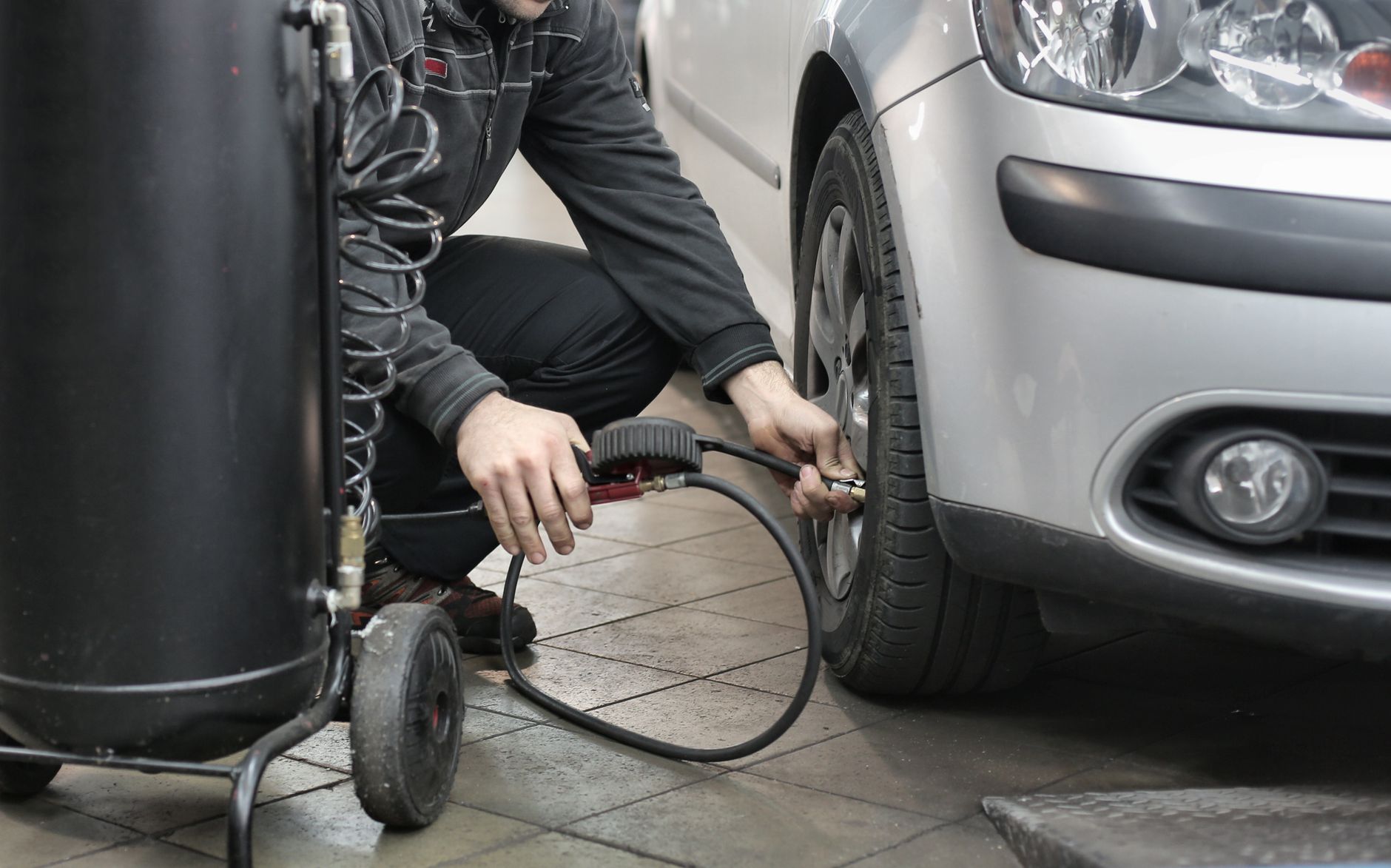
- Check every tire pressure with a gauge and inflate to the pressure on your door sticker.
- If pressures are fine, inspect each valve stem for damage, corrosion, or missing sensors.
- Try the TPMS reset procedure in your owner’s manual, which often relearns sensor IDs.
- Use an OBD2 scan tool to read TPMS codes and identify the failed sensor.
- Replace the sensor or its battery, then have the system relearned.
- If the scan shows no sensor codes, test the TPMS receiver module.
To identify which sensor is failing, you need a scan tool that can read TPMS data.
Related Guides
- Best Tire Inflator for Truck Tires
- Best Tire Inflator for SUV
- Tire Pressure Light On But Tires Are Fine
Frequently Asked Questions
Why is my tire pressure light blinking then stays on?
This pattern is the TPMS system’s way of saying it has a malfunction. A solid light means low pressure, while a blink followed by a steady light usually points to a dead sensor battery, a missing sensor, or a receiver fault.
Can I drive with a blinking TPMS light?
You can drive short distances, but the warning means the system cannot confirm your tire pressures. Check the pressures manually and keep an eye on how the car feels. If a tire is visibly low or the car pulls to one side, stop and inspect it before continuing.
How long do TPMS sensor batteries last?
Most TPMS sensor batteries last between five and ten years, depending on driving conditions and how often the system wakes up. When the battery dies, the sensor is usually replaced as a unit because the battery is sealed inside.
Do I need a special tool to reset the TPMS light?
Many cars can relearn sensors with a simple button sequence or by driving for a few minutes. Others require a TPMS scan tool or a diagnostic scanner to program new sensor IDs. Your owner’s manual will tell you which method your car uses.
Can cold weather make the TPMS light blink?
Cold weather lowers tire pressure and can turn on a solid warning light, but it does not normally cause the blink-then-steady malfunction pattern. If you see blinking in cold weather, treat it as a system fault and check the sensors rather than just adding air.
The short version is that a tire pressure light blinking then staying on signals a TPMS fault, not just low air. Start with a manual pressure check, then move to a scan tool to pinpoint the failed sensor or module.