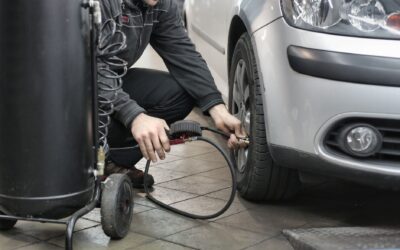
The quickest way to check tire pressure is to use a digital or analog tire pressure gauge on each tire when the tires are cold, then compare the reading to the manufacturer’s recommended PSI listed on the driver’s side door jamb or in your owner’s manual. This simple routine improves fuel economy, extends tire life, and keeps you safe on the road. Learning how to check tire pressure properly prevents uneven wear and blowouts.

Pros
- Fast tire inflation with high-capacity battery
- Cordless freedom for use anywhere
- Multiple modes and pressure units for different inflatables
- Safety auto shut-off prevents over-inflation
- Compact and lightweight for easy storage
Cons
- Battery life may decrease over time with frequent use
- Max 150 PSI may not be sufficient for large truck or RV tires
- No user reviews available yet to confirm long-term reliability
The CRAFTSMAN cordless tire inflator is a versatile portable air compressor designed for car owners and DIY enthusiasts. It combines a powerful 6000mAh rechargeable battery with a digital pressure gauge and auto shut-off for convenient and accurate inflation on the go.
Standout performance includes the ability to inflate four standard car tires from 30 to 36 PSI in just 45 seconds. The five preset modes (bike, motorcycle, car, ball, plus custom) and four pressure units (PSI, KPA, BAR, KG/CM2) make it suitable for a wide range of inflatables beyond car tires.
Design and build quality are solid with a lightweight 1.28-pound body and compact dimensions that fit easily in a glove compartment. The integrated LED light with three modes aids visibility in low light, while the USB-C port and 5V/1A output allow charging of mobile devices.
A potential drawback is the battery capacity: while sufficient for several tire top-ups, heavy users may need to recharge frequently. Additionally, the 150 PSI maximum pressure limits use for high-pressure truck or RV tires. As a new model, long-term reliability is not yet proven by customer reviews.
Overall, the CRAFTSMAN cordless tire inflator offers excellent value for everyday car owners seeking a portable, feature-rich air pump. Its combination of speed, safety features, and multi-functionality makes it a smart addition to any vehicle emergency kit.
Pros
- Exceptional accuracy within 1% helps maintain optimal tire pressure.
- Rugged stainless steel and brass construction ensures longevity.
- Versatile 3-in-1 design suits inflation, deflation, and checking without switching tools.
- Wide compatibility with various air compressors and vehicle types.
- Backlit LCD screen works well in dim conditions.
Cons
- Requires connection to an external air compressor; not a standalone inflator.
- Battery life is not specified; digital gauge may need occasional battery changes.
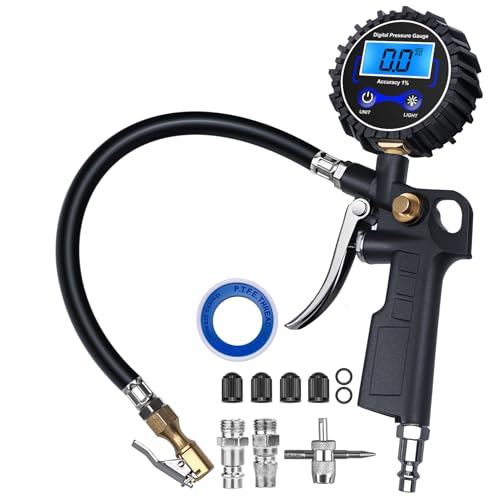
The DigitPro Digital Tire Pressure Gauge with Inflator is a versatile 3-in-1 tool designed for drivers who demand precision and durability. It is ideal for car, truck, SUV, RV, and motorcycle owners who need to check, inflate, and deflate tires quickly and accurately. This heavy-duty gauge connects to standard air compressors, making it a practical addition to any garage or workshop.
Standout features include 1% accuracy with a resolution of 0.1 PSI, covering a range from 3 to 250 PSI. The four selectable units (PSI, BAR, KPA, KG/CM2) cater to global users. The built-in deflation valve and power button streamline tire maintenance, while the backlit LCD display ensures visibility in low light. The 3-in-1 design saves time and eliminates the need for multiple tools.
Build quality is robust with a stainless steel body, brass components, and a gear-type rubber dial. The rubber hose is sturdy and flexible, and the overall construction feels reliable for daily use. The grip and trigger are comfortable, and the gauge is easy to operate even with gloves.
One potential drawback is that this gauge requires an external air compressor to function as an inflator; it is not a standalone unit. Additionally, the digital display is battery-powered, and battery life is not specified, so users should keep spare batteries handy. The gauge's heavy-duty design adds some weight, but this is a trade-off for durability.
Overall, the DigitPro Digital Tire Pressure Gauge with Inflator offers excellent value for those seeking a precise, durable, and multi-functional tire pressure tool. Its accuracy and build quality make it a solid choice for both DIY enthusiasts and professionals. This gauge is a reliable companion for maintaining tire health and safety.


Pros
- Highly accurate with 0.1 PSI resolution and ANSI Grade 2A calibration.
- Durable brass fittings and crush-resistant rubber hose for long-term reliability.
- Ergonomic design reduces hand fatigue, even during prolonged use.
- Easy-to-read backlit LCD and built-in LED for low-light conditions.
- Versatile 3-in-1 functionality for inflating, deflating, and measuring.
Cons
- No auto-shutoff feature for the LED flashlight, which may drain battery if left on.
- The 19.7-inch hose length may be too short for some users needing extra reach.
- Battery life is not specified, so users should keep spare batteries handy.
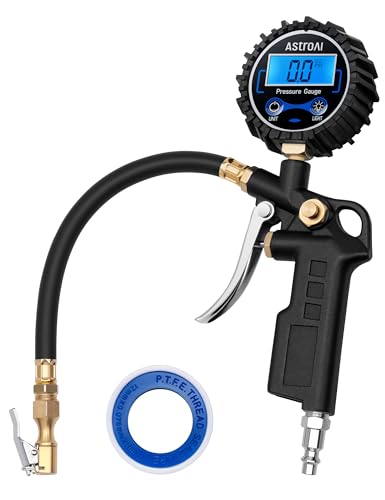
The AstroAI Digital Tire Pressure Gauge with Inflator is a versatile tool designed for drivers, mechanics, and DIYers who demand precision and durability. It combines inflation, deflation, and pressure reading into one compact unit, making it a convenient addition to any garage or roadside emergency kit.
Its standout feature is professional-grade accuracy, calibrated to ANSI B40.7 Grade 2A standards with ±0.5% full scale and 0.1 PSI resolution. This ensures you get reliable readings every time, outperforming typical ±1% gauges. The 3-in-1 operation allows you to squeeze the trigger to inflate or press a button to deflate, streamlining tire maintenance tasks.
The build quality is heavy-duty, with solid brass air chuck and connect fittings that resist leaks, plus a 19.7-inch rubber hose that withstands crushing and kinking. The ergonomic palm-grip trigger and anti-slip soft rubber handle reduce hand strain during prolonged use, while the 360-degree swivel air chuck reaches awkward valve stems effortlessly, protecting valves from damage.
One potential drawback is the lack of an auto-shutoff for the built-in LED flashlight, which could drain batteries if forgotten. Additionally, the hose length may be too short for larger vehicles or setups requiring extra reach. Battery life is not specified, so keeping spare batteries is advisable.
Overall, the AstroAI Digital Tire Pressure Gauge with Inflator offers excellent accuracy, durability, and user-friendly features at a reasonable price. It is a solid choice for anyone seeking a reliable tire maintenance tool for everyday use or emergencies.
Why Tire Pressure Matters for Safety and Performance
Underinflated tires generate more friction, which makes your engine work harder and reduces gas mileage by as much as three percent. Overinflated tires reduce the contact patch with the road, making braking distances longer and increasing the risk of a puncture. Proper pressure also prevents overheating at highway speeds, a common cause of tire failure. That is why knowing how to check tire pressure is more than a maintenance chore, it is a real safety habit.
The Best Time to Check Tire Pressure: Cold Tires
Tire pressure fluctuates with temperature. For every ten degrees Fahrenheit the air temperature drops, tire pressure decreases by about one PSI. Driving a few miles heats the tires and pushes the pressure reading artificially higher. To get an accurate baseline, always check tire pressure when the car has been parked for at least three hours or before you drive more than a mile in the morning. This cold reading is the number the manufacturer wants you to hit.
What You Need to Check Tire Pressure
You need a tire pressure gauge and an air compressor or tire inflator. Gauge types include stick-style, digital, and dial. Digital gauges are easiest to read, but any gauge that matches the recommended PSI range on your vehicle works. Many gas stations have free air pumps with built in gauges, but their accuracy varies. Keeping a personal gauge in your glove box removes the guesswork when you stop to fill up.
Step-by-Step: How to Check Tire Pressure Correctly
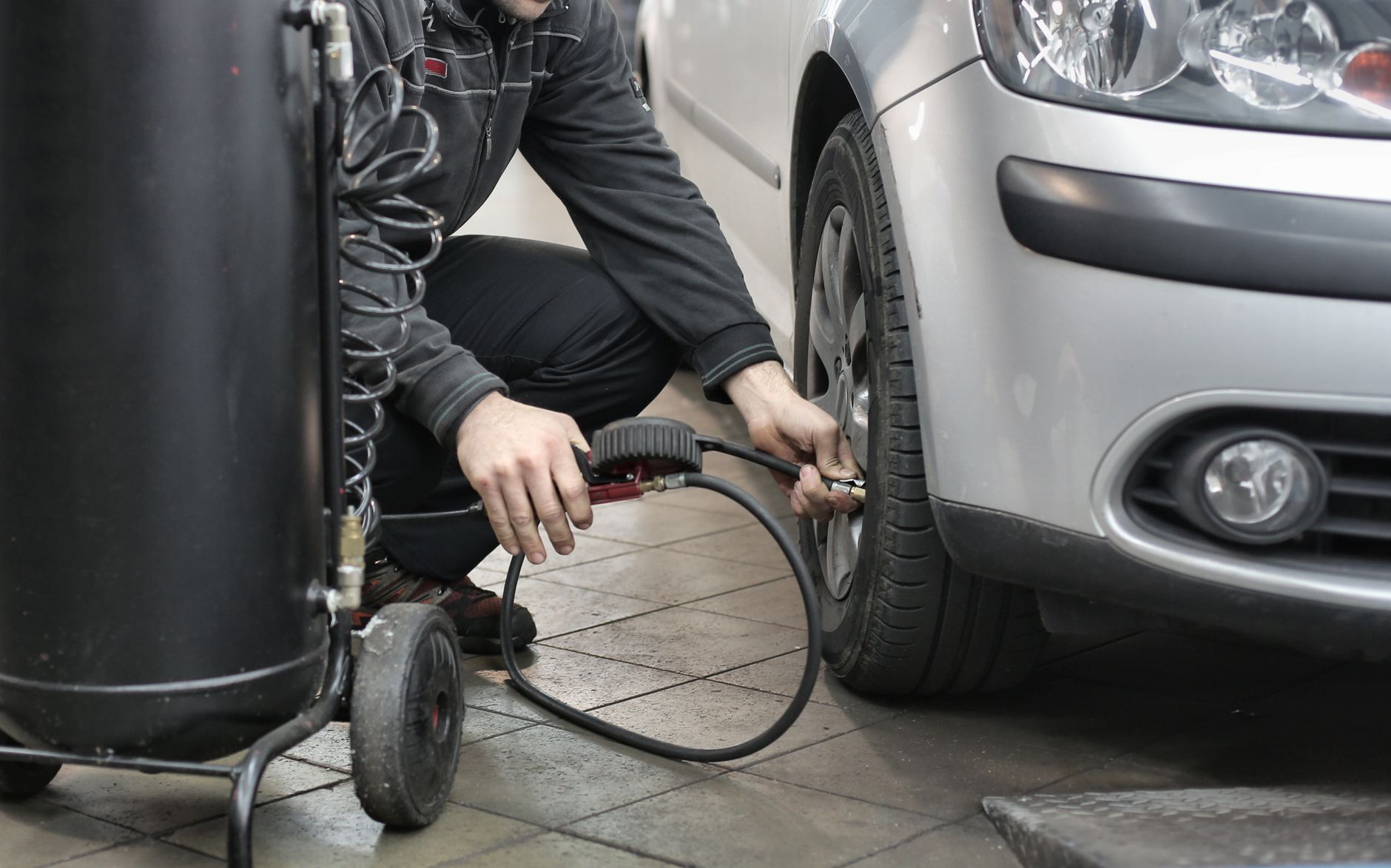
Start by removing the valve stem cap on the first tire. Press the gauge firmly onto the valve stem until the hissing stops. Read the pressure shown on the gauge and write it down. Add air if the reading is below the recommended PSI, or release air by pressing the small pin inside the valve stem if it is too high. Recheck the pressure after adjusting. Repeat for all four tires.
How Often Should You Check Tire Pressure?
Check pressure at least once a month and before any long trip. Seasonal temperature changes can cause a drop of five or more PSI between summer and winter, so start of each season is worth a check. If you drive over potholes or rough roads often, inspect more frequently. Regular checks catch small leaks early before they become flat tires.
How to Fix Incorrect Tire Pressure
Here are the quick actions you can take based on what you find when you check tire pressure:
- Low reading: Add air in short bursts, checking pressure after each burst, until you reach the recommended PSI.
- High reading: Press the small pin inside the valve stem to release air gradually, then recheck.
- Pressure drops again quickly: Inspect the tire for a puncture or a damaged valve stem. A slow leak means a shop repair is needed.
- Uneven pressure across tires: Rotate tires and recheck. Consistent difference between front and rear is normal, but a single tire out of range suggests a problem.
Checking tire pressure is the easiest way to protect your tires and your safety.
Frequently Asked Questions
Can I check tire pressure without a gauge?
You can get a rough idea by looking at the tire shape and pressing on the sidewall, but only a gauge gives an accurate reading. Driving on visibly underinflated tires is dangerous. A gauge costs only a few dollars and fits in the glove box.
What does PSI stand for in tire pressure?
PSI stands for pounds per square inch. It measures the air pressure inside the tire. Most passenger cars recommend between 30 and 35 PSI. You can find the exact number for your vehicle on the driver’s door panel sticker.
Is it safe to check tire pressure when tires are hot?
You can check hot tires, but the reading will be higher than the cold pressure. If you check while hot and see a reading that matches the cold recommendation, your tires are actually underinflated. For the most reliable data, always check cold.
How can I tell if my tire pressure sensor is accurate?
TPMS (tire pressure monitoring system) sensors are usually accurate within a few PSI, but they only warn you when pressure drops about 25 percent below the recommended level. That means you could be driving on underinflated tires without a warning light. A manual check with a gauge catches this gap.
What causes tire pressure to drop overnight?
A gradual overnight drop of one or two PSI can be normal from cooling, but a larger drop often means a slow leak from a puncture, a damaged valve stem, or a cracked wheel rim. Check the tire for visible damage and have a shop inspect it if the pressure drops repeatedly.
Related Guides
Final Thoughts
Learning how to check tire pressure takes two minutes and pays you back in fuel savings, longer tire life, and safer driving. Once you have this routine down, consider testing other systems under your hood with our alternator testing guide to keep your whole car in top shape.