Are you tired of crooked shelves and mismatched tile lines? Whether you hang pictures, install cabinets, or frame walls, a cross line laser level delivers the accuracy you need. This guide reviews two of the best cross line laser level options for 2026, one built for professional jobsite use and another ideal for home DIYers. We evaluated each model for precision, durability, brightness, and ease of use. You will also find practical buying tips to choose the right tool for your projects. If you are also selecting other essential tools, consider our expert picks for the top multimeters for electricians.
Pros
- Durable rubber overmold and IP55 rating withstand jobsite abuse
- Works with AA batteries or optional rechargeable Li-Ion battery
- Accurate self-leveling with lock mode for transport safety
- Bright, visible lines suitable for indoor framing and layout tasks
- Versatile mounting options including magnets and tripod thread
Cons
- 50-foot range may be insufficient for large commercial projects
- Li-Ion battery sold separately, adding to overall cost
- No included tripod or wall mount in the package
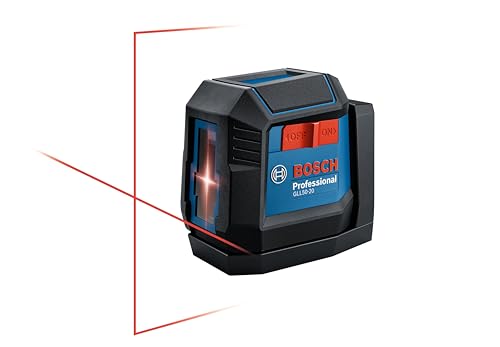
The Bosch PRO GLL50-20 Self-Leveling Cross-Line Laser is a rugged, compact tool built for professionals who need accurate leveling on construction sites. It projects both horizontal and vertical lines with 5/16-inch accuracy at 30 feet, and a range of 50 feet, making it perfect for framing, shelving, or tile layout. Its dual power system lets you use either included AA batteries or an optional Bosch lithium-ion pack, so you can keep working without hunting for outlets.
Standout features include the full rubber overmold housing that acts like a roll cage, protecting the laser from drops and bumps. The IP55 rating adds dust and water resistance, so it can handle muddy or rainy conditions. The Smart Pendulum System self-levels quickly, blinks if the tool is out of level, and locks the pendulum when switched off to prevent damage during transport.
Design and build quality are top-notch: the laser feels solid yet lightweight at just over a pound. The integrated mount includes strong magnets and a 1/4-20 thread, so you can attach it to metal studs, tripods, or wall brackets. The cross-line mode is simple to activate with a single button, and the lines are bright and thin enough for precise work indoors.
Potential drawbacks include a 50-foot range that may feel limiting on large commercial jobs. Also, the rechargeable lithium-ion battery is sold separately, which adds cost if you want to avoid disposable AA batteries. No tripod or wall mount is included, so you may need to purchase accessories separately for hands-free use.
Overall, the Bosch PRO GLL50-20 delivers excellent durability and accuracy for its price point. It is a smart choice for electricians, carpenters, and DIYers who need a reliable cross-line laser for interior projects. With its tough construction and flexible power options, it is a solid addition to any tool kit.


Pros
- Multi-material cutting capability (wood, steel, aluminum, composites) saves time and money.
- Zero-clearance throat plate reduces tear-out for cleaner edges.
- Dado plate included for grooves and dadoes, increasing project versatility.
- Robust safety features like blade brake and anti-kickback pawls enhance confidence.
- Portable design with outfeed support bar handles large materials easily.
Cons
- No built-in stand or legs included, requiring a separate work surface or stand.
- At 15 amps, it may require a dedicated circuit in some workshops.
- Limited to 3-3/8-inch cut depth, which may not suit thicker stock for some users.
The Evolution R10TS is a 10-inch jobsite table saw designed for professionals and serious DIYers who need a portable yet powerful saw. With a 15A motor capable of cutting wood, mild steel, aluminum, and composites, it is a versatile tool for construction, remodeling, and metalworking projects.
Standout features include the zero-clearance throat plate and dado plate, which minimize tear-out and allow for groove cutting. The rack and pinion fence system delivers precise, repeatable cuts with a 26-inch rip capacity. The 0-45 degree bevel range with geared adjustment ensures accuracy for angled cuts.
Build quality is solid with a lightweight steel frame and carry handles for easy transport. The outfeed support bar adds stability for larger materials. Safety is addressed with an electronic blade brake, anti-kickback pawls, and a quick-release riving knife, making it a reliable choice for busy job sites.
Potential drawbacks include the lack of a built-in stand, which may require an additional purchase. The 15A motor might need a dedicated circuit in some settings, and the 3-3/8-inch cut depth may not handle thicker stock. However, these are minor trade-offs for the saw's portability and multi-material capability.
Overall, the Evolution R10TS is a top-tier jobsite table saw that combines power, precision, and safety. It earns a strong recommendation for professionals who need a versatile saw that can handle diverse materials and demanding job site conditions. Backed by a 3-year warranty, it is a worthy investment.
Motor: 15A, soft start. Blade Size: 10 inches. Rip Capacity: 26 inches. Cut Depth: 3-3/8 inches. Bevel Range: 0 to 45 degrees. Throat Plate: Zero-clearance (included). Dado Plate: Included. Weight: Approximately 60 pounds. Dimensions: 29 x 29 x 15 inches. Warranty: 3-year limited. Color: Orange.
Buying Guide: How to Choose a Cross Line Laser Level
Accuracy and Leveling Range
The primary job of any laser level is to project straight, level lines. Look for a model that self-levels and indicates when it is out of level. Most lasers offer accuracy within 1/8 to 5/16 inch at 30 feet. For general home use, that is sufficient. Professional framers may need even tighter tolerances. Check the working range, too. Some units reach 50 feet without a receiver, while others need an optional detector for long distances.
Brightness and Line Visibility
Green laser beams are generally four times brighter than red ones, which helps in well-lit rooms. A bright beam saves time and reduces eye strain. However, green lasers often demand more battery power. For outdoor use, seek a pulse mode that works with a laser receiver. That feature extends visibility even in direct sunlight.
Durability and Weather Resistance
Jobsite tools endure drops, dust, and splashes. Look for a rugged housing with rubber overmolding and an IP rating. An IP54 or IP55 rating indicates protection against limited dust ingress and water spray. A unit with a roll-cage style case can survive accidental falls from ladders or scaffolding.
Power Source and Battery Life
Battery flexibility matters. Some lasers run on standard AA batteries, which are easy to replace. Others feature a built-in rechargeable battery that lasts a full workday. Consider how often you use the tool. For heavy daily use, rechargeable systems save money over time. If you need a laser for occasional DIY tasks, AA batteries offer convenience with no charging wait. For more tool advice, check our review of the best stud finder for drywall.
Final Thoughts
After reviewing both options, the right choice depends on your specific needs. If you work on professional job sites and require rugged durability, the BOSCH PRO GLL50-20 Self-Leveling Cross-Line Laser delivers power flexibility and a tough IP55 rating. For home DIYers who value portability and a bright green beam, the Fanttik D2 Pocket Green Laser Level for Picture is an excellent companion for hanging shelves and pictures. Both tools simplify layout work and boost accuracy.
Frequently Asked Questions
Can I use a cross line laser level outdoors?
Yes, but you may need a laser receiver for bright conditions. Many models offer a pulse mode that works with a separate detector, extending the range up to 164 feet. Look for this feature if you plan to do exterior framing or landscaping.
What is the difference between red and green laser levels?
Green lasers are about four times brighter than red ones under the same conditions, making them more visible in well-lit rooms or outdoors. However, green lasers consume more battery power. Red lasers are less expensive and often have longer battery life. Choose based on your typical work environment.
How do I maintain a cross line laser level?
Keep the lens clean using a soft, dry cloth. Store the laser in its case to prevent dust and impact damage. Before each use, check the self-leveling function. If you drop the tool, verify calibration by checking against a known level surface. For more maintenance tips, see our guide on the top tire pressure gauges which covers care for precision instruments.
Can I mount a laser level on a tripod?
Most cross line laser levels feature a 1/4-inch-20 threaded mount that fits standard tripods. Some models also include a magnetic bracket for quick attachment to metal surfaces. A tripod is ideal for keeping the laser at a consistent height during layout work.