

Imagine you are working remotely from a coffee shop or a hotel lobby, typing on a public Wi-Fi that feels as exposed as an open window. You need a secure tunnel for your data, and that is exactly what a VPN provides. But not every router handles VPN traffic gracefully. Some choke on encryption, slow your connection to a crawl, or make setup a nightmare. That is where this guide helps. We have assessed three top-rated routers from TP-Link and GL.iNet that excel at VPN integration, whether you are traveling light or building a secure home network. For more on building a reliable whole-home setup, check our Routers category page for deeper insights.


Pros
- WiFi 6E delivers future-proof performance with access to the uncongested 6 GHz spectrum for faster, more stable connections
- Exceptional value at this price point for a tri-band router with PCMag Editors' Choice recognition
- Superior device capacity with 4x increase in simultaneous connections through OFDMA technology
- Robust security features including VPN server and client support plus HomeShield protection at no extra cost
- Excellent customer support with 24/7 availability and extended 3-year warranty coverage
Cons
- Requires a separate modem for most internet service providers, adding to overall setup costs
- 6 GHz band adoption still limited as many devices lack WiFi 6E compatibility, though backward compatibility ensures broad device support
- Advanced features like VPN and HomeShield premium features may require technical knowledge for optimal configuration
The TP-Link Archer AXE75 represents a significant leap forward in home networking, bringing WiFi 6E technology to users who demand next-generation performance. This tri-band router is engineered for households with multiple devices, gamers seeking competitive advantages, and streaming enthusiasts who refuse to compromise on speed or reliability.
What sets the AXE75 apart is its access to the new 6 GHz band, which provides a dedicated, interference-free channel for your most demanding tasks. The 5400 Mbps total bandwidth is distributed across three bands, with 2402 Mbps on both the 6 GHz and 5 GHz bands, plus 574 Mbps on 2.4 GHz. This architecture, combined with OFDMA technology, increases device capacity by four times compared to standard routers, meaning you can connect significantly more devices without experiencing slowdowns or lag.
The hardware design emphasizes longevity and reliability, featuring a 1.0 GHz dual-core CPU, 512 MB of high-speed memory, and an optimized housing design for superior heat dissipation. These specifications translate to consistent performance during extended use and fewer connection drops during peak usage times. EasyMesh compatibility allows you to expand your network seamlessly by adding compatible routers or extenders, effectively eliminating dead zones throughout your home.
Security and privacy features are comprehensive, including VPN server and client support for OpenVPN, PPTP, and L2TP protocols. The included HomeShield service provides network security scanning, IoT device identification, and parental controls at no additional cost, with premium features available for enhanced protection. Universal ISP compatibility means the router works with virtually every major internet provider without requiring proprietary equipment.
The primary consideration is that most ISPs require a separate modem, and full benefits require devices that support WiFi 6E, though backward compatibility ensures excellent performance with existing devices. At this price point with PCMag Editors' Choice recognition, the AXE75 delivers exceptional value for anyone ready to upgrade to next-generation wireless technology.
Performance: Total WiFi Speed: 5400 Mbps (6 GHz: 2402 Mbps, 5 GHz: 2402 Mbps, 2.4 GHz: 574 Mbps). Processor: 1.0 GHz Dual-Core CPU. Memory: 512 MB High-Speed RAM.
Connectivity: WiFi 6E Tri-Band Router. Gigabit Ethernet ports for wired connections. EasyMesh compatible for network expansion. Works with all major ISPs including Comcast, Verizon, AT&T, Charter, Xfinity, Spectrum, and others.
Security: VPN Server and Client support (OpenVPN, PPTP, L2TP). TP-Link HomeShield with basic network security, IoT device identification, parental controls, and quality of service management.
Support: 24/7 technical support. 3-year warranty coverage. EasyMesh technology for seamless whole-home mesh network expansion.
Best For: Power users, gamers, content creators, and households with 10+ connected devices. Ideal for those seeking future-proof WiFi 6E technology, low-latency gaming, 4K streaming, and comprehensive network security without monthly subscription fees.
Consider If: You have a large home with multiple dead zones, rely on multiple simultaneous high-bandwidth activities, need VPN capabilities for privacy, or want access to the latest WiFi standard at an affordable price.
May Not Be Right If: You only need basic WiFi for light browsing and email, have a very small space, or your devices don't support WiFi 6E (though backward compatibility with older devices is fully supported).
Buying Guide
VPN Protocol Support: OpenVPN vs. WireGuard
The heart of any VPN-friendly router is its protocol support. OpenVPN is widely compatible and highly configurable, but WireGuard offers faster speeds and simpler code. The best router for you will support both, giving flexibility to match your VPN provider. Look for native client integration rather than manual config files.
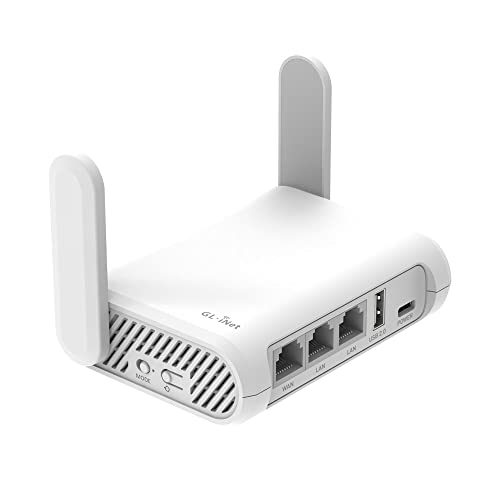
For example, the GL.iNet GL-SFT1200 Opal Travel Router comes with both pre-installed and a physical toggle switch to activate your VPN instantly. That convenience can save time on the road. For more travel tips, see our best wifi routers for vpn article.
Portability and Power Source
Travel routers need to be lightweight and easy to power. USB-C charging is a game changer because you can use a power bank or your laptop charger. Look for compact designs under 200 grams that fit in a pocket. The TP-Link Roam 6 is a pocket-sized unit that runs on USB-C, making it ideal for flights or campsites.
If your trips often include public venues with captive portals (like hotels or airports), a router that can authenticate once and keep the whole team connected is invaluable. For a deeper dive into travel routers, check our best wifi routers for vpn resource.
Speed and Band Support
VPN encryption demands processor power. A slow CPU can bottleneck your connection. For home use, a tri-band AX5400 router like the TP-Link AXE5400 provides dedicated 6 GHz bandwidth for low-latency tasks. For travel, dual-band AC1200 is usually sufficient for streaming and browsing, but Wi-Fi 6 models offer better handling of multiple devices.
Consider your typical devices: if you carry a laptop, tablet, and phone, a router that handles 30+ devices ensures everyone stays connected without lag. This is especially important when sharing a hotel connection among colleagues or family.
Final Thoughts
After evaluating these models, our recommendation splits into two clear paths: for travelers who need a compact, plug-and-play VPN solution, the GL.iNet GL-SFT1200 Opal Travel Router is a fantastic choice with its dedicated VPN toggle and lightweight design, while the TP-Link AXE5400 Tri-Band WiFi 6E Router stands out for home users who want blazing speeds on the 6 GHz band and robust VPN server/client support. Both are validated for stable, secure connections in 2026.
Related Guides
- Best WiFi Router For Gigabit Internet
- Top Routers with Parental Controls for 2026
- Top Routers Under $200 for 2026
Frequently Asked Questions
Can I use any router with a VPN?
Not all routers support VPN clients natively. To run a VPN directly on the router, you need one that supports OpenVPN or WireGuard protocols. Dedicated VPN routers like those from GL.iNet or TP-Link offer built-in clients. Some models also support VPN server functionality, which lets you access your home network remotely.
Will a VPN slow down my router speed?
Yes, encryption overhead can reduce throughput. However, modern routers with powerful CPUs (1.0 GHz or more) and support for WireGuard can minimize the impact. For gigabit connections, look for routers with faster processors. In 2026, many mid-range models easily handle 300 to 500 Mbps VPN speeds.
How do I set up a VPN on my router?
Most routers have a VPN section in their admin panel. You enter your provider’s server address, username, and password. Some offer one-click setup via a mobile app. For travel routers like the GL.iNet Opal, you can configure the VPN in the web interface and then use a physical switch to enable or disable it on the go.
What is the difference between a VPN client and VPN server on a router?
A VPN client connects your router to a remote VPN service, encrypting all outgoing traffic. A VPN server allows remote devices to connect to your home network securely. The TP-Link AXE5400 supports both, which is useful for accessing files at home while traveling.


