

Picture this: you’re on a video call, your partner is streaming in 4K, the kids are gaming online, and the smart home devices are constantly syncing. Suddenly, everything freezes. This is the daily reality for many households with multiple devices, and the culprit is often an outdated router that simply can’t keep up.
In this guide, we’ll break down the key differences between WiFi 6 and WiFi 7 routers, focusing on what really matters when you have a house full of connected gadgets. Whether you’re a gamer, a remote worker, or just have a busy smart home, we’ve got you covered. For a deeper dive into smart home setups, check out our top picks for smart home routers.

Pros
- Blazing fast WiFi 7 speeds up to 5 Gbps for demanding applications
- Simple setup process using the Orbi app with guided steps
- Strong whole-home coverage covering up to 6,000 sq ft
- Multi-Gig Ethernet ports (2.5 Gbps) for wired connections
- Comprehensive security features including WPA3 and Armor trial
Cons
- Dual-band design may limit overall performance in very high-density environments compared to tri-band systems
- Some users report satellites occasionally dropping offline, requiring reconnection
- Initial setup may require satellites to be near the base station to avoid failures
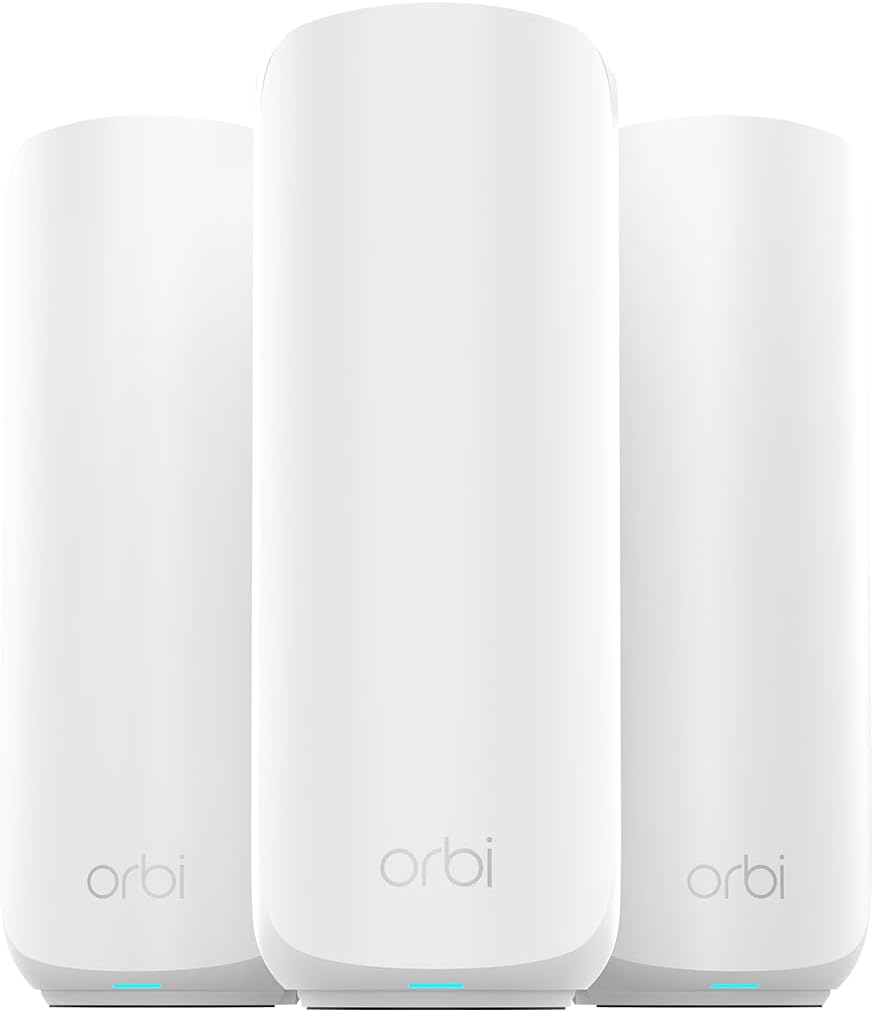
The NETGEAR Orbi 370 Series is a dual-band WiFi 7 mesh system designed for larger homes needing reliable, high-speed coverage. With a router and two satellites covering up to 6,000 square feet and supporting up to 70 devices, it's perfect for families who stream, game, and work from home simultaneously. This system offers a cost-effective entry into the latest WiFi standard without the premium price tag of tri-band alternatives.
Standout features include WiFi 7 speeds up to 5 Gbps, which is 2.4 times faster than WiFi 6, ensuring smooth 8K streaming and lag-free gaming. The Enhanced Backhaul prioritizes the connection between router and satellites, so even bandwidth-heavy tasks like 4K video calls get the needed throughput. Real-world speeds will vary based on your internet plan and devices, but many users report dramatic improvements over older systems.
The Orbi 370 boasts a sleek, understated tower design that blends into any home. Setup is straightforward using the Orbi app, though some users note that keeping satellites near the base station during initial configuration is crucial to avoid connection errors. The system includes 2.5 Gig WAN and LAN ports, making it ready for multi-gig fiber internet plans. Security is robust out of the box with WPA3 encryption, automatic firmware updates, and a 30-day trial of NETGEAR Armor.
However, the dual-band configuration is a notable limitation. Unlike tri-band systems, the Orbi 370 shares spectrum between client devices and backhaul, which can lead to congestion in very dense environments. Additionally, a few reviewers report satellites dropping offline intermittently, though this seems less common with proper placement. Expandability is easy by adding another satellite for up to 2,000 sq ft more coverage.
Overall, the NETGEAR Orbi 370 Series is an excellent choice for anyone wanting to future-proof their home network with WiFi 7 without spending over a thousand dollars. It delivers strong performance, easy management, and solid security for medium to large homes. If you have a very large home or need absolute top-tier speed for many simultaneous high-bandwidth devices, consider a tri-band system, but for most families, this is a fantastic upgrade.

Pros
- Exceptional range and WiFi signal strength even at distances from the router
- Simple setup process that takes just minutes with clear instructions
- Handles multiple devices and heavy network traffic without lag or performance drops
- Excellent value for the price with WiFi 6 performance at an affordable cost
- CISA Secure-by-Design pledge ensures advanced security features built into the device
Cons
- Requires a separate modem for internet connection, which may be an additional purchase
- Phone app setup can be problematic for some users, though web browser setup is more reliable
- Dual-band design does not support the 6 GHz band like higher-end WiFi 6 routers
The TP-Link Archer AX21 is a dual-band WiFi 6 router engineered for households seeking a significant upgrade from older networking equipment. It delivers 1.8 Gbps total bandwidth (1200 Mbps on 5 GHz, 574 Mbps on 2.4 GHz) and is compatible with all major internet service providers. This router is ideal for families with multiple connected devices, gamers, streamers, and anyone frustrated with slow or unreliable WiFi performance.
The standout feature of this router is its exceptional range and coverage capability. Four high-gain antennas combined with advanced beamforming technology focus signal strength toward your devices, ensuring strong connections even in distant rooms or areas with obstacles. WiFi 6 technology with OFDMA support allows the router to communicate with multiple devices simultaneously, eliminating the congestion and slowdowns common with older routers handling heavy network traffic.
Setup is remarkably straightforward, with users reporting successful connections in just minutes using either the mobile app or web browser interface. The router features a modern, compact black design that fits discreetly in most home environments. Built-in security includes WPA3 protocol support and compliance with the CISA Secure-by-Design pledge, giving you confidence in your network's protection. Additional features include VPN server support, parental controls, and Alexa voice integration for hands-free management.
The primary consideration is that this router requires a separate modem for internet connectivity, which may mean an additional purchase if you don't already have one. The phone app can occasionally present setup challenges, though the web browser interface provides a more reliable alternative. As a dual-band router, it does not support the 6 GHz band available on premium WiFi 6E models.
The Archer AX21 represents exceptional value for budget-conscious buyers seeking genuine WiFi 6 performance. With industry-leading support, a 2-year warranty, and proven reliability from a trusted networking brand, this router delivers the speed and coverage upgrades that frustrated users consistently praise in real-world usage.
Wireless Performance: WiFi 6 (802.11ax), AX1800 with 1.8 Gbps total bandwidth, 1200 Mbps on 5 GHz band, 574 Mbps on 2.4 GHz band.
Connectivity: 4 high-gain fixed antennas, beamforming technology, OFDMA support, 5 ports (Gigabit Ethernet), Alexa voice control compatible.
Security: WPA/WPA2, WPA/WPA2-Enterprise (802.1x), WPA3 protocol, OpenVPN and PPTP VPN server support, CISA Secure-by-Design pledge signatory.
Physical: Dimensions 10.28 inches L x 5.3 inches W x 1.61 inches H, weight 1.1 pounds, black color, 12V power adapter included.
Support: 2-year manufacturer warranty, 24/7 technical support at +1 866-225-8139, compatible with Internet Explorer 11+, Firefox 12.0+, Chrome 20.0+, Safari 4.0+.
Is This Router Right for You? The Archer AX21 is ideal if you're upgrading from a router older than 5 years, experiencing slow speeds despite paying for higher-tier internet plans, or adding numerous smart home devices that overwhelm your current network. It's perfect for households with 2,000-3,000 square foot homes seeking reliable coverage without premium pricing.
What You'll Need: A cable or DSL modem (not included), active internet service provider subscription, and a compatible browser for setup. Most major ISPs like Comcast, Charter, AT&T, Verizon, and Spectrum are fully supported without additional configuration.
Setup Expectations: Plan 10-15 minutes for initial configuration using either the Tether mobile app or web browser interface. The included ethernet cable and quick installation guide make the process straightforward even for non-technical users. Consider using the web browser setup method if you encounter app-related issues.
Performance Considerations: Actual speeds depend on your internet plan, distance from the router, obstacles like walls, and the number of connected devices. The router's 1.8 Gbps capacity is more than sufficient for gigabit internet plans and handles streaming, gaming, and video conferencing simultaneously without degradation.
Buying Guide
Coverage Area and Square Footage
The size of your home and the number of floors play a huge role in router performance. A single router might be fine for a small apartment, but for a larger house, you’ll need a mesh system to eliminate dead zones.
Consider your home’s layout, wall thickness, and where you place the router. For homes with multiple levels, a mesh system like the best routers for 4000 sq ft house can provide seamless coverage throughout.
Device Capacity and MU-MIMO
When you have many devices, the router’s ability to handle simultaneous connections is critical. Look for routers that support MU-MIMO (Multi-User, Multiple-Input, Multiple-Output) and OFDMA, which allow multiple devices to communicate without slowing down the network.
Routers with higher device limits are essential for busy households. The best routers for lots of devices often feature advanced chipsets that manage traffic efficiently.
WiFi Technology: WiFi 6 vs. WiFi 7
WiFi 7 is the latest standard, offering faster speeds and lower latency compared to WiFi 6. However, WiFi 6 routers are still very capable and often more affordable. Your choice should depend on your internet plan and the devices you own.
If you have a multi-gig internet plan and the latest devices, WiFi 7 is future-proof. For most users, WiFi 6 provides a great balance of performance and value. Learn more about the differences in our WiFi 6 vs WiFi 7 guide for big families.
Security Features
With more devices connected, your network becomes a bigger target for cyber threats. Look for routers with built-in security features like automatic firmware updates, WPA3 encryption, and advanced threat protection.
Some brands offer additional security suites, but even the basics can make a big difference. For a comprehensive look at managing many devices, see our guide to routers for many devices.
Final Thoughts
Choosing the right router for multiple devices comes down to your home’s size, your internet plan, and your budget. For a powerful single unit, the NETGEAR Nighthawk WiFi 7 Router RS150 is a great choice, while the NETGEAR Orbi 370 Series WiFi 7 Mesh System is perfect for whole-home coverage. Both offer excellent performance and will keep your household running smoothly.
Related Guides
- Best WiFi Router For Gigabit Internet
- Top Routers with Parental Controls for 2026
- Top Routers Under $200 for 2026
Frequently Asked Questions
How many devices can a router handle?
Most modern routers can handle anywhere from 20 to over 80 devices, depending on the model and the traffic. WiFi 7 routers like the NETGEAR Nighthawk RS150 are designed to support up to 80 devices simultaneously, making them ideal for busy households.
Is WiFi 7 worth it for multiple devices?
If you have a fast internet plan (1 Gbps or more) and many connected devices, WiFi 7 is definitely worth considering. It offers faster speeds, lower latency, and better handling of simultaneous connections compared to WiFi 6. For most users in 2026, WiFi 7 provides a significant upgrade in performance.
What is the difference between a mesh system and a traditional router?
A traditional router broadcasts WiFi from a single point, which can lead to dead zones in larger homes. A mesh system uses multiple units that work together to create a single, seamless network, ensuring consistent coverage throughout your home. This makes mesh systems like the NETGEAR Orbi 370 ideal for larger spaces.
How do I improve my WiFi for multiple devices?
Start by placing your router in a central location, away from walls and obstructions. Update your router’s firmware regularly and consider using a mesh system if you have coverage issues. For more tips, check out our guide on routers for smart homes.


