

You check into your hotel, drop your bags, and reach for your phone to connect to the WiFi. But the network asks for a room number, a last name, and an email address. Then it kicks you off after an hour. Sound familiar? A travel router solves this by creating your own private, secure network from any public connection. In this guide, we evaluate three top-rated models from TP-Link and GL.iNet to help you choose the best wifi travel router for your needs. Whether you are a digital nomad, a cruise passenger, or a family on vacation, these compact devices keep you connected without the hassle. For more context on using these devices in hotels, check out our guide to travel routers for hotels.


Buying Guide: What to Look for in a WiFi Travel Router
Speed and Wi-Fi Standard
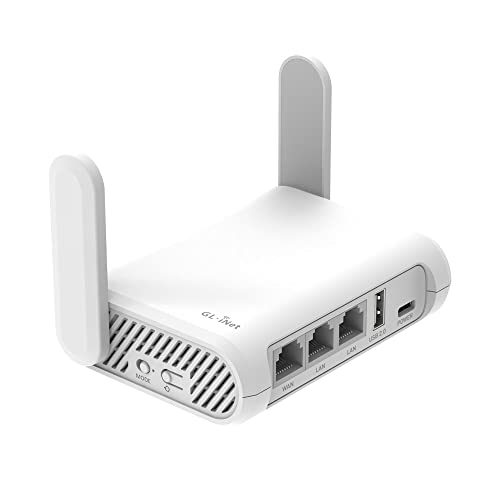
The speed of your travel router determines how many devices can stream, work, or game simultaneously. Wi-Fi 6 routers like the TP-Link Roam 6 AX1500 and AX3000 offer faster data rates and better efficiency than older AC models. If you frequently share the connection with family or colleagues, a Wi-Fi 6 router ensures smoother performance. For lighter use, an AC1200 router like the GL.iNet Opal still handles browsing and email well.
Portability and Power Options
A travel router should slip into your pocket or bag without weighing you down. All three models here are pocket-sized, but power options matter. USB-C charging lets you use a power bank when an outlet is not available. The TP-Link Roam 6 models support 5V/3A PD power sources, while the GL.iNet Opal also works with standard USB. If you plan to roam internationally, our international travel router recommendations cover additional considerations like voltage compatibility.
Security and VPN Support
Public WiFi is convenient but risky. A travel router with VPN support encrypts your traffic, protecting sensitive data from snoopers. Both TP-Link models support OpenVPN and WireGuard, and the GL.iNet Opal includes a physical toggle for quick VPN activation. For a deeper dive into secure travel networking, browse our top travel routers with VPN.
Operating Modes and Flexibility
The best travel routers adapt to different scenarios. Router mode connects to a wired Ethernet port in your hotel room. Hotspot mode turns public WiFi into a private network. Repeater or AP mode extends an existing signal. The TP-Link Roam 6 AX1500 offers four modes, including USB tethering from your phone. The GL.iNet Opal also handles repeater duties, though it does not support EasyTethering. Choose based on where you stay most often. For RV or cruise ship use, see our full routers category for more specialized guides.
Final Thoughts
After evaluating these three travel routers, we recommend the Roam 6 AX1500 Portable Wi-Fi 6 Travel Router for most travelers because it balances speed, security features like captive portal authentication, and multiple power options at an attractive price point. For budget-conscious users who still want reliable VPN support and a compact design, the GL.iNet GL-SFT1200 Opal Travel Router is a solid choice with its physical VPN toggle and retractable antennas. Both models will keep you securely connected wherever your travels take you.
Frequently Asked Questions
Can I use a travel router with a power bank?
Yes, all three routers support USB-C power and can be powered by a standard power bank delivering 5V/3A or higher. This is especially useful on long flights or during camping trips where wall outlets are scarce.
Do travel routers support VPN out of the box?
Most modern travel routers come with VPN client support pre-installed. The TP-Link Roam 6 models support OpenVPN and WireGuard, while the GL.iNet Opal includes both plus a physical toggle. For full details, see our VPN travel router recommendations.
What is captive portal authentication and why does it matter?
Captive portal is the login page hotels and airports use to grant internet access. The TP-Link Roam 6 AX1500 offers one-step captive portal authentication, meaning you log in once on the app and all your devices connect automatically. This saves time and frustration on every trip.
Are travel routers allowed on airplanes and cruise ships?
Yes, travel routers are generally permitted in carry-on luggage and can be used onboard if the ship or plane offers WiFi. For cruise-specific advice, check our guide to travel routers for cruise ships. Note that some airlines restrict router use during takeoff and landing, so follow crew instructions.


