Ever plugged in a high-end headset only to hear flat, lifeless audio? You might be missing out on the positional awareness that a dedicated 7.1 sound card provides. If you’re a gamer trying to pinpoint footsteps or a music lover craving studio-quality detail, the sound card inside your PC likely isn’t cutting it.
This guide simplifies your search for the best 7.1 sound cards in 2026. We’ve evaluated internal PCIe cards for serious audiophiles and compact USB adapters for laptops and consoles, so you can find the right upgrade for your specific needs.




Buying Guide
Internal vs. External Sound Card
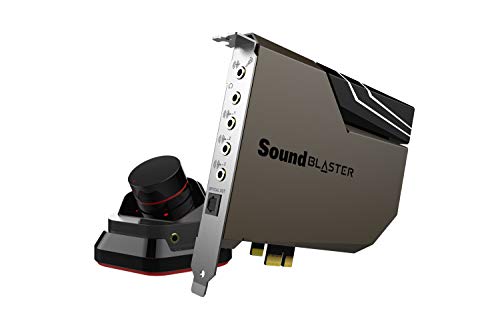
Your first decision is between an internal PCIe card, like the Creative Sound Blaster AE-7, and an external USB adapter. Internal cards often offer higher signal-to-noise ratios and dedicated processing chips, which can reduce CPU load. They’re ideal for desktop towers with available PCIe slots.
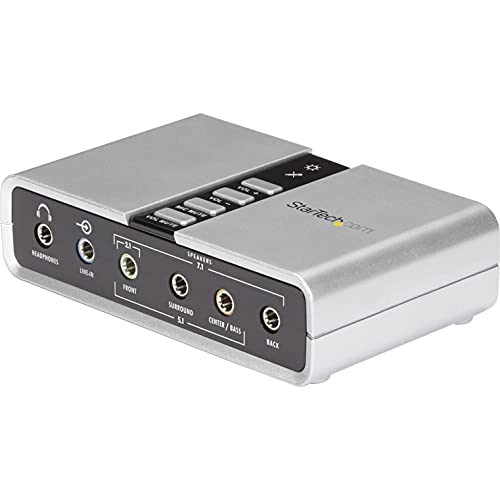
External USB sound cards, such as the StarTech 7.1 USB Audio Adapter, are perfect for laptops, mini PCs, or anyone who wants a quick plug-and-play solution. They’re portable, easy to install, and often include additional inputs and outputs. Consider your chassis space and whether you need portability before choosing.
Audio Quality and Sample Rate Support
Look for a high signal-to-noise ratio (SNR) and support for high-resolution audio. A higher SNR, measured in decibels (dB), means less background hiss and cleaner sound. For example, the Creative Sound Blaster Audigy Fx Pro delivers up to 120 dB SNR and 32-bit/384 kHz playback, which is excellent for critical listening.
Sample rates of 48 kHz are standard for movies and games, but if you listen to hi-res music, you’ll want a card that supports 96 kHz or higher. The Cubilux 7.1 USB Surround Sound Card supports up to 384 kHz/24-bit for headphone output, making it a great choice for audiophiles on a budget. For more on external options, check out our top USB sound cards for music production.
Connectivity and Channel Output
Think about your speaker setup. True 7.1 surround sound requires multiple analog outputs (usually three 3.5mm jacks) or an optical/SPDIF connection. If you’re using a soundbar or home theater receiver, an optical output is essential. The HUANGENG USB External Sound Card includes SPDIF optical in/out for flexible digital connections.
For headsets, ensure the card has a dedicated headphone amp and separate mic input. Some cards, like the Creative Sound Blaster AE-7, come with an external Audio Control Module that provides convenient volume control and headphone/mic jacks on your desk. This is a game-changer for easy access.
Software and Customization Features
Software can make or break the experience. Look for a card with an intuitive control panel that lets you adjust EQ, enable virtual surround, and customize audio profiles. Creative’s Sound Blaster Command software is a good example, offering features like AutoEQ for headphone tuning and bass boost.
Some budget cards, like the ULANSeN USB Sound Card, rely on physical buttons for 7.1 channel toggling and game-specific sound effects. This is simple and effective if you prefer not to deal with software. For more tips on optimizing your PC audio, you might find our guide to single-slot graphics cards useful for understanding system compatibility.
Final Thoughts
Ultimately, the best 7.1 sound card for you depends on your setup and priorities. For a high-end internal solution with audiophile-grade components and a headphone amp, the Creative Sound Blaster AE-7 Hi-Res PCIe is a top choice. If you need a portable, budget-friendly upgrade for a laptop or console, the HUANGENG USB External Sound Card with SPDIF offers excellent value and versatile connectivity.
Frequently Asked Questions
Do I need a 7.1 sound card if I have a good motherboard?
If your motherboard’s onboard audio is sufficient, a dedicated sound card can still offer better signal-to-noise ratio, lower latency, and more precise positional audio for gaming. However, if you’re using a budget headset and casual speakers, the difference may be minimal. For serious gamers and audiophiles, the upgrade is often worth it.
Will a 7.1 USB sound card work with my PS5 or PS4?
Most USB sound cards are plug-and-play with consoles, but they may only output stereo or virtual surround, depending on the console’s settings. The ULANSeN USB Sound Card is specifically marketed for PC/PS4/PS5, but it’s always best to check compatibility with your specific console model. For a more reliable experience, consider a console-specific audio solution.
What is the difference between 5.1 and 7.1 surround sound?
5.1 surround sound uses five speakers and one subwoofer, while 7.1 adds two more rear or side speakers for more precise audio positioning. For most games and movies, 5.1 is sufficient, but 7.1 can provide a more immersive experience if your room and speaker setup allow for it. Many sound cards offer virtual 7.1 for headphones, which simulates the effect.
Can I use a 7.1 sound card with a soundbar or home theater system?
Yes, you can connect a soundbar or home theater receiver to a sound card using an optical (SPDIF) or coaxial connection. However, most soundbars only support stereo or virtual surround, not true 5.1/7.1 over a single optical cable. For true multi-channel audio, you’ll need to connect your speakers directly to the sound card or use a receiver with multi-channel analog inputs.