If you have invested in a 144Hz monitor, you already know that smooth motion is a game changer. But to actually hit those high frame rates in modern titles, your graphics card needs serious horsepower. Whether you are into competitive shooters, open-world RPGs, or fast-paced sims, the right GPU can mean the difference between a stuttery mess and buttery fluidity. In this guide, we have reviewed five top contenders for 144Hz gaming in 2026, covering options from entry-level to mid-range. If you are also considering higher resolutions, check out our picks for best graphics cards for 1440p 144Hz.


Buying Guide
Performance at 1080p and 1440p
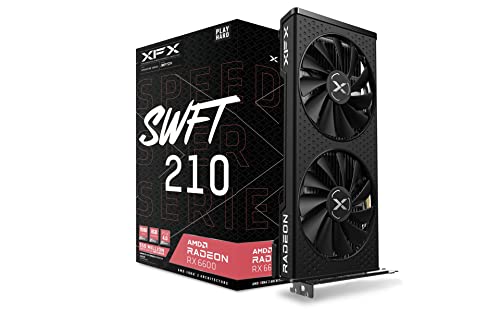
For 144Hz gaming, the resolution you target matters a lot. At 1080p, even mid-range cards like the ASUS Dual GeForce RTX 3050 6GB GDDR6 OC Edition can deliver high frame rates in esports titles. For more demanding games at 1440p, you will want a card with more muscle, such as the XFX Speedster SWFT 210 Radeon RX 6600 CORE or the newer ASUS Dual NVIDIA GeForce RTX 5060 8GB GDDR7 OC. The RTX 5060 brings Blackwell architecture and DLSS 4, which can boost performance significantly in supported titles.
VRAM and Future Proofing
Video memory is critical for texture-heavy games and higher resolutions. The XFX RX 6600 and ASUS RTX 5060 come with 8GB of GDDR6 or GDDR7, which is comfortable for today’s titles. The RTX 3050 models in our list (ASUS, MSI, GIGABYTE) offer 6GB, which is enough for 1080p gaming but may become limiting in future releases. If you plan to keep your card for several years, consider an 8GB option. For more on future-proofing, see our best graphics cards for 4K gaming guide.
Cooling and Noise
A quiet, cool system is essential for long gaming sessions. The XFX Speedster SWFT 210 uses a dual fan setup with a robust heatsink, while the ASUS Dual RTX 5060 features Axial-tech fans with 0dB technology that stops fans under low load. The MSI Ventus 2X and GIGABYTE WINDFORCE also employ dual fan designs, though the GIGABYTE model is slightly more compact. If you have a small case, the 2-slot design of the ASUS RTX 3050 or the MSI card may be preferable.
Connectivity and Features
Modern monitors often rely on DisplayPort and HDMI for high refresh rates. All five cards offer at least one DisplayPort and HDMI. The ASUS RTX 5060 includes HDMI 2.1b and DisplayPort 2.1b, supporting the latest monitors. The XFX RX 6600 provides three DisplayPort outputs, ideal for multi-monitor setups. For ultra-wide or 4K high refresh rate displays, check our recommendations for best graphics cards for ultrawide monitors.
Final Thoughts
Choosing the right graphics card for 144Hz gaming comes down to your resolution and budget. For gamers who want the latest features and solid 1080p/1440p performance, the ASUS Dual NVIDIA GeForce RTX 5060 8GB GDDR7 OC is a fantastic pick with DLSS 4 and Blackwell architecture. If you are on a tighter budget but still want reliable 1080p 144Hz in competitive titles, the GIGABYTE GeForce RTX 3050 WINDFORCE OC V2 6G offers excellent value and quiet cooling. Either way, you will enjoy a significant upgrade over integrated graphics.
Frequently Asked Questions
Can a GTX 3050 run 144Hz?
Yes, the RTX 3050 can drive 144Hz at 1080p in many esports and older titles. In newer AAA games, you may need to lower settings to maintain high frame rates. The 6GB VRAM models are best for lighter workloads.
What graphics card do I need for 144Hz 1080p gaming in 2026?
For smooth 144Hz at 1080p, we recommend at least an AMD RX 6600 or an NVIDIA RTX 3060 class card. The XFX Speedster SWFT 210 RX 6600 is a strong choice, and the ASUS RTX 5060 offers even more headroom. For more detailed comparisons, see our best graphics cards for 4K guide for higher resolution options.
Is 8GB VRAM enough for 144Hz gaming?
Yes, 8GB is sufficient for most current games at 1080p and 1440p. Some newer titles may push beyond that at ultra settings, but 8GB remains a good balance for 2026.
Should I buy an RTX 5060 or RX 6600 for 144Hz?
The RTX 5060 offers newer architecture, DLSS 4, and better ray tracing performance, making it ideal for future-proofing. The RX 6600 is more budget-friendly and still delivers excellent 1080p 144Hz performance in most games. Your choice depends on budget and feature priorities.