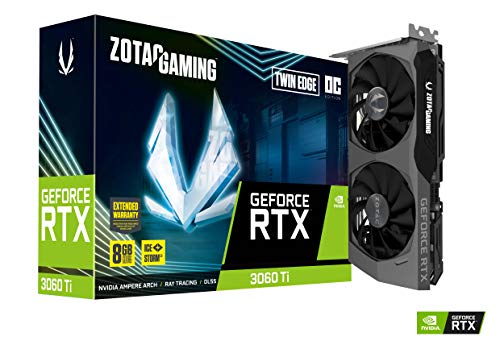
You have a 1080p 144Hz monitor and you want every frame to count. Whether you are diving into competitive shooters, exploring open worlds, or building a budget-friendly gaming rig, the right graphics card makes all the difference. The sweet spot for 1080p high refresh rates sits in the entry-level to mid-range segment, where cards like the NVIDIA RTX 3050 deliver enough horsepower to push triple-digit frames in popular titles without emptying your wallet. In this guide, we break down the best graphics cards for 1080p 144Hz in 2026, focusing on models from ASUS, MSI, and GIGABYTE that balance performance, cooling, and reliability. If you are also curious about higher resolutions, check out our picks for best graphics cards for 1440p 144Hz.



Buying Guide: What to Look for in a 1080p 144Hz Graphics Card
GPU Core and Memory Configuration
For 1080p 144Hz, you need a card that can consistently output over 100 fps in modern games. The RTX 3050 series features NVIDIA’s Ampere architecture with 6GB of GDDR6 memory on a 96-bit bus. While this configuration handles most esports titles at high settings, more demanding AAA games may require lowering details to maintain a steady 144 fps. Cards with higher memory bandwidth, like those with 128-bit interfaces, can offer an edge, but the 3050 remains a capable entry point.
Cooling and Build Quality
A well-cooled card runs quieter and maintains boost clocks longer. Look for dual-fan designs with axial fans or custom solutions like ASUS’s Axial-tech or GIGABYTE’s WINDFORCE. Features such as a stainless steel bracket and IP5X dust resistance (found on the ASUS Dual) add durability. A 2-slot design ensures compatibility with most cases while keeping temperatures in check.
Ray Tracing and DLSS Support
Second-generation RT Cores and third-generation Tensor Cores on the RTX 3050 allow for entry-level ray tracing and DLSS upscaling. While you won’t max out ray tracing at 144Hz, DLSS can boost frame rates in supported titles, making it a valuable feature for future-proofing. If you prioritize raw rasterization, consider a card with higher CUDA core counts, but for most 1080p gamers, the 3050 strikes a good balance.
Connectivity and Form Factor
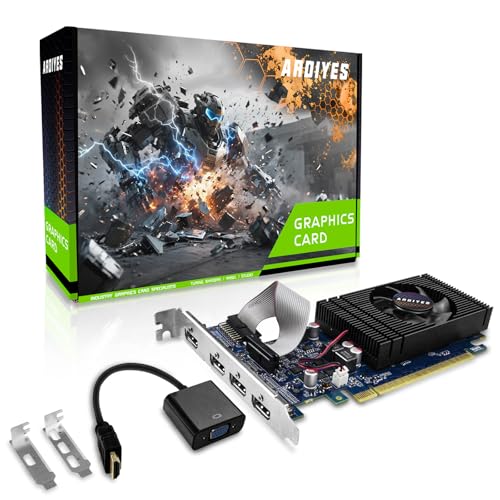
Ensure the card has the outputs you need: at least one HDMI 2.1 and one DisplayPort for high refresh rates. The MSI Ventus 2X offers two HDMI 2.1a ports, which is handy for multi-monitor setups. Low-profile options like the ARDIYES GT 740 exist but are not suitable for 144Hz gaming—they are best for office or home theater use. For a deep dive into multi-monitor setups, see our best graphics cards for ultrawide monitors guide.
Final Thoughts
For a reliable 1080p 144Hz experience, the ASUS Dual GeForce RTX 3050 6GB GDDR6 OC Edition stands out with its robust cooling and OC mode, while the GIGABYTE GeForce RTX 3050 WINDFORCE OC V2 6G offers excellent value with similar performance and a slightly lower price point. Both cards handle competitive titles like Valorant and Fortnite at 144 fps with ease, and they can dip into AAA gaming with adjusted settings. Whichever you choose, you will get smooth gameplay and solid build quality for years to come.
Frequently Asked Questions
Can an RTX 3050 run 1080p 144Hz?
Yes, the RTX 3050 can drive a 1080p 144Hz monitor in many popular games. In esports titles like CS2, Overwatch 2, and Apex Legends, you can expect well over 100 fps at high settings. In more demanding AAA games, you may need to lower settings to medium or high to hit the 144 fps target consistently.
What is the best budget graphics card for 1080p 144Hz in 2026?
The best budget option is the RTX 3050 lineup, with the GIGABYTE Windforce and ASUS Dual offering strong performance around the $250 mark. For slightly more, consider cards with a 128-bit memory bus, but the 3050 remains the sweet spot for price and capability. For higher resolution needs, browse our best graphics cards for 4K gaming list.
Is 6GB of VRAM enough for 1080p 144Hz gaming?
For most current games at 1080p, 6GB of VRAM is sufficient. Titles like Call of Duty: Modern Warfare III and Cyberpunk 2077 may use close to 5GB at high settings, but 6GB leaves headroom. Future releases may push past 6GB, so if you plan to keep the card for several years, a 8GB model could be a safer bet, though it will cost more.
Should I buy a low-profile card like the GT 740 for 144Hz gaming?
No. The ARDIYES GT 740 is designed for office work, home theater, or multi-monitor setups with no gaming demands. It lacks the horsepower to push 144 fps in any modern game. Stick to the RTX 3050 or higher for a proper 1080p 144Hz experience. For office builds, see the Cards category for more options.