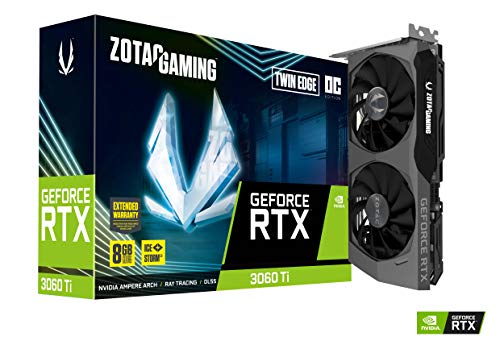
Are you building a 1080p gaming rig in 2026? The resolution remains the most popular choice for gamers who want high frame rates without breaking the bank. But with so many graphics cards on the market, finding the best one for your setup can be overwhelming. Whether you’re on a tight budget or looking for premium performance, we’ve evaluated the top contenders to help you make an informed decision. From value-oriented picks like the OKAMUS RX 590 to powerful options from ASRock and GIGABYTE, this guide covers everything you need for a smooth gaming experience. For those interested in NVIDIA’s latest technology, check out our roundup of the best RTX graphics cards.


Buying Guide: What to Look for in a 1080p Gaming Graphics Card
1. Performance at 1080p
For 1080p gaming, the sweet spot is a card that can deliver smooth frame rates in modern titles at high settings. Look for a GPU with strong shader performance and good driver optimization. Cards like the ASRock Intel Arc B580 Challenger offer excellent balance with its 2740 MHz boost clock and Intel XeSS upscaling. If you prefer AMD, the ASRock Radeon RX 7600 Challenger Pro provides outstanding 1080p performance with its RDNA 3 architecture. For a deeper look at AMD options, visit our best radeon graphics cards guide.
2. VRAM and Memory
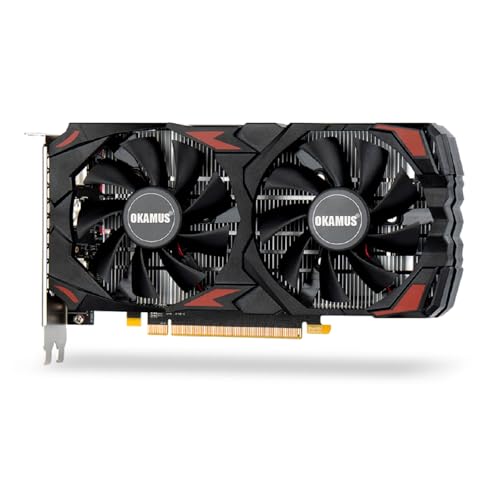
While 8GB of VRAM is generally sufficient for 1080p gaming, some modern titles benefit from 12GB or more for high-resolution textures. The ASRock B580 comes with 12GB of GDDR6, giving you extra headroom, while the OKAMUS RX 590’s 8GB GDDR5 is plenty for most games. For a more detailed comparison, check our best AMD graphics cards article.
3. Cooling and Noise
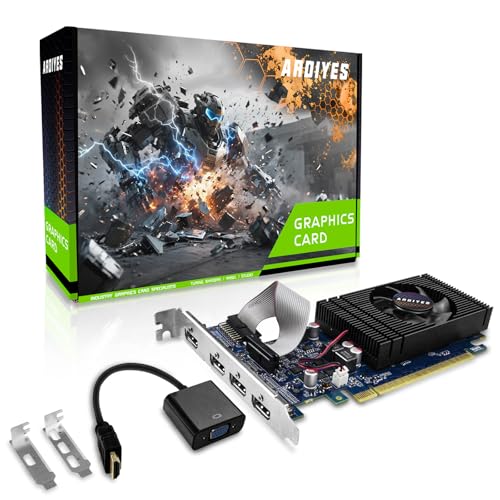
A quiet, efficient cooler is essential for an enjoyable gaming experience. Cards like the ASUS Dual GeForce RTX 3050 feature axial-tech fans with 0dB mode, stopping fans under low loads. The ARDIYES GT 740 is designed for silent operation in home theater PCs. If you prioritize low noise, these options are excellent.
4. Compatibility and Power
Ensure the card fits your case and power supply. Most 1080p cards require a single 8-pin connector and a 500W to 650W PSU. The GIGABYTE Radeon RX 9070 XT is larger but offers future-proofing for higher resolutions. For a wider selection, browse our complete graphics card category.
Final Thoughts
Choosing the best graphics card for 1080p gaming ultimately depends on your budget and performance expectations. For an affordable entry point that handles popular titles smoothly, the OKAMUS RX 590 8GB 2304SP Gaming Graphics Card is a solid value pick. If you want modern features like hardware-accelerated ray tracing and AI upscaling, the ASRock Intel Arc B580 Challenger 12GB OC Graphics delivers impressive performance at a competitive price. Both cards will provide a great 1080p gaming experience in 2026.
Frequently Asked Questions
Is 8GB VRAM enough for 1080p gaming in 2026?
Yes, 8GB of VRAM is still sufficient for the majority of 1080p games at high settings. However, some demanding titles like modern AAA releases may benefit from 12GB for future-proofing. Cards like the ASRock B580 with 12GB offer extra headroom.
Should I buy a used graphics card for 1080p gaming?
Buying used can save money, but be cautious of cards that have been mined on or lack warranty. New cards like the ASUS RTX 3050 come with full support and better efficiency. For more guidance, see our best intel graphics cards review.
What power supply do I need for a 1080p gaming GPU?
Most 1080p gaming graphics cards require a 500W to 650W power supply with at least one 8-pin PCIe power connector. Always check the manufacturer’s recommendation for your specific model.
Can I use a low-profile graphics card for 1080p gaming?
Low-profile cards like the ARDIYES GT 740 are best for office or home theater use, not for modern gaming. For decent 1080p performance, you need a dual-slot card with active cooling. The OKAMUS RX 590 is a good budget choice.