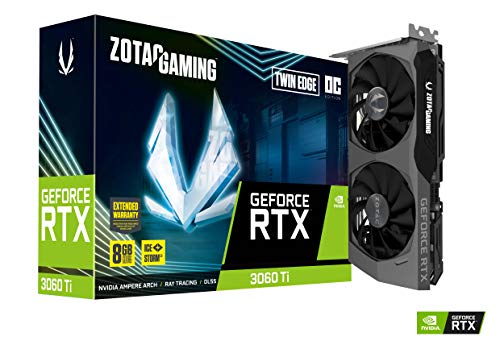
If you’re serious about competitive gaming, every frame counts. A powerful graphics card can mean the difference between a smooth 144 FPS and frustrating stutters. Our guide covers the top graphics cards for FPS games in 2026, helping you choose the perfect GPU for buttery-smooth gameplay. For an even wider view, check out our ultrawide monitor graphics card guide for extended field-of-view setups.
We’ve evaluated five leading graphics cards from ASUS, ASRock, and GIGABYTE, focusing on their performance in fast-paced titles. Whether you play on a 1080p monitor or push 4K, these GPUs deliver the frame rates you need.


How to Choose the Best Graphics Card for FPS Games
Frame Rate and Resolution Targets
Your monitor’s refresh rate and resolution dictate the GPU power you need. For 1080p at 144 Hz, a mid-range card like the ASRock Intel Arc B580 Challenger 12GB OC Graphics handles esports titles with ease. For 1440p or 4K high refresh, step up to a flagship like the ASUS TUF Gaming GeForce RTX™ 5080 16GB GDDR7 OC. For deeper insight, see our best graphics cards for 4K monitors guide.
Always match the GPU’s capabilities to your display’s maximum refresh rate to avoid wasted frames.
Ray Tracing and AI Features
Modern FPS games increasingly use ray tracing for realistic lighting. NVIDIA’s DLSS 4 (available on the RTX 5080) boosts frame rates without visual compromise, while AMD’s FSR and Intel’s XeSS offer similar benefits. The GIGABYTE Radeon RX 9070 XT Gaming OC 16G Graphics leverages FSR for smooth 4K gameplay. For a comprehensive 4K perspective, explore our best graphics cards for 4K gaming.
Look for models with dedicated AI accelerators to future-proof your rig for upcoming titles.
Cooling and Power Requirements
High frame rates generate heat. Efficient cooling prolongs component life and keeps noise low. The ASUS Dual GeForce RTX 3050 uses a compact 2-slot design with axial fans, while the RX 9070 XT features a triple-fan WINDFORCE system. Check your case clearance and PSU wattage: the RTX 5080 requires a 850W power supply with a 16-pin connector.
Silent operation is a bonus: cards like the ASRock Arc B580 offer 0dB mode for quiet gaming during lighter loads.
Budget and Longevity
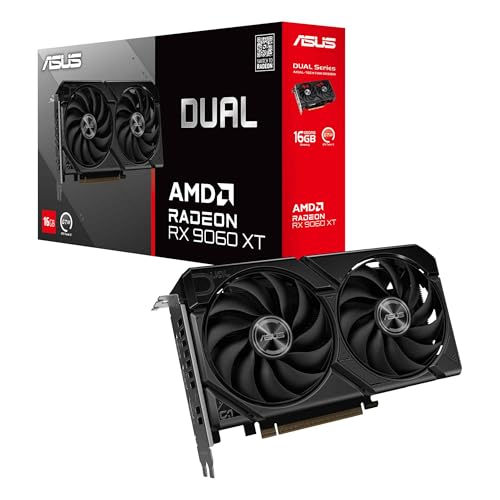
Graphically demanding FPS titles like Call of Duty and Apex Legends benefit from extra VRAM. The ASUS Dual Radeon RX 9060 XT 16GB GDDR6 provides ample memory for high-texture settings at 1440p. Meanwhile, budget options like the RTX 3050 still deliver solid 1080p performance. For a broader view, visit our Cards category page.
Final Thoughts
Choosing the right GPU for FPS games comes down to balancing your resolution target, desired frame rate, and budget. For uncompromising 4K performance with advanced AI upscaling, the ASUS TUF Gaming GeForce RTX™ 5080 16GB GDDR7 OC is our top tier pick. If you’re aiming for high refresh 1440p with excellent value, the GIGABYTE Radeon RX 9070 XT Gaming OC 16G Graphics delivers outstanding frame rates and modern features. Both cards will keep your gaming smooth for years to come.
Frequently Asked Questions
Is a high-end GPU necessary for FPS games?
Not always. Many competitive FPS titles are optimized for lower hardware. A mid-range card like the ASRock Intel Arc B580 can easily push 144 FPS at 1080p. High-end GPUs become beneficial for 4K gaming or when enabling ray tracing without sacrificing frame rates.
How much VRAM do I need for FPS games in 2026?
For 1080p gaming, 6GB is sufficient for most current titles. For 1440p or 4K, aim for 12GB or more. The ASUS Dual Radeon RX 9060 XT offers 16GB, which provides headroom for future games and high-resolution texture packs.
Should I choose NVIDIA or AMD for competitive FPS gaming?
Both brands offer excellent options. NVIDIA’s DLSS 4 and Reflex technology reduce input lag and boost frame rates in supported titles. AMD’s FSR is more widely compatible and often provides better raw rasterization per dollar. Consider which ecosystem you prefer and check game support.
Can I use a PCIe 4.0 GPU in a PCIe 3.0 motherboard?
Yes, PCIe 4.0 graphics cards are backwards compatible with PCIe 3.0 slots. You may see a small performance loss (usually under 5%) in some games, but for FPS games at 1080p and 1440p, the impact is minimal. For further reading, our best graphics cards for 4K guide covers high-resolution scenarios.