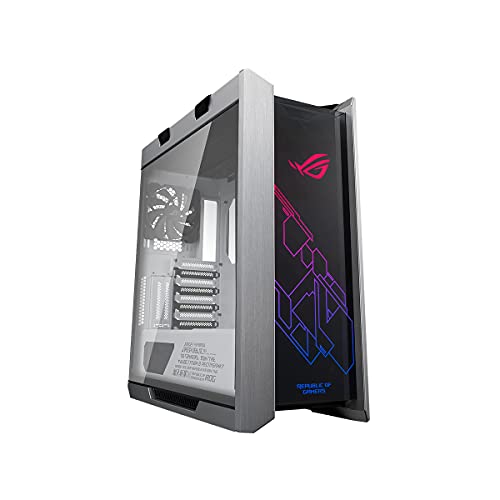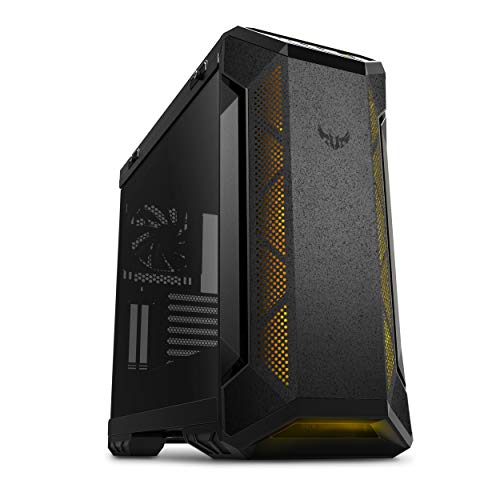
You have gathered the finest components: a top-tier motherboard, a powerhouse graphics card, and a robust cooling solution. But without a spacious, well-ventilated chassis, your hardware may struggle to perform at its best. Finding the right full tower PC case is about more than just size; it is about airflow, build flexibility, and future-proofing your investment. In this guide, we have assessed five standout models from leading brands like Antec, Corsair, and Lian Li to help you choose the ideal foundation for your dream rig. For those considering smaller form factors, our roundup of best micro ATX PC cases offers compact alternatives without sacrificing performance.


Buying Guide: What to Look for in a Full Tower PC Case
Choosing the right full tower case requires careful consideration of several factors. Here are the key criteria we used to evaluate these models.
Cooling Potential and Fan Configuration
A full tower case must excel at moving air. Look for models that support multiple fans (120mm or 140mm) and large radiators. Cases with pre-installed PWM fans save you time and money, while those with removable brackets simplify radiator installation. We prioritized designs that offer both front and top intake options for optimal airflow. For more insights on silent operation, check our guide on top PC cases for airflow and silence.
Motherboard and Hardware Compatibility
Full tower cases typically support E-ATX motherboards, but always verify the maximum size. Consider GPU length clearance (for modern cards) and CPU cooler height. Some cases offer back-connect motherboard support for cleaner cable management. If you are building with a smaller board, our recommendations for best Mini ITX PC cases may also interest you.
Build Quality and Aesthetics
The materials matter: steel frames offer durability, tempered glass panels showcase your components, and wood accents add a premium touch. Tool-less side panels and removable dust filters simplify maintenance. RGB lighting fans and customizable ARGB strips let you personalize the look. The overall design should match your workspace and style.
Expandability and Future-Proofing
Think ahead. A full tower case should offer ample drive bays (both 3.5-inch and 2.5-inch), multiple PCIe slots, and room for future upgrades like additional radiators or a second GPU. Front I/O ports including USB-C and USB 3.0 are essential for modern peripherals. Some cases feature modular panels that can be swapped as your needs evolve.
Final Thoughts
After evaluating these five models, we believe the Antec Flux Pro Full-Tower E-ATX PC Case stands out for enthusiasts who demand exceptional cooling and a premium wood-and-glass aesthetic, while the MUSETEX ATX PC Case 7 PWM ARGB Fans Pre-Installed offers incredible value with its seven pre-installed fans and panoramic tempered glass. Whichever you choose, you are investing in a solid foundation that will keep your components cool and your build looking sharp for years to come.
Frequently Asked Questions
Here are answers to common questions about full tower PC cases.
What is the difference between a full tower and a mid tower case?
A full tower case is taller and wider than a mid tower, offering more internal space for larger motherboards (E-ATX), multiple GPUs, and extensive liquid cooling loops. Mid towers are more compact and suit standard ATX builds. For a middle ground, explore our PC Cases category page for various sizes.
Do I need a full tower case for a high-end gaming PC?
Not necessarily. A high-quality mid tower case can accommodate most high-end components, including large GPUs and 360mm radiators. However, if you plan to use an E-ATX motherboard, multiple radiators, or multiple GPUs, a full tower case provides the necessary room and airflow.
How many fans should a full tower case have?
Most full tower cases support at least 6 to 10 fans. For optimal airflow, we recommend a configuration with three front intakes, two or three top exhausts, and one rear exhaust. Many cases come with pre-installed fans, but you can always add more for improved cooling.
Are full tower cases louder than smaller cases?
Not inherently. Noise levels depend on fan quality, case insulation, and airflow design. Full tower cases often have larger fans that spin slower, reducing noise. Look for cases with sound-dampening materials and PWM fan control for quieter operation. For detailed comparisons, see our best PC cases for airflow and silence guide.