

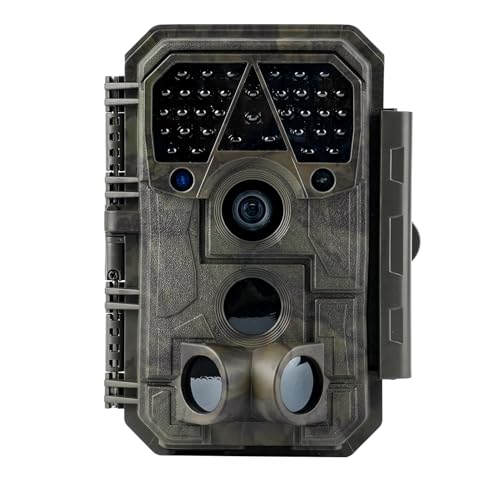
You set up a trail camera hoping to capture deer, turkeys, or that elusive buck. But when you review the footage, you see empty frames or animals spooked by a visible red glow. Traditional IR cameras emit a faint light that savvy wildlife can detect, ruining your scouting. That is where no glow trail cameras come in. They use 940nm LEDs that produce zero visible light, keeping your presence completely hidden. In this guide, we evaluate four top-rated no glow models from WOSPORTS, MagicEagle, GardePro, and Meidase. Whether you are a seasoned hunter, a wildlife photographer, or a homeowner monitoring your property, these cameras deliver crisp images day and night without alerting animals. For more insights on trail camera technology, check out our best trail cameras for wildlife scouting guide.


Buying Guide: What to Look For in a No Glow Trail Camera
Trigger Speed and Detection Range
When wildlife moves fast, you need a camera that reacts instantly. Look for a trigger speed of 0.2 seconds or faster. The GardePro E5S and Meidase P70 boast an impressive 0.1 second trigger, ideal for capturing bounding deer or running turkeys. A wide detection angle, typically 120 degrees, ensures you cover a larger area. Pairing fast trigger with multiple PIR sensors reduces false triggers from swaying branches or temperature changes.
Image and Video Quality
Resolution matters for identifying species, antler points, or even trespassers. Most no glow cameras now offer 64MP photos and 4K or 1296p video. The WOSPORTS model captures 4K HD video, while the GardePro and Meidase deliver 1296p. For cellular cameras like the MagicEagle, 5MP stills are sufficient for remote viewing but may lack fine detail for trophy scoring. Consider your primary use: scouting or security. For wireless trail camera options, image compression also affects data usage.
Power Source and Battery Life
Remote cameras need reliable power. Non-cellular models like the WOSPORTS, GardePro E5S, and Meidase P70 run on 8 AA batteries and support optional solar panels. The MagicEagle cellular camera includes a massive 13,000 mAh internal battery, plus solar compatibility, offering months of continuous operation. If you plan to leave your camera for an entire season, prioritize models with low power consumption and solar readiness. For home security, you may also want to see our outdoor-ready essentials for all-weather gear.
Durability and Weather Resistance
Trail cameras face rain, snow, dust, and extreme temperatures. An IP66 rating, found on all four models here, ensures protection against heavy rain and dust ingress. Rugged casing and mounting options (1/4-inch-20 threads) allow secure attachment to trees or posts. For cellular cameras, additional anti-theft features like gravity sensors and GPS tracking, as seen on the MagicEagle, add peace of mind in high-traffic areas.
Final Thoughts
After evaluating these no glow trail cameras, our top recommendation depends on your specific needs. For hunters who want ultra-fast triggers and high-resolution images without cellular connectivity, the GardePro E5S Non-Cellular Trail Camera offers exceptional value with its 0.1 second trigger and 64MP photos. If you need remote access and long-term power, the MagicEagle Cellular Trail Camera 4G Wild Game stands out with its built-in 4G, massive battery, and solar panel support. Both provide truly invisible no glow night vision that keeps wildlife undisturbed, making them reliable partners for your outdoor adventures.
Frequently Asked Questions
What is the difference between no glow and low glow trail cameras?
No glow cameras use 940nm infrared LEDs that emit no visible light, making them completely invisible to both animals and humans. Low glow cameras use 850nm LEDs that produce a faint red glow, which can spook some wildlife. For stealth scouting, no glow is the better choice.
Can no glow trail cameras capture color images at night?
No, no glow cameras capture black-and-white or monochrome images at night because infrared light does not provide color information. Some models offer a “color” mode using a white LED flash, but that defeats the no glow purpose. For true stealth, expect monochrome night footage.
How long do batteries last in no glow trail cameras?
Battery life varies widely. Non-cellular models like the GardePro E5S can last up to 6 months on a set of 8 AA batteries in low-activity areas. Cellular cameras drain faster due to data transmission; the MagicEagle with its 13,000 mAh battery can run for 3 months or more, especially when paired with a solar panel. Always check the manufacturer specifications.
Do no glow trail cameras work in cold weather?
Yes, most quality no glow trail cameras are rated for temperatures as low as -20°C or -30°C. The models reviewed here all have IP66 weatherproofing and operate in freezing conditions. For extreme cold, consider using lithium AA batteries which perform better than alkaline in low temperatures.




