

You set up a trail camera deep in the woods, hike back a mile, and check it a week later. The card is full of empty frames, blurry deer, or worse, nothing at all. That frustration drove the rise of WiFi trail cameras: you can review images and video from your phone without pulling the SD card, adjust settings on the fly, and get near-real-time updates on movement patterns. This guide covers five of the most innovative WiFi trail cameras for 2026, spanning cellular models that send images over 4G and local WiFi cameras that rely on a built-in hotspot. Whether you are a serious deer hunter or a backyard wildlife enthusiast, one of these cameras will fit your scouting strategy. For more context on stealthy monitoring, check out our best no glow trail cameras article.




Buying Guide
Cellular vs. Non-Cellular Connectivity
Your first decision is whether you need a cellular trail camera that transmits photos over a mobile network or a non-cellular WiFi camera that creates its own short-range hotspot. Cellular cameras like the Moultrie Edge 3 and SPYPOINT Flex-M work anywhere with cell service, sending images straight to your phone no matter how far you are from the property. They require a data plan, but plans are flexible and start around $10 per month. Non-cellular cameras, such as the MAXDONE Solar models and the Fargarloo 4K camera, rely on a built-in WiFi hotspot with a range of about 55 feet. You must be physically close to download images, but they never incur monthly fees and are ideal for small properties or backyard monitoring.
Image and Video Quality
A camera is only as good as the images it captures. Look for high megapixel counts for stills and true HD or 4K video resolution. The Moultrie Edge 3 shoots 40MP photos and 1080p HD video, while the MAXDONE Solar models boast 64MP stills and 4K video. The Fargarloo camera also offers 4K video and 48MP images. Higher resolution helps you identify buck antler points, distinguish individual animals, and capture usable photos for herd management. If you spend a lot of time reviewing footage at night, we also recommend reading our best night vision trail cameras guide for deeper insight into IR performance.
Trigger Speed and Detection Range
Fast trigger speed ensures you capture moving deer before they exit the frame. The Moultrie Edge 3 triggers in 0.5 seconds with a 100-foot detection range, while the MAXDONE and Fargarloo cameras boast a 0.1-second trigger time and a 65-foot night vision range. A short trigger delay paired with a wide detection zone (100 to 120 degrees) reduces missed captures. For hunting setups where mature bucks move quickly, a sub-second trigger is critical. If you focus specifically on deer hunting, you will find more tailored recommendations in our best trail cameras for deer hunting.
Power Source and Battery Life
Remote cameras must run for weeks or months without maintenance. The MAXDONE Solar models feature a built-in 6000mAh rechargeable lithium battery with a separate solar panel that can be angled for optimal sun exposure. The SPYPOINT Flex-M works with standard AA batteries and is compatible with a sold-separately solar panel. The Moultrie Edge 3 accepts AA batteries and offers remote battery monitoring through its app. If you plan to leave a camera in the field year-round, a solar option like the MAXDONE eliminates the hassle of frequent battery swaps. For general hunting cameras with extended battery life, our best trail cameras for hunting covers additional choices.
Final Thoughts
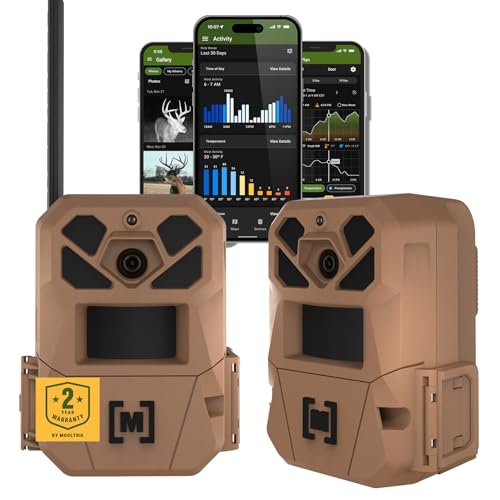
Choosing the right WiFi trail camera comes down to how you hunt and where you place the camera. If you want real-time cellular transmission with AI buck detection and GPS mapping, the Moultrie Edge 3 Cellular Trail Camera – 2-Pack is a powerful package that delivers instant alerts and remote feeder control. If you prefer a budget-friendly, subscription-free option with solar charging and strong 4K resolution, the MAXDONE Solar Trail Camera WiFi Bluetooth offers excellent value and continuous power for year-round monitoring. Both options eliminate the guesswork of traditional camera setups and put control in your pocket.
Related Guides
- Best Car Cameras with Night Vision for 2026
- Best Pet Monitoring Cameras of 2026
- Best Cat Cameras for 2026
Frequently Asked Questions
Do WiFi trail cameras work without cell service?
Yes. Non-cellular WiFi cameras, like the MAXDONE Solar models and the Fargarloo 4K camera, create their own short-range WiFi hotspot. You can view and download images only when you are within roughly 55 feet of the camera. They do not send notifications or transmit data over the internet. For remote properties without cell reception, a non-cellular WiFi camera is a reliable choice.
What is the difference between cellular and WiFi trail cameras?
Cellular trail cameras contain a modem that connects to mobile networks and transmits photos to your phone from anywhere with coverage. WiFi trail cameras rely on a built-in hotspot that only works at close range. Cellular models require a data plan, while WiFi models have no ongoing fees. Choose cellular for off-property access and WiFi for local, free operation.
How long do batteries last in WiFi trail cameras?
Battery life varies by features and usage frequency. The MAXDONE Solar cameras include a 6000mAh rechargeable battery and a solar panel, allowing year-round operation without battery swaps. The Moultrie Edge 3 runs on AA batteries and its app shows remaining battery levels. The SPYPOINT Flex-M uses AA batteries and is compatible with an optional solar panel. In general, solar models last much longer than AA-only cameras in sunny locations.
Can I use a WiFi trail camera without a monthly subscription?
Absolutely. Non-cellular WiFi cameras never require a subscription. The MAXDONE Solar and Fargarloo cameras let you download images for free via the companion app when you are near the camera. Cellular cameras like the Moultrie Edge 3 and SPYPOINT Flex-M require a data plan, but SPYPOINT offers a free plan for up to 100 photos per month. For more reviews on camera options for 2026, visit our Cameras category page.




