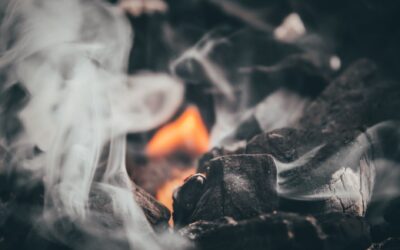
If you are asking why is my pellet grill smoking too much, the short answer is that something is disrupting the clean burn of the pellets. Too much smoke almost always means the fire is not getting enough air, the fuel is burning poorly, or the grill is too cold. Most causes are simple to fix once you know what to look for, and none require replacing the grill itself.
Dirty Burn Pot or Ash Buildup
The burn pot is where the pellets ignite and burn. Over several cooks, ash and unburned pellet residue accumulate inside it. When that buildup gets thick, it smothers the fire, forcing the auger to dump more pellets into a struggling flame. The result is a heavy, dirty white smoke instead of the thin blue smoke you want.
Cleaning the burn pot after every three to five cooks is the single most effective way to fix this. A shop vacuum makes the job fast. You also need to scrape any hardened clinker off the pot walls. If you let the ash pile up, the fire cannot breathe, and the smoke gets worse with each cook.
Wet or Low-Quality Pellets
Pellet grills rely on dry, dense fuel to burn hot and clean. If your pellets have absorbed moisture from humid storage or a leaky bag, they will smolder rather than burn. That smoldering produces thick, acrid smoke that smells more like a campfire than a barbecue.
You can test a pellet by snapping one in half. A dry pellet breaks cleanly with a sharp crack. A wet one bends or crumbles. If your pellets are damp, the only fix is to empty the hopper and replace them with a fresh, dry batch. Store pellets in a sealed plastic bin, not in the original paper bag.
Inadequate Airflow or Clogged Vents
A pellet grill needs a steady flow of oxygen to burn efficiently. If the intake vent or the exhaust chimney is blocked by grease, ash, or debris, the fire starves for air. When that happens, the grill compensates by feeding more pellets, which only makes the smoke thicker.
Check the chimney cap for grease buildup and the intake vent for any obstruction. On most grills, the vent is a small hole near the fire pot. A pipe cleaner or a thin wire can clear it in seconds. If you have been cooking fatty meats without cleaning the chimney, that is likely your problem.
Cooking at Too Low a Temperature
Pellet grills are designed to run efficiently between 225°F and 350°F. When you set the temperature below 200°F, the fire does not burn hot enough to fully combust the pellets. Instead of burning, the pellets smolder and produce heavy, dirty smoke.
If you are trying to cold-smoke or cook at very low temperatures, most standard pellet grills are not built for that. For normal smoking, keep the set point at 225°F or higher. If you need true cold smoking, you will need a separate cold-smoke attachment or a dedicated cold smoker.
Excessive Grease or Drippings in the Firebox
When you cook fatty meats like brisket or pork shoulder, grease drips onto the heat deflector and the firebox. If that grease pool gets deep enough, it can ignite or smolder, creating a thick, greasy smoke that tastes bitter. This is different from the clean smoke of burning pellets.
Regularly cleaning the drip tray and the interior of the grill prevents this. A good rule is to scrape the drip tray after every long cook and do a full deep clean every five to ten cooks. If you notice a sudden change in smoke color or smell during a cook, check the grease buildup first.
Faulty or Misaligned Auger System
The auger feeds pellets from the hopper into the burn pot at a rate controlled by the controller. If the auger is jammed, misaligned, or the controller is malfunctioning, it can overfeed the fire. Too many pellets in the burn pot create a smoldering pile that produces clouds of smoke.
Listen for a clicking sound from the auger motor. If you hear grinding or no sound at all, the auger may be stuck. Empty the hopper and inspect the auger for obstructions. If the auger turns freely but still overfeeds, the controller may need recalibration or replacement.
How to Fix a Pellet Grill That Smokes Too Much
- Clean the burn pot and ash buildup after every three to five cooks.
- Store pellets in a sealed container and test them for dryness before use.
- Clear the intake vent and exhaust chimney of grease and debris.
- Keep cooking temperatures at 225°F or higher for normal smoking.
- Scrape the drip tray and firebox after fatty cooks.
- Inspect the auger for jams and the controller for proper pellet feed rate.
If you have worked through these fixes and your grill still produces excessive smoke, the issue may be a component failure like a faulty igniter or controller.
Frequently Asked Questions
Why is my pellet grill smoking white smoke instead of blue?
White smoke usually means the fire is too cold or the pellets are smoldering instead of burning. Raise the temperature to at least 225°F and check that the burn pot is clean and dry pellets are feeding properly.
Can wet pellets damage my pellet grill?
Yes, wet pellets can clog the auger and cause the fire to go out or smolder. They also produce creosote, which coats the interior and can lead to a grease fire. Always store pellets in a dry, sealed container.
How often should I clean my pellet grill to prevent smoke issues?
Empty and vacuum the burn pot every three to five cooks. Do a full deep clean of the drip tray, heat deflector, and chimney every ten to fifteen cooks. Grease buildup is a common cause of excessive smoke.
Is it normal for a pellet grill to smoke a lot when first starting?
A short burst of thick smoke during the initial ignition cycle is normal as the grill heats up and burns off residual dust. If the smoke continues for more than 10 minutes, something is wrong with the burn or airflow.
Related Guides
- Pellet Grill Not Igniting
- Pellet Grill Not Heating Up
- How to Clean a Pellet Grill
- Best Pellet Grill and Smoker for : Top Picks Reviewed
Final Thoughts
Excessive smoke from a pellet grill almost always traces back to a dirty burn pot, damp pellets, or poor airflow. Fix those three things, and your grill will produce the thin blue smoke that means a clean, efficient burn. For more troubleshooting help with other tools and appliances around your home, browse our blog for guides on diagnosing common problems.