You’ve just set up a high-end pair of headphones or a new speaker system, only to realize your computer’s built-in audio leaves you flat. Hiss, distortion, and a complete lack of soundstage can ruin even the most beloved tracks. That’s where a dedicated external sound card steps in, transforming your PC into a true audio source.
This guide covers the best external sound cards for audiophiles, focusing on models that prioritize clarity, channel separation, and build quality. Whether you’re a casual listener or a detail-obsessed music fan, we’ve got the information you need to make a confident choice. For more tailored advice, check out our roundup on the best external sound cards for laptops.



Buying Guide: What to Look For in an External Sound Card
Choosing the right external sound card isn’t just about picking the most expensive option. It’s about matching the hardware to your specific listening habits and system setup. Here are the key criteria we used to evaluate the top contenders.
Audio Resolution and DAC Quality
For an audiophile, the digital-to-analog converter (DAC) is the heart of the matter. Look for a high signal-to-noise ratio (SNR) and support for high-resolution formats like 32-bit/384 kHz. These specs directly translate to cleaner, more detailed sound with less background noise.
Consider what you listen to. If you’re streaming from services like Tidal or Qobuz, a card that handles 24-bit/96 kHz or better will reveal details you’ve been missing. For most listeners, a card that supports at least 24-bit/192 kHz is a solid benchmark for future-proofing your setup.
Channel Output and Surround Sound
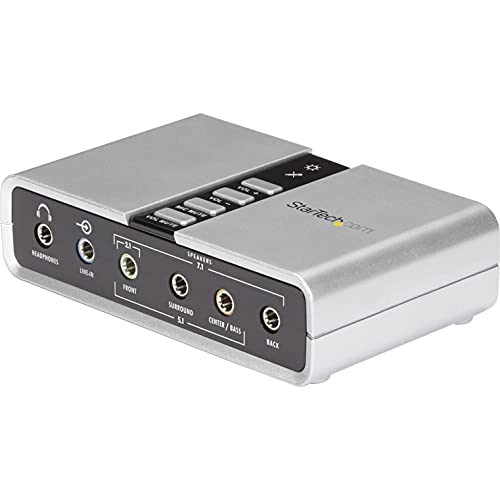
Do you game or watch movies with surround sound? If so, you’ll want a card that supports 5.1 or 7.1 channel output. This allows for a more immersive audio experience, placing you in the center of the action with precise directional cues.
Not all multi-channel sound cards are created equal. Some use virtual surround processing, while others provide true discrete analog outputs. For the purist, discrete outputs are generally preferred, but they require a receiver or speaker system with multiple inputs.
Connectivity and Inputs
Think about what you’ll plug in. Do you need a dedicated headphone amplifier? How about a line-in for recording or connecting external devices? A good external sound card should offer a variety of ports, including 3.5mm jacks, and possibly optical SPDIF for digital audio.
Also, consider the physical layout. Some cards feature volume knobs and mute buttons right on the unit, which is a welcome convenience. Ensure the card is compatible with your operating system, whether that’s Windows, macOS, or even a gaming console like the Switch.
Build Quality and Form Factor
An external sound card is a physical object on your desk, so build quality matters. Look for a solid construction, preferably with a metal housing that can shield against electromagnetic interference. A compact design is also a plus, keeping your workspace tidy.
Don’t overlook the little things. A braided USB cable, a non-slip base, and well-labeled ports all contribute to a premium feel. These details often indicate a manufacturer’s overall commitment to quality.
Final Thoughts
Upgrading to an external sound card is one of the most impactful changes you can make to your audio setup, and the right choice depends entirely on your needs. For a high-resolution, feature-packed card that excels in both music and gaming, the Creative Sound Blaster Audigy Fx Pro Hi-Res PCIe is a fantastic all-rounder. If you prioritize portability and simplicity for on-the-go listening, the VENTION USB Sound Card, External Stereo Sound Card offers a plug-and-play solution without compromising on sound quality. Whichever you choose, you’ll immediately notice a richer, more detailed soundstage that brings your media to life.
Frequently Asked Questions
Do I really need an external sound card if I have a good motherboard?
For many, a high-end motherboard’s integrated audio is sufficient. However, an external sound card isolates the audio circuitry from the electrical noise inside your PC case, which can reduce hiss and interference. This is especially noticeable with sensitive high-impedance headphones.
What is the difference between 5.1 and 7.1 surround sound?
5.1 surround sound uses five full-range channels and one subwoofer, while 7.1 adds two more rear channels for a more immersive rear soundfield. The extra channels provide more precise positional audio, which is a significant advantage in competitive gaming and action movies. The actual benefit depends on your speaker setup and the content you consume.
Can I use an external sound card with a gaming console?
Yes, many external sound cards are compatible with consoles like the Nintendo Switch, especially those that support USB audio class standard without additional drivers. This allows you to enjoy the same high-quality audio experience you get on your PC. Always check the product specifications for console compatibility before purchasing.
Will an external sound card improve the sound of my headphones?
Absolutely. An external sound card with a built-in headphone amplifier can drive high-impedance headphones to their full potential, resulting in better dynamics, clarity, and bass response. It also bypasses the often-weak headphone jack on your computer or laptop, eliminating distortion at higher volumes.